Old West Money Slang Decoder
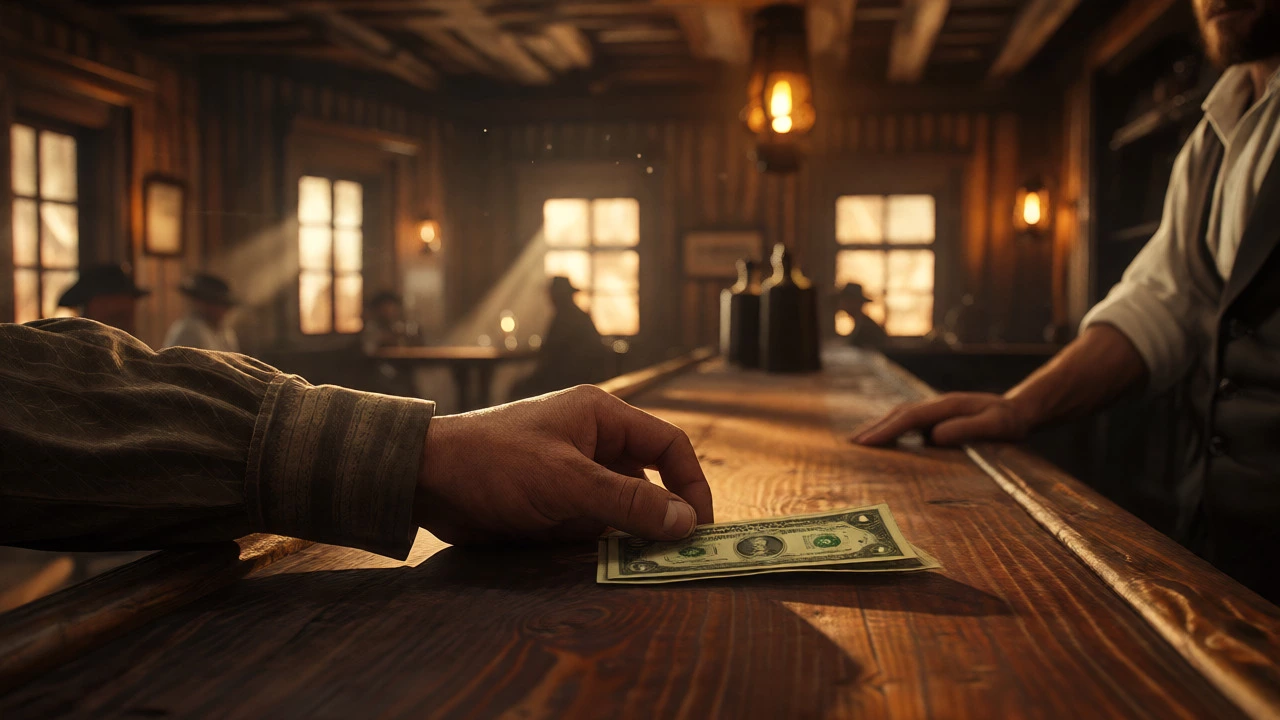
You walk into a dusty saloon in 1885. The air smells of stale beer and gunpowder. You need to pay for your whiskey, but you don't just say "here is the money." That sounds too modern, too clean. Instead, you might slide across the bar some greenbacks, or maybe you mention you're short on coin. If you were a real cowboy, you had a whole secret language for cash that had nothing to do with banks and everything to do with survival.
Why did cowboys have so many words for money? It wasn't just for style. In the American West, trust was scarce, and counterfeit bills were common. Using specific slang helped signal who you were and where you came from. It created a sense of belonging among drifters, ranch hands, and outlaws. Understanding these terms isn't just trivia; it helps you decode old movies, classic literature, and even some modern country songs that still use this rugged vocabulary.
The Most Common Cowboy Slang for Money
Let's start with the heavy hitters. These are the terms you'll hear most often in Western films and books. They aren't random; each one has a history tied to the physical reality of carrying wealth in the 19th century.
Greenbacks is probably the most famous term. This refers to US paper currency issued during the Civil War. The back of the notes was printed in green ink to prevent counterfeiting. For a cowboy, having greenbacks meant you had official government-backed value, which was safer than carrying raw gold dust. It became a universal synonym for dollars in the post-war era.
Clams didn't come from the ocean, though it sounds like it. This term likely emerged later, around the late 19th or early 20th century, but it fits the cowboy aesthetic perfectly. Why clams? Some historians think it relates to the clamshell shape of coins or the idea that money is hard to pry open, like a stubborn shell. Others suggest it comes from "clamming up," meaning staying silent about your finances. Regardless of origin, if a cowboy said he had "a pocket full of clams," he meant he had ready cash.
Bucks remains the most enduring slang term today. Its origins are debated. One theory links it to buckskins, which Native Americans used as trade goods with European settlers. Another suggests it comes from the male deer (buck), symbolizing masculinity and strength. By the time of the Wild West, calling a dollar a "buck" was already common practice among traders and frontiersmen. It’s the one term that survived the centuries and lives on in every paycheck conversation.
Terms Based on Physical Form
Cowboys didn't always carry paper. Often, their wealth was metal or loose change. Their slang reflected exactly what they held in their hands.
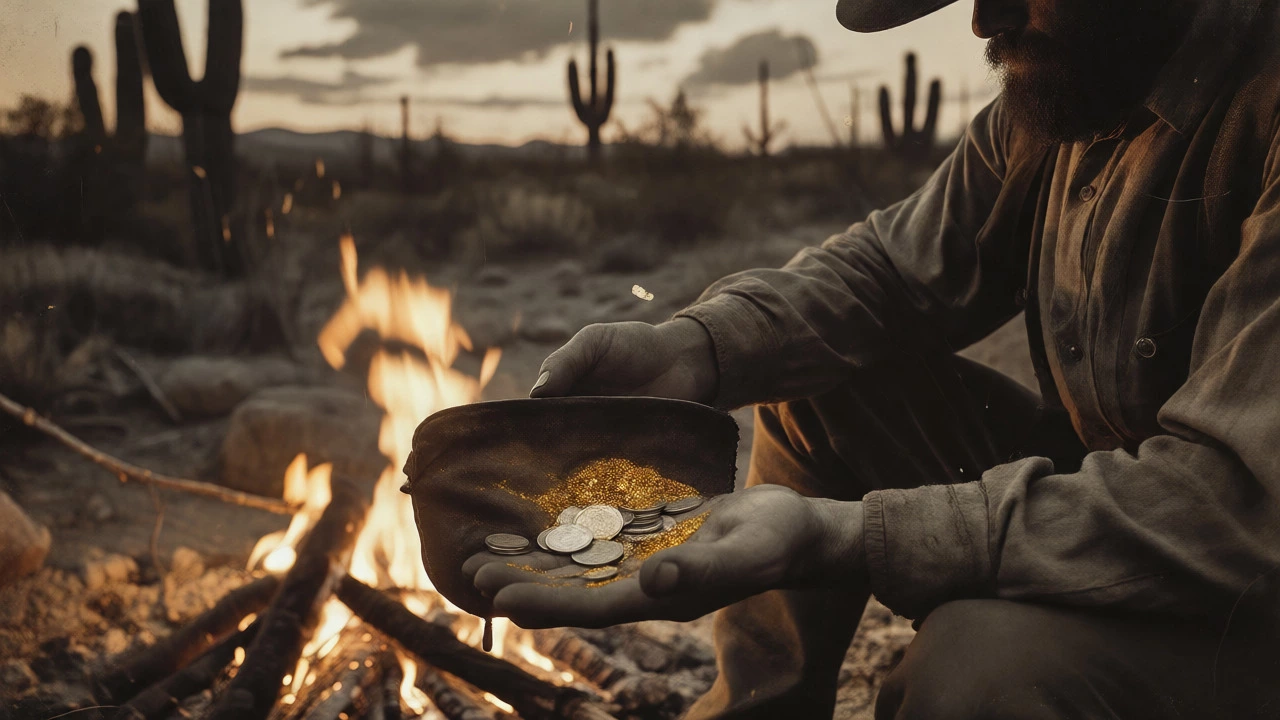
Hard Cash referred specifically to gold or silver coins, as opposed to paper notes or credit. In the frontier economy, paper money could be worthless if the bank collapsed or if you were too far from civilization to redeem it. Gold and silver were universal. If a prospector found a nugget, he had "hard cash." This term emphasized tangibility and reliability.
Coins had their own nicknames. A quarter was sometimes called a "two-bit piece" because eight bits made a Spanish dollar, the standard currency in much of the Southwest. Half-dollars were "fifty-cent pieces" or simply "halves." But when cowboys talked generally, they often used Silver to refer to any coinage, especially since silver was more abundant than gold in daily transactions.
Dust was literal. During the Gold Rush, miners carried gold dust in small pouches. Even after the rush ended, the term stuck. Saying you had "dust" implied you had valuable resources, even if they weren't minted yet. It connected the cowboy identity to the prospectors who preceded them.
Slang Reflecting Value and Scarcity
Not all money was equal. Cowboys had colorful ways to describe how much they had-or didn't have.
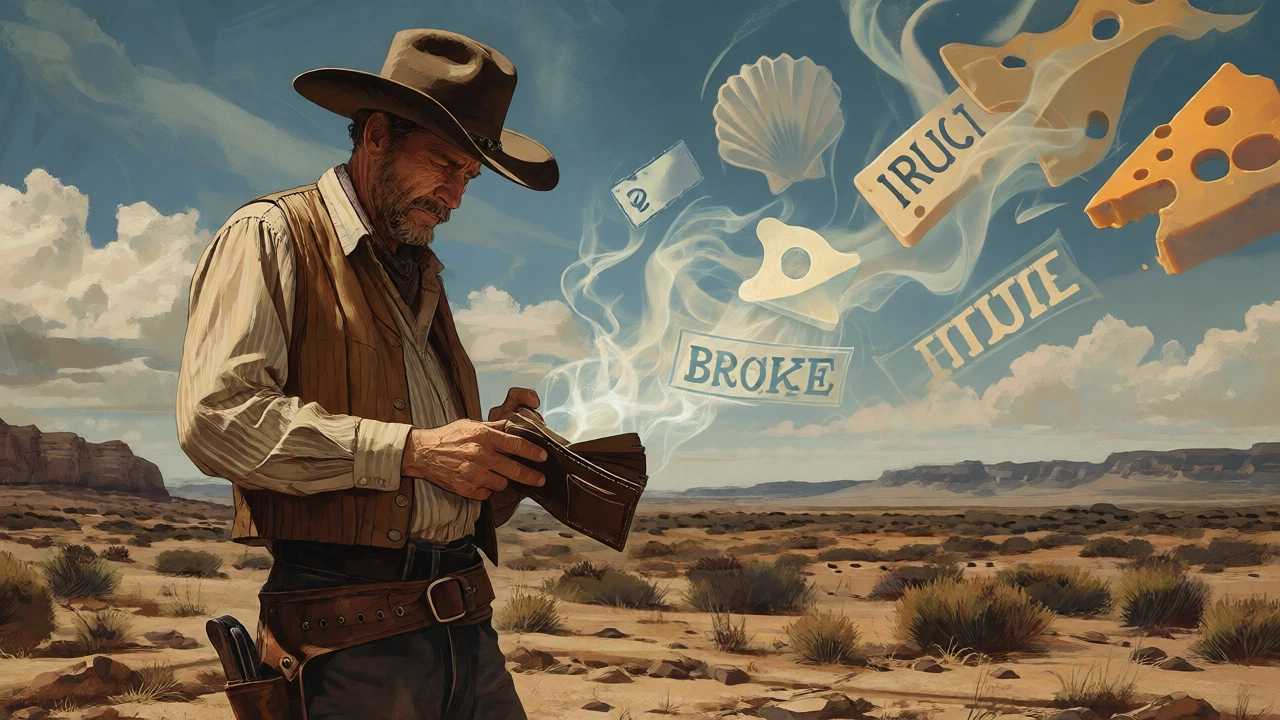
If you were broke, you might say you were Flat Broke. This phrase paints a vivid picture: your wallet is flat because there's nothing inside it. Other variations included being "skint" (short for skinned, implying you've been stripped bare) or "cleaned out." These terms weren't just descriptive; they were warnings to creditors that you couldn't pay.
On the other end of the spectrum, if you had a lot of money, you might call it Loot. While "loot" is often associated with pirates, cowboys used it too, especially for winnings from gambling or unexpected windfalls. It implies money acquired through luck or force rather than steady labor. A ranch hand might joke about his "loot" after a big poker night, even if he only won five dollars.
Another interesting term is Cheddar. While popularized by hip-hop culture in the 20th century, its roots go deeper. Some etymologists link it to "cheddar cheese," which was a commodity traded in rural America. Having cheddar meant you had something valuable to trade. In cowboy circles, it was less common than "bucks," but it existed in the broader vernacular of rural poverty and resourcefulness.
Regional Variations and Trade Goods
The American West wasn't a monolith. Different regions had different influences, which shaped their slang.
| Term | Region/Origin | Meaning | Context |
|---|---|---|---|
| Spanish Dollars | Southwest/Texas | Mexican Peso or equivalent | Used before US currency dominated |
| Two-Bit Piece | General West | Quarter Dollar | Derived from Spanish dollar fractions |
| Confederate Notes | Post-Civil War South/West | Worthless Paper | Often used mockingly for bad debt |
| I.O.U. | Rural Frontier | Debt Note | Common in company stores |
In Texas and the Southwest, Spanish Dollars remained in circulation long after independence. Many cowboys preferred them because they were widely accepted in Mexico and California. This influenced the "bit" terminology. Since a Spanish dollar was divided into eight parts, a quarter dollar became a "two-bit piece." This linguistic legacy persists in the phrase "not worth two cents," which originally meant not worth two bits.
For those working on large ranches, actual cash was rare. Wages were often paid in scrip or credited at the company store. Here, the slang shifted to Scrip. This was a voucher usable only at the company store, often at inflated prices. Cowboys hated scrip because it trapped them in debt. Calling your pay "scrip" was a complaint about lack of freedom.
Why This Language Matters Today
You might wonder why we care about 19th-century slang. Because it shapes how we talk about money now. When you say "I'm short on bucks," you're using a cowboy term. When you talk about "hard cash," you're invoking the gold standard era. These phrases carry emotional weight-they imply toughness, authenticity, and a direct relationship with value.
Modern writers and filmmakers use these terms to instantly establish character. A protagonist who says "pass me the greenbacks" feels different from one who says "here's my credit card." The former suggests action, immediacy, and perhaps a bit of lawlessness. Understanding these nuances helps you appreciate Western genre media more deeply. It also adds flavor to your own writing or storytelling.
Moreover, these terms remind us that money is a social construct. Cowboys didn't value paper; they valued trust and tangible assets. Their slang reflects a world where economic systems were fragile and personal reputation was collateral. In an age of digital wallets and cryptocurrency, that perspective is surprisingly relevant.
What is the most accurate cowboy word for money?
There isn't one single "most accurate" term because usage varied by region and time period. However, "bucks" for dollars and "greenbacks" for paper currency were widespread. "Bucks" is historically linked to fur trade and masculine symbolism, while "greenbacks" directly referenced the color of US Civil War-era notes. Both were commonly understood across the frontier.
Did cowboys really use the word "clams"?
The term "clams" likely gained popularity slightly after the peak of the Wild West era, becoming common in the late 19th and early 20th centuries. While it may not have been universal among 1870s cowboys, it fits the rugged lexicon and appears in later Western literature and folklore. Its exact origin is unclear, but it conveys the idea of money being hard-earned or difficult to extract.
What does "two-bit" mean in cowboy slang?
A "two-bit piece" refers to a quarter dollar. This stems from the Spanish milled dollar, which was divided into eight "bits." Therefore, two bits equaled one-quarter of a dollar. The phrase "not worth two bits" means something has very little value. This terminology persisted in the American Southwest due to the continued use of Spanish currency.
How did cowboys handle transactions without banks?
Cowboys relied heavily on cash transactions using gold, silver, or widely accepted paper notes like greenbacks. In remote areas, they used barter systems or company store scrip. Credit was based on personal reputation. If you didn't have cash, you might leave an IOU, trusting that the merchant knew you would return to pay. This system required high levels of community trust.
Is "cheddar" considered cowboy slang?
While "cheddar" is primarily associated with 20th-century urban slang, particularly in African American Vernacular English and later hip-hop, it has roots in rural American trade where cheese was a valuable commodity. It was not a primary term in classic cowboy vocabulary compared to "bucks" or "dollars," but it shares the same metaphorical basis of comparing money to essential goods.