Sofa Cushion Styling Calculator
- Select a sofa type to see recommendations.
You walk into a showroom or scroll through Instagram, and you see sofas that look effortlessly chic. Then you look at your own couch, and it feels... bare. Or worse, cluttered like a storage unit. The difference usually isn't the price tag of the furniture; it's the number and placement of sofa cushions. It’s not just about comfort; it’s about visual balance. But how many do you actually need? There is no single magic number, but there are rules of thumb that professional stylists use to make any sofa look expensive and inviting.
The Golden Rule: Odd Numbers Work Best
If you take one thing away from this guide, let it be this: odd numbers are your friend. Three looks balanced. Five looks abundant. Seven looks luxurious. Even numbers, like two or four, often feel static and symmetrical in a way that can look dated or overly formal. Why? Because our eyes naturally try to find a center point. With an odd number, there is a clear focal point. With an even number, the eye wanders between the two central objects, creating a sense of tension rather than harmony.
This doesn’t mean you can never use pairs. If you have a very small loveseat, two large matching pillows might work. But for standard three-seater sofas, starting with three is almost always the safest bet. It gives you structure without overcrowding the seating area. You want people to sit down, not climb over a mountain of fabric.
Matching Cushion Count to Sofa Size
Your sofa’s length dictates the maximum capacity for decoration. Overstuffing a small apartment sofa makes the room feel cramped. Under-decorating a massive sectional leaves it looking cold. Here is a practical breakdown based on typical Australian living room setups:
| Sofa Type | Length (Approx.) | Ideal Cushion Count | Styling Tip |
|---|---|---|---|
| Loveseat | 1.2m - 1.5m | 2 or 3 | Use two large square cushions plus one small lumbar if space allows. |
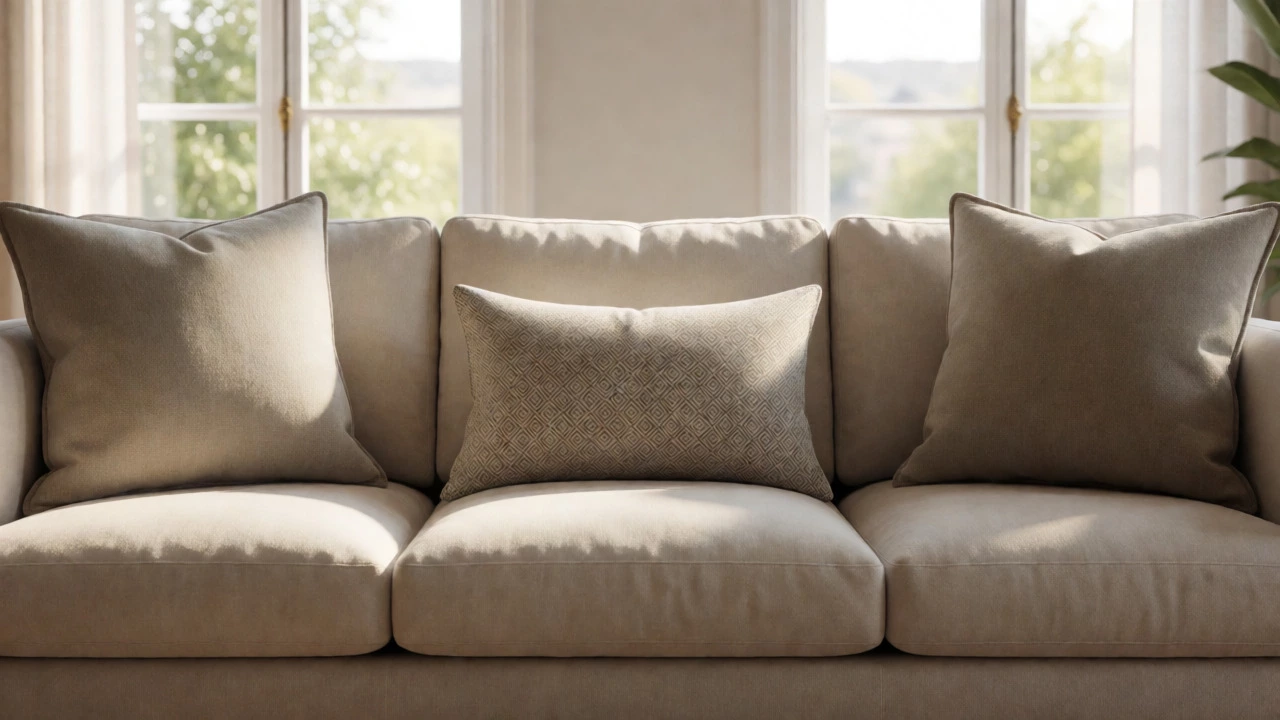
| Two-Seater | 1.6m - 1.8m | 3 | One large square on each end, one medium rectangular in the center. |
| Three-Seater | 2.0m - 2.4m | 3 to 5 | Start with 3. Add a fourth only if you have a chaise section. |
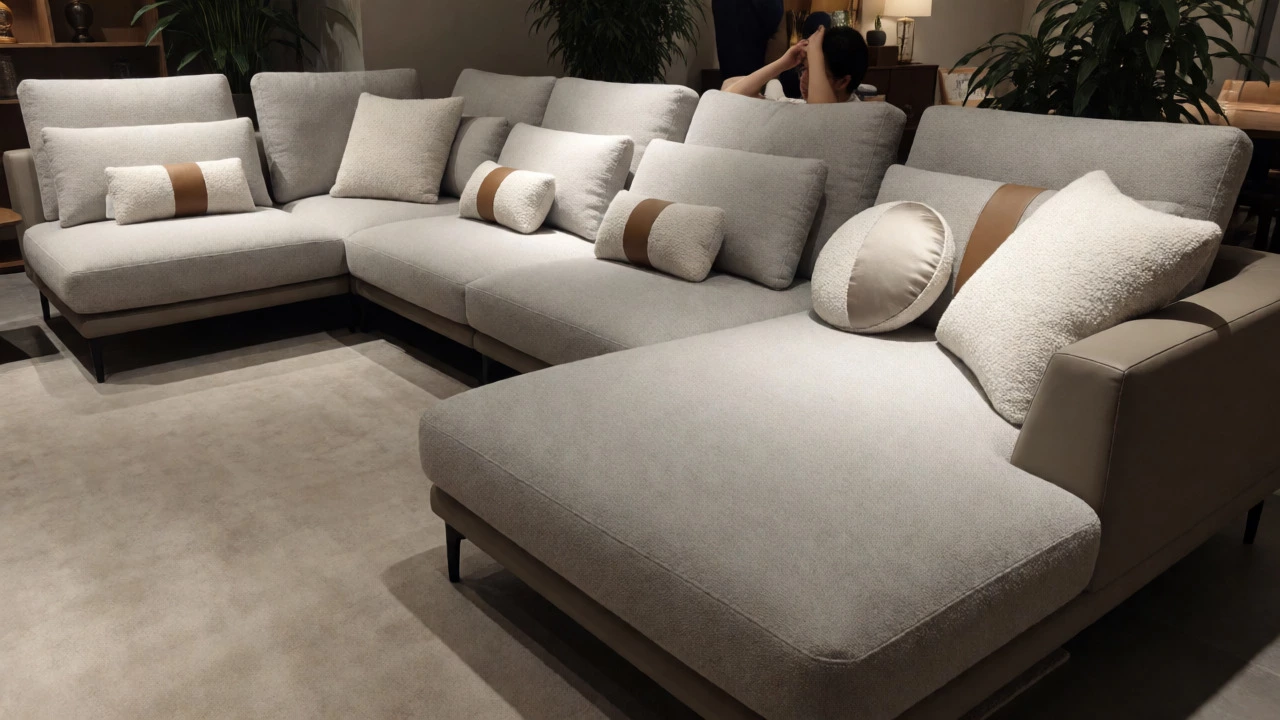
| Sectional/L-Shape | 2.5m+ | 5 to 7 | Distribute evenly along both arms and the corner. Avoid clustering all on one side. |
| Daybed/Bench | 1.8m - 2.0m | 3 to 4 | Focus on low-profile bolsters or flat pillows to maintain sleek lines. |
Notice the progression? As the surface area grows, so does the count. But don’t just dump them on randomly. Think of it as layering. You’re building depth, not just filling gaps.
The Layering Technique: Big, Medium, Small
Once you’ve decided on the number, the next question is size. Mixing sizes creates visual interest. If all your cushions are identical squares, the sofa looks flat. To fix this, adopt the "Big-Medium-Small" hierarchy. This is a core concept in interior design.
- The Base Layer (Large): Start with two large square cushions (usually 45cm x 45cm or 50cm x 50cm). Place these at the outer edges of the sofa, tucked firmly into the corners. These frame the sofa and provide structural support for your back.
- The Middle Layer (Medium): Next, add rectangular or slightly smaller square cushions. These go in front of the large ones, slightly overlapping. They break up the monotony of the squares and add texture. Common sizes here are 30cm x 50cm rectangles.
- The Accent Layer (Small): Finally, add a small decorative pillow or a bolster. This could be a round cushion, a textured velvet piece, or a bold printed accent. This draws the eye inward and adds personality.
For a three-seater, this might look like: Two large squares at the ends, two medium rectangles in front of them, and one small accent pillow in the center. Total: five cushions. It sounds complex, but once you buy the right mix, it becomes second nature.
Texture and Material Matter More Than Color
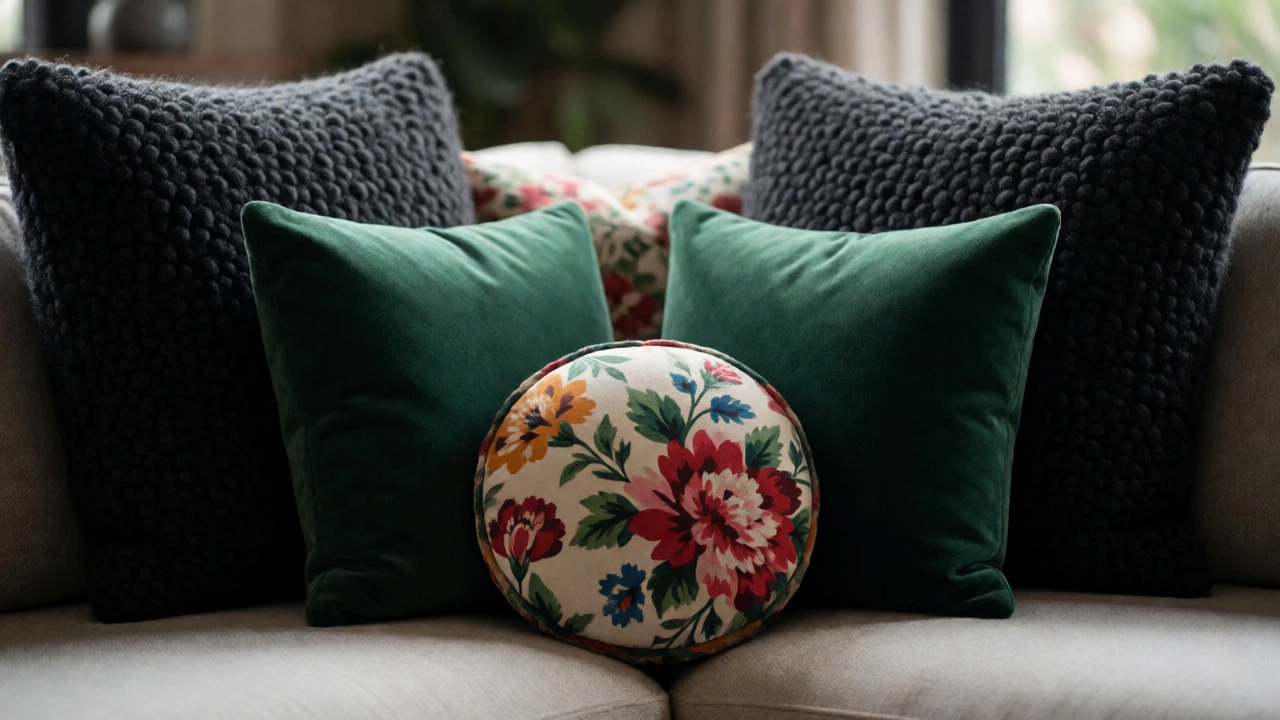
Here is a mistake many people make: they focus entirely on color coordination. While matching your palette is important, texture is what makes a sofa look high-end. A plain grey linen sofa needs tactile contrast. If everything is smooth cotton, it feels cheap. Mix materials. Pair a nubby wool throw with a smooth silk cushion. Combine leather accents with soft boucle.
Consider the climate in Perth. In summer, lightweight linens and cottons breathe well. In winter, heavier velvets and wools add warmth. Rotating your cushion covers seasonally is a smart move. It keeps your home decor fresh without buying new furniture. When mixing textures, ensure at least one element has a pattern-geometric, floral, or abstract-to break up solid blocks of color.
Avoiding the "Cluttered" Look
More isn’t always better. If you have to push cushions aside to sit down, you have too many. The goal is accessibility. You should be able to sink into the sofa comfortably. A good test: Sit on the sofa. Can you lean back against the cushions? Do they support your lower back? If you’re fighting with a pile of feathers just to get comfortable, reduce the count.
Also, consider the armrests. If your sofa has thin, sleek arms, bulky cushions will look out of place. On chunky, overstuffed sofas, you need larger, plumper cushions to match the scale. Proportion is key. A tiny 30cm cushion on a massive industrial sofa looks lost. A huge 60cm cushion on a delicate mid-century modern chair looks overwhelming.
Common Mistakes to Avoid
Let’s troubleshoot some frequent issues. First, the "Row of Soldiers." This is when all cushions are lined up perfectly straight across the back. It looks stiff. Instead, stagger them. Let the middle ones sit slightly higher or lower than the ends. Create a gentle curve or wave effect. Second, ignoring the corners. Tucking cushions deep into the corners makes them disappear. Pull them forward slightly so they’re visible and usable.
Third, mismatched fillings. Cheap polyester fills flatten quickly, making your carefully styled sofa look sad within weeks. Invest in quality feather-down blends or high-density foam inserts. They hold their shape longer and feel better to lean on. Your guests will notice the difference immediately.
Final Thoughts on Personal Style
Rules are great, but your home should reflect you. If you love minimalism, stick to two or three neutral cushions. If you’re maximalist, go wild with seven colorful, mixed-texture pieces. The most important factor is coherence. Ensure the colors tie into the rest of the room-your rug, curtains, or artwork. That connection makes the sofa feel like an integrated part of the design, not an afterthought.
Start small. Buy three high-quality cushions. See how they feel. Adjust from there. Styling is iterative. You’ll find your sweet spot faster than you think.
Is it okay to have an even number of cushions?
Yes, but it requires careful styling. Even numbers can look symmetrical and formal, which works well in traditional or minimalist interiors. However, to avoid looking static, vary the sizes significantly. For example, two large squares on the outside and one long lumbar pillow across the center creates an odd visual grouping despite the even physical count.
What size cushions should I buy for a standard three-seater sofa?
For a standard three-seater, start with two large square cushions (45x45cm or 50x50cm) for the corners. Add two medium rectangular cushions (30x50cm) for the middle layer. Finish with one small accent pillow (30x30cm or round) in the center. This combination provides both support and visual depth.
How do I stop my cushions from falling off the sofa?
This is usually due to slippery fabrics or poor positioning. Use non-slip grip pads inside the cushion covers. Also, tuck the base layer cushions firmly into the back corners before placing the decorative layers. Leaning the top cushions against the backrest at a slight angle helps them stay put better than standing them upright.
Should all cushions match the sofa color?
No, and often they shouldn't. Matching exactly can make the sofa look monotonous. Aim for tonal variation or complementary contrasts. If your sofa is neutral, use cushions to introduce color. If your sofa is bold, use neutral or patterned cushions to balance it. The goal is harmony, not uniformity.
How many cushions are too many?
If you cannot sit down comfortably without moving cushions, you have too many. Generally, more than seven cushions on a standard three-seater starts to look cluttered unless you have a very large sectional. Functionality should always trump aesthetics; a sofa must remain functional seating first.