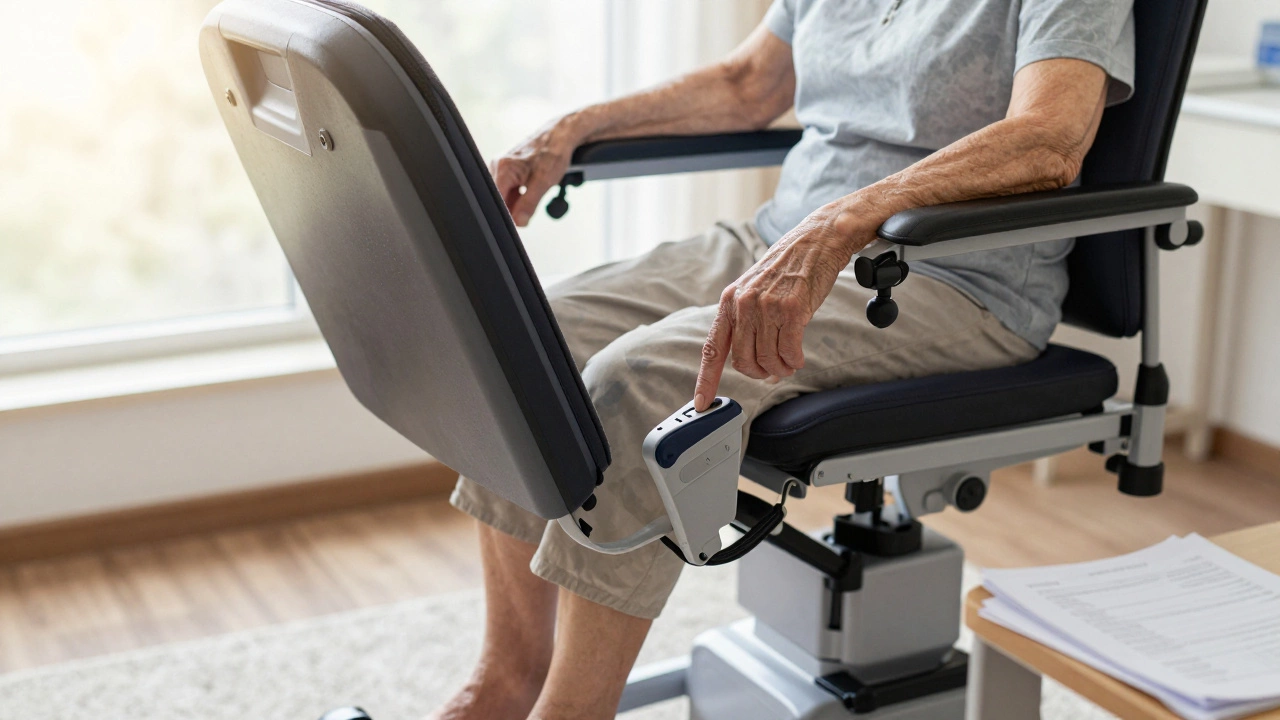
If you're struggling to stand up from a regular chair or sitting for long periods causes pain, you might be wondering if Medicare will cover a recliner chair. The short answer: Medicare doesn’t cover recliners just because they’re comfortable. But if your recliner meets specific medical criteria as durable medical equipment (DME), it might be covered-partially or fully.
What Makes a Recliner Medical Equipment?
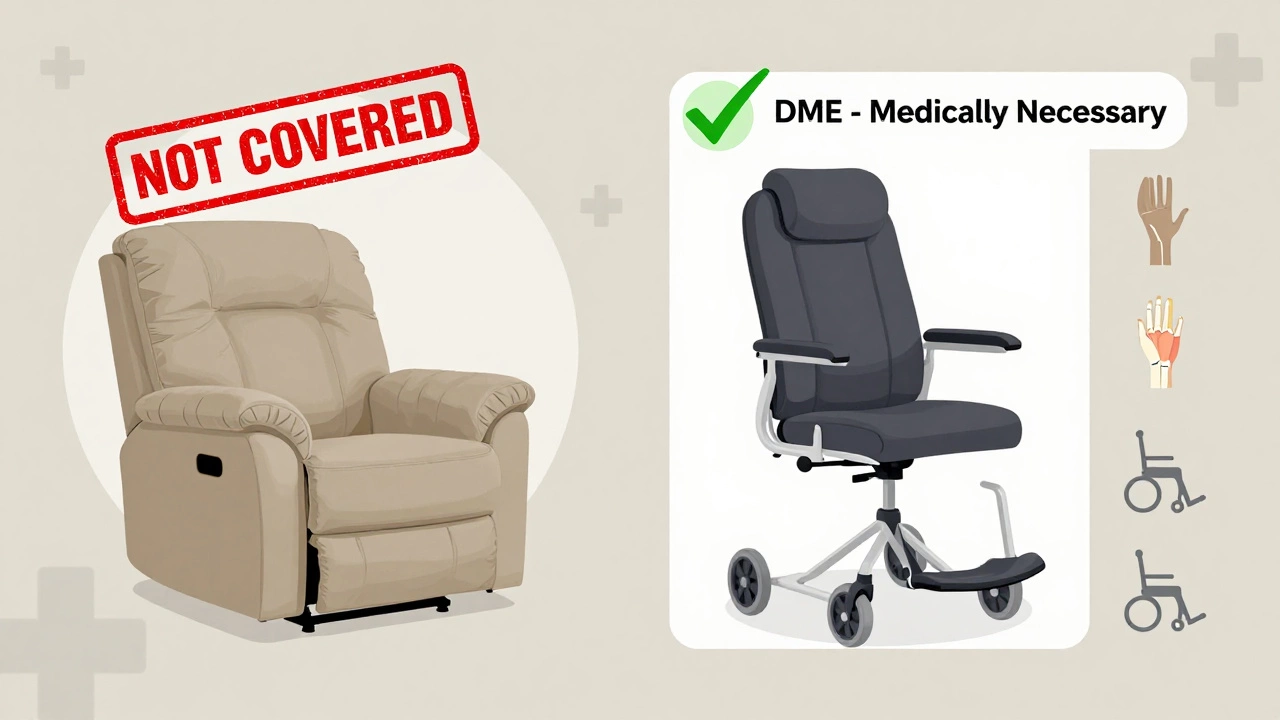
Medicare only pays for items that are deemed medically necessary by your doctor. A standard recliner you buy at a furniture store won’t qualify. But a power recliner with features like therapeutic positioning, pressure relief, or lift assistance might. These aren’t just fancy chairs-they’re designed to help with conditions like severe arthritis, spinal stenosis, chronic back pain, or mobility issues after surgery.The key difference? Medical recliners have adjustable backrests and leg rests that help reduce pressure on joints, improve circulation, or support proper spinal alignment. Some even come with built-in heat or massage, but those features alone won’t make it eligible. What matters is whether the chair helps you perform daily activities like standing, sitting, or resting without pain or risk of injury.
Medicare Coverage Rules for Recliners
Medicare Part B covers durable medical equipment if you meet three basic requirements:- You have a doctor’s written order stating the recliner is medically necessary.
- The recliner is prescribed for use in your home.
- The supplier is enrolled in Medicare and accepts assignment (meaning they accept Medicare’s approved payment amount).
Medicare will pay 80% of the approved amount after you meet your Part B deductible. You pay the other 20%. If you have a Medigap plan, it might cover that 20%. Medicare Advantage plans may cover more, but you’ll need to check your plan’s rules.
Important: Medicare doesn’t cover the full cost of luxury features. If your recliner has built-in speakers, USB ports, or leather upholstery, those are considered non-medical upgrades. You’ll pay extra for those, or Medicare will only cover the base model that meets medical standards.
What Types of Recliners Are Covered?
Not all recliners are created equal. Medicare typically covers:- Power lift recliners that help you stand up with the push of a button
- Recliners with adjustable back and leg support to relieve pressure on hips, knees, or lower back
- Chairs with pressure-relieving cushions designed for people at risk of skin breakdown (like those with limited mobility or diabetes)
These are often called “medical recliners” or “DME recliners.” Brands like Golden Technologies, Pride Mobility, and Invacare make models that meet Medicare’s standards. You won’t find these at Wayfair or IKEA-you’ll need to go through a Medicare-approved DME supplier.
Some people think a simple cushion or wedge pillow qualifies. While those can be covered under separate DME codes, they’re not the same as a full recliner. A cushion might help with pressure sores, but if you need to change positions frequently or can’t stand without help, a full recliner is what you need.
How to Get Started
Follow these steps to get your recliner covered:- See your doctor. Explain your symptoms-difficulty standing, pain when sitting, balance issues, or recent surgery. Be specific about how your current seating affects your daily life.
- Ask for a face-to-face evaluation. Medicare requires this for DME claims. Your doctor will document your condition and determine if a recliner is medically necessary.
- Get a written prescription. It must include your diagnosis, why the recliner is needed, and the type of equipment (e.g., “power lift recliner with adjustable back and leg support”).
- Find a Medicare-enrolled DME supplier. Use Medicare’s supplier directory (search “Medicare DME supplier finder”) or ask your doctor for recommendations. Avoid online retailers that don’t accept Medicare assignment.
- Let the supplier handle the paperwork. They’ll submit the claim to Medicare using the correct HCPCS code (like E0620 for power lift recliners).
Don’t buy first and ask later. If you purchase a recliner on your own from a non-Medicare supplier, you’ll likely pay full price and get no reimbursement.
What If Medicare Denies Coverage?
Denials happen. Common reasons include lack of proper documentation, no face-to-face exam, or the supplier not being enrolled. If you’re denied:- Ask for a written explanation of the denial.
- Check if your doctor can provide more detailed notes or a second opinion.
- Appeal within 120 days using Medicare’s formal appeal process. You can get help from your State Health Insurance Assistance Program (SHIP) for free.
Some people get approved on the second try after adding more medical evidence. Don’t give up if your first request is turned down.
Alternatives If Medicare Won’t Cover It
If you don’t qualify for Medicare coverage, there are still options:- Check with Medicaid-if you’re dual-eligible, you might get full coverage.
- Look into nonprofit organizations like the United Way or local Area Agencies on Aging. Some offer grants or rental programs for medical equipment.
- Ask your DME supplier about payment plans. Many offer 0% interest over 6-12 months.
- Consider used or refurbished medical recliners. Reputable suppliers sell certified pre-owned models at 30-50% off.
Also, don’t underestimate the value of a good cushion. If your issue is pressure sores or tailbone pain, a Medicare-covered gel or foam cushion (HCPCS code E0601) might be enough. But if you need help standing up, that’s a different problem-and that’s where a lift recliner makes the real difference.

Common Mistakes to Avoid
Many people try to get a recliner covered and fail because of simple errors:- Buying from Amazon or Walmart-these suppliers don’t bill Medicare.
- Thinking any recliner with “orthopedic” in the name qualifies-Medicare doesn’t recognize marketing terms.
- Skipping the face-to-face exam-this is non-negotiable.
- Assuming all lift chairs are the same-only specific models with adjustable positioning qualify.
- Not checking if your doctor is enrolled in Medicare-some private practices aren’t.
Also, don’t confuse a recliner with a wheelchair or hospital bed. Those have separate codes and rules. A lift recliner is not a mobility device-it’s a seating solution for home use.
Real-Life Example
Margaret, 74, had hip replacement surgery and couldn’t stand without help. Her doctor diagnosed her with severe osteoarthritis and prescribed a power lift recliner. She used Medicare’s supplier finder, picked a local DME provider, and got her recliner with no out-of-pocket cost beyond her 20% coinsurance. The supplier handled everything-paperwork, delivery, setup. She didn’t have to lift a finger.She didn’t get a leather recliner with Bluetooth. She got a basic, durable model with a 3-position lift, pressure-relieving cushion, and a 5-year warranty. That’s all Medicare covers-and it changed her life.
Final Tips
- Keep copies of every document: prescription, order, supplier receipt, Medicare explanation of benefits. - Don’t wait until you’re in pain to act. The sooner you document your needs, the faster you can get help. - Talk to your physical therapist. They often know which suppliers Medicare trusts. - Recliners aren’t a luxury-they’re a tool for independence. If you need one to sit safely and stand without help, you deserve access to it.Can I get a recliner chair covered by Medicare if I have arthritis?
Yes, if your arthritis causes severe mobility issues and your doctor documents that a lift recliner is necessary to help you sit and stand safely. A standard recliner won’t qualify, but a power lift model with adjustable positioning might.
Does Medicare cover the cost of a cushion for a recliner?
Yes, if the cushion is prescribed for pressure ulcer prevention or treatment due to limited mobility. It’s covered under a different code (E0601) than the chair itself. You can get both if your doctor says you need them.
Can I rent a recliner chair through Medicare?
Medicare doesn’t rent equipment. But some suppliers offer rental programs for short-term use (like after surgery). Medicare will still only pay if the chair is medically necessary and you have a valid prescription. You’ll pay out of pocket for rentals unless your state Medicaid program covers them.
What if I already bought a recliner? Can I get reimbursed?
No. Medicare doesn’t reimburse for equipment you bought before getting a prescription or from a non-enrolled supplier. You must go through a Medicare-approved DME provider from the start.
Do I need to be homebound to qualify for a Medicare recliner?
No. Homebound status is only required for home health services. For durable medical equipment like a recliner, you just need to use it in your home and have a doctor’s order proving medical necessity.