The "Keep or Toss" Bedroom Declutter Decision Tool
Current Item Category
Have I worn this in the last 12 months?
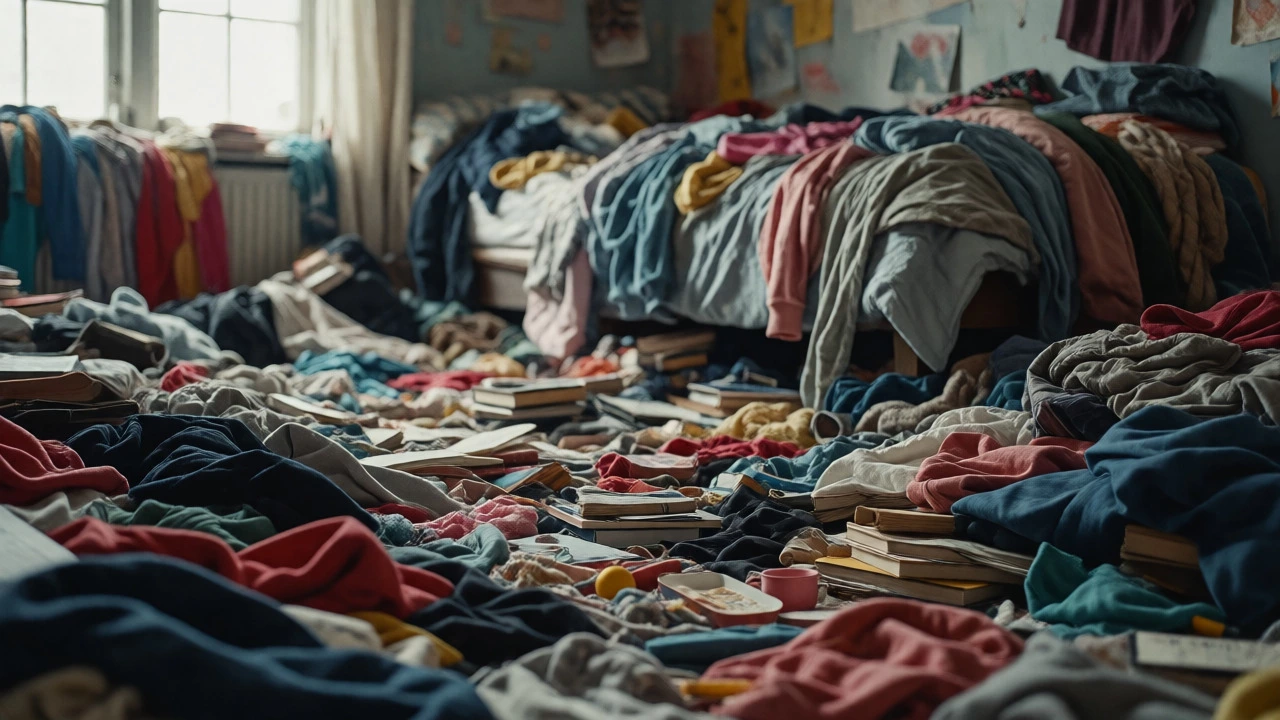
You know that feeling when you walk into your bedroom and the floor is invisible? Not because it’s clean, but because it’s buried under piles of clothes, books, and things you haven’t touched in months. It’s stressful. You can’t relax in a space that feels chaotic. But here’s the truth: you don’t need a bigger room. You just need a better system.
Organizing a cluttered bedroom isn’t about buying expensive custom closets or hiring a professional organizer. It’s about making smart, small changes that add up. Whether you’re dealing with a tiny apartment bedroom or a master suite overflowing with stuff, the principles are the same. Let’s get your space back.
The Big Purge: Start by Removing Things
You cannot organize clutter. If you try to arrange piles of junk, you’re just decorating chaos. The first step is always removal. This sounds obvious, but most people skip it or do it halfway. They move stuff from one pile to another. Don’t do that.
Pick one category at a time. Clothes are usually the easiest place to start because you interact with them daily. Pull every single item out of your wardrobe and drawers. Yes, everything. Put it on your bed. Now, ask yourself three questions for each item:
- Have I worn this in the last 12 months?
- Does it fit me right now?
- Do I actually like it?
If the answer to any of those is no, it goes. Into a donation bag, not back in the closet. Be ruthless. That shirt you bought two years ago "just in case" you lost weight? You probably won’t. Let it go. Once your clothes are sorted, repeat the process for other categories: books, electronics, papers, and sentimental items. Sentimental items are tricky. Keep only the ones that truly spark joy or serve a purpose. A box of old tickets doesn’t bring you joy; it brings dust.
Maximize Vertical Space with Smart Shelving
Floor space is premium real estate in a bedroom. When you have too much stuff, you need to look up. Vertical storage is your best friend. Most bedrooms have walls that are completely unused except for hanging art. Why waste that space?
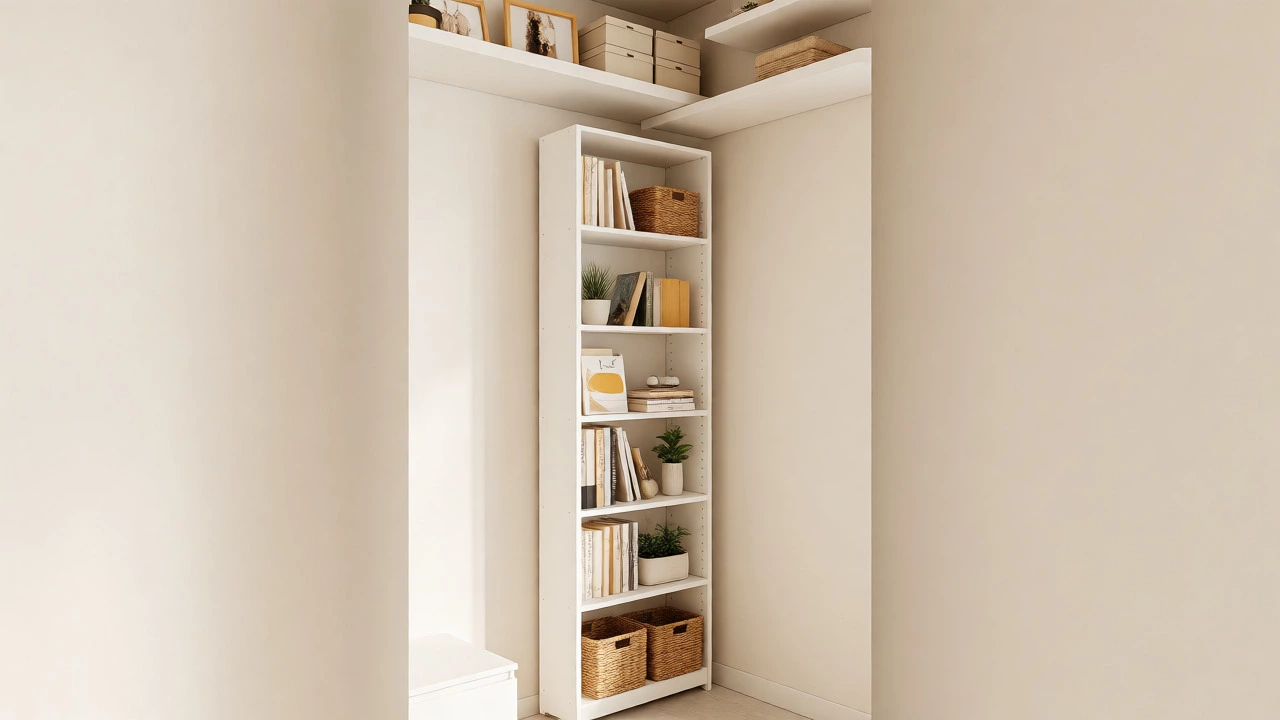
Install floating shelves above your headboard or along empty wall sections. These are great for books, plants, or decorative boxes that hide ugly cables. For a more robust solution, consider a tall, narrow bookcase. It takes up minimal floor footprint-often less than 30cm wide-but holds hundreds of items. In Perth, where humidity can be an issue, ensure your shelving is made of moisture-resistant materials like metal or treated wood to prevent warping.
Type
Best For
Space Saved
Floating Shelves
Light items, decor, books
High (no legs)
Tall Narrow Bookcase
Books, files, baskets
Medium (floor use)
Wall-Mounted Hooks
Bags, hats, robes
Very High
Under-Bed Storage: The Hidden Goldmine
Did you know the average bed frame hides about 15-20 cubic feet of empty space? That’s enough to store off-season clothes, extra bedding, or even shoes. Yet, most people let it gather dust bunnies.
Invest in rolling under-bed containers. Look for ones with lids to keep dust out. Clear plastic bins are ideal because you can see what’s inside without opening them. Label them clearly: "Winter Coats," "Extra Linens," "Shoes." This turns a dead zone into active storage. If your bed doesn’t have clearance underneath, consider a bed frame with built-in drawers. Brands like IKEA offer affordable options with hydraulic lifts, allowing you to access massive storage compartments easily.
Pro tip: Use vacuum seal bags for bulky items like duvets and winter jackets. They shrink down to a fraction of their size, fitting more into smaller bins. Just remember to release the air slowly if you plan to use them again soon, as compressed fibers can sometimes lose loft if left sealed for years.
Optimize Your Wardrobe with Hierarchy
A messy wardrobe often leads to a messy bedroom. If you can’t find your favorite jeans, you’ll leave them on the chair. The key is hierarchy. Store items based on frequency of use.
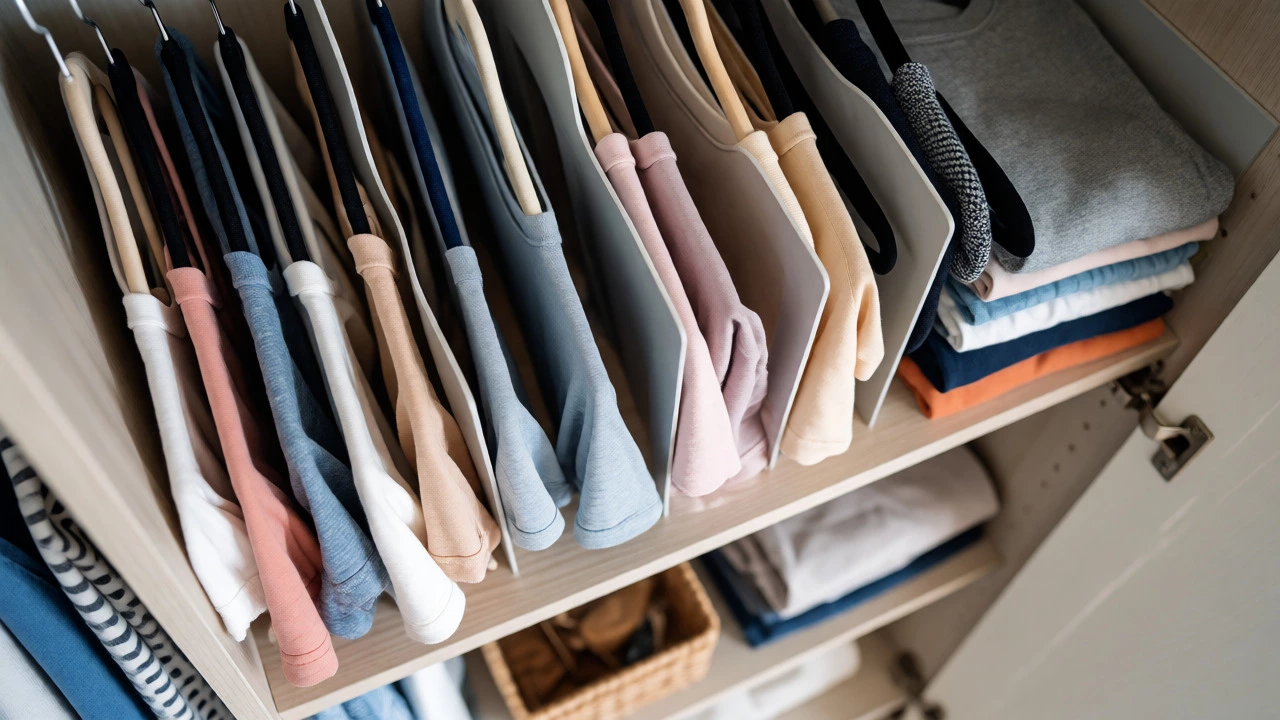
Keep daily wear at eye level and within arm’s reach. This includes work clothes, casual outfits, and anything you grab every morning. Move occasional wear-like formal dresses or hiking gear-to higher shelves or top drawers. Seasonal items belong in under-bed storage or high cupboards. Use slim velvet hangers instead of bulky plastic ones. They save about 30% more space in your rail and stop clothes from slipping off.
Add shelf dividers to stack folded clothes neatly. Without them, stacks collapse into heaps. Shelf dividers keep your t-shirts and jumpers upright and visible. You’ll spend less time digging through laundry and more time getting ready.
Manage Nightstand Clutter with Trays and Baskets
Nightstands are clutter magnets. Keys, wallets, phones, glasses, books, water bottles-it all ends up there. Instead of letting it spread, contain it. Use a small tray for daily essentials like keys and jewelry. This gives them a "home" so they don’t migrate across the room.
For larger items, place a woven basket next to the bed. Toss random objects in there throughout the day. At night, do a quick five-minute tidy and put things away. This prevents the "doom pile" from forming. If you have a drawer in your nightstand, use drawer organizers. Simple compartment trays keep pens, chargers, and medications separated. No more digging for a charging cable in a tangled mess.
Use Multi-Functional Furniture to Reduce Items
Sometimes, having too much stuff means you have too many pieces of furniture. Do you really need a separate dresser, a desk, and a side table? Maybe not. Multi-functional furniture reduces the number of objects you need to manage.
A bench at the foot of the bed can store blankets and serve as seating. An ottoman with hidden storage works as a footrest and a stash spot for remotes or magazines. If you work from your bedroom, choose a desk with built-in drawers rather than adding a separate filing cabinet. Every piece of furniture should earn its place by serving more than one purpose.
How long does it take to organize a very cluttered bedroom?
It depends on the volume of stuff, but aim for 2-4 hours per major category (clothes, books, etc.). Don’t try to do it all in one day. Break it into manageable chunks over a weekend. Consistency beats speed.
What is the best way to store off-season clothes?
Vacuum-sealed bags stored in under-bed bins or high cupboards are the most space-efficient method. Ensure clothes are clean before storing to prevent stains setting in. Avoid cardboard boxes as they attract pests and absorb moisture.
Should I buy new storage bins before organizing?
No. Always declutter first. Buying bins before knowing how much stuff you actually keep leads to wasted money and ill-fitting containers. Measure your spaces after sorting, then buy bins that fit perfectly.
How do I keep my organized bedroom tidy long-term?
Adopt the "one in, one out" rule. If you buy a new shirt, donate an old one. Also, dedicate 10 minutes each evening to a quick reset. Put dirty clothes in the hamper, clear the nightstand, and fold the blanket. Small habits prevent big messes.
What if I have too many sentimental items?
Take photos of bulky sentimental items before discarding them. Keep only the top 10-20 items that hold the most meaning. Display them in a shadow box or a dedicated memory jar rather than hiding them in boxes you never open.
Maintaining Your New System
Once you’ve cleared the clutter and set up your storage, maintenance is key. It’s easy to slide back into old habits. To avoid this, create simple rules. Never leave clothes on the floor overnight. If it’s clean, hang it up. If it’s dirty, it goes in the hamper. There is no middle ground.
Do a mini-audit once a month. Check your donation pile. Has it grown? Take it to charity. Review your wardrobe. Did you buy anything you didn’t wear? Adjust your shopping habits. Organization isn’t a one-time event; it’s a lifestyle choice. By keeping your surfaces clear and your storage logical, you create a sanctuary that helps you sleep better and wake up refreshed.
Remember, the goal isn’t perfection. It’s functionality. A bedroom that serves you, rather than one you serve. Start small today. Pick one drawer. Empty it. Sort it. Feel the difference. Then tackle the next one. Before you know it, you’ll wonder how you ever lived in the chaos.