Rug Quality Inspector
Answer these questions about the rug you're considering to get a quality assessment score.
Quality Score
Score Breakdown:
- 80-100: Excellent quality — will last decades
- 60-79: Good quality — solid everyday choice
- 40-59: Fair quality — acceptable for light use
- Below 40: Poor quality — consider alternatives
Imagine you just bought that stunning area rug from the clearance rack. It looks perfect in your living room for about three days. Then, it starts curling at the edges. The pile feels flat underfoot, and suddenly, it smells like wet dog every time it rains. You didn't buy a floor covering; you bought a headache. We’ve all been there. The difference between a rug that lasts decades and one that falls apart in months usually isn't visible until it's too late.
Spotting a quality rug isn't about spending the most money. It’s about knowing what to look for before you pull out your credit card. Whether you are hunting for a vintage Persian piece or a modern synthetic blend, the rules of quality remain surprisingly consistent. Let’s break down exactly how to inspect a rug so you don’t get burned.
The Squish Test: Understanding Pile Density
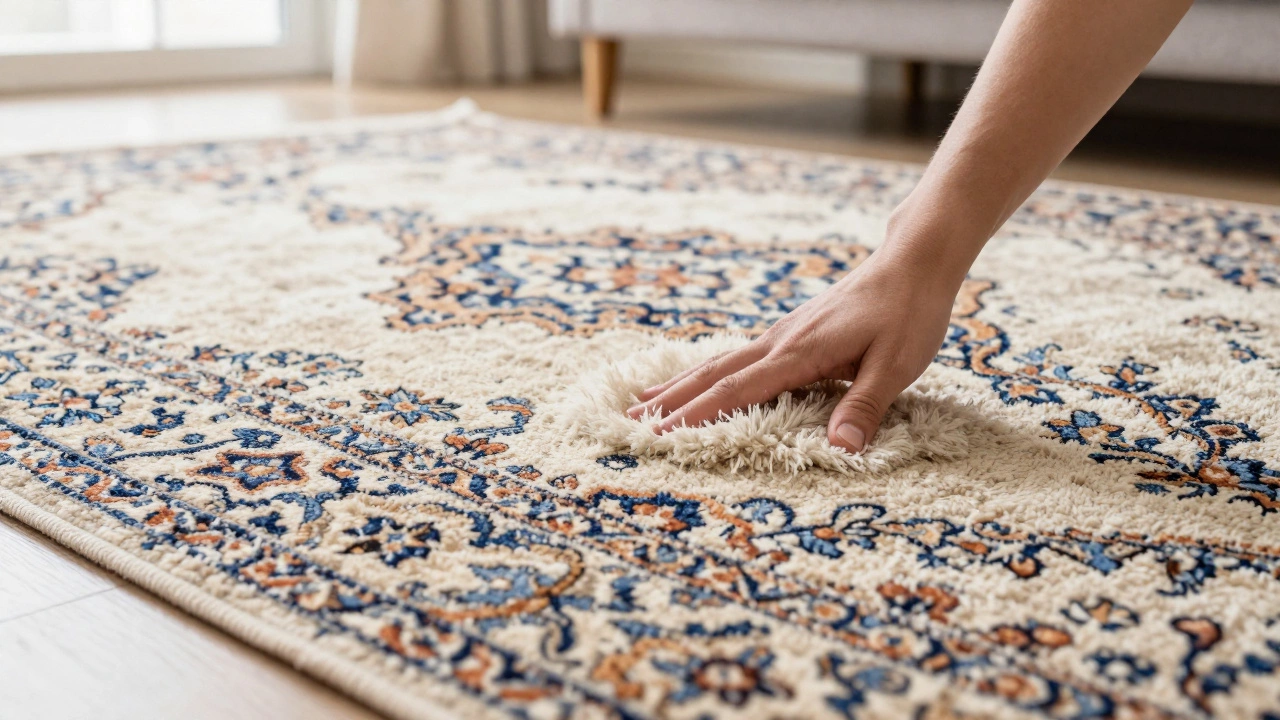
If you take only one thing away from this guide, let it be this: density matters more than anything else. Most people look at the pattern or the color first. Smart buyers push their hand into the pile. This is often called the 'squish test.'
Here is how you do it. Push your fingers firmly into the center of the rug, right up to the backing. Look at the base of the fibers. Can you see the canvas or jute backing through the knots? If yes, put it back. A high-quality rug has such tight packing that you should barely, if at all, see the foundation when you part the hair.
Why does this matter? Density determines durability. In the industry, we talk about 'knots per square inch' (KPSI) for hand-knotted rugs or 'face weight' for machine-made ones. But you don't need a calculator. You just need your hands. If the rug feels spongy and resilient when you press it, the fibers are packed tightly enough to withstand foot traffic without matting down immediately. If it feels loose and airy, those fibers will shift, tangle, and wear out quickly.
| Material | Durability Level | Best For |
|---|---|---|
| Wool | High | High-traffic areas, living rooms |
| Silk | Low (delicate) | Low-traffic formal spaces |
| Cotton | Medium | Kitchens, bathrooms, kids' rooms |
| Polypropylene (Synthetic) | High | Outdoor use, budget-friendly indoor options |
Fiber Content: Natural vs. Synthetic
Not all fibers are created equal. The material dictates how the rug ages, how it handles stains, and how it feels under bare feet. Wool remains the gold standard for a reason. Sheep's wool has a natural crimp, which acts like tiny springs. This gives the rug its bounce-back ability. It also contains lanolin, a natural wax that repels dirt and moisture. That’s why wool rugs stay looking new longer than cotton or synthetic alternatives.
Synthetic fibers, particularly polypropylene (often sold as Olefin), have made huge strides in recent years. They are incredibly stain-resistant and affordable. If you have pets with accidents or young children who spill juice daily, a high-density polypropylene rug might actually serve you better than an expensive wool one. However, synthetics tend to flatten over time because they lack that natural spring. They also generate static electricity, which can make them cling to dust bunnies.
Cotton is soft and eco-friendly but lacks structural integrity. It’s great for low-pile kitchen mats or bathroom runners where washability is key, but it won’t hold up well in a main hallway. Silk is luxurious and lustrous but fragile. A silk rug is an art piece, not a workhorse. Treat it accordingly.
Construction Methods: How It’s Made Matters
The way a rug is constructed tells you a lot about its lifespan. There are three main categories you’ll encounter: hand-knotted, hand-tufted, and machine-made.
Hand-knotted rugs are the pinnacle of craftsmanship. Each knot is tied individually by hand around the warp threads. These rugs can last generations. They are heavy, reversible (usually), and develop a beautiful patina over time. Because they are labor-intensive, they come with a higher price tag. If you find a hand-knotted rug on sale, check the backing. It should feel substantial, not flimsy.
Hand-tufted rugs are a middle ground. A gun-like tool pushes yarn through a canvas backing, and glue is applied to the back to hold the tufts in place. They are faster to produce than hand-knotted rugs and cost less. However, the glue can dry out over decades, leading to shedding. They are generally not reversible.
Machine-made rugs dominate the market. Modern technology allows them to mimic hand-knotted patterns convincingly. The key here is again, density. A high-end machine-made rug with tight weaving can outlast a poorly made hand-tufted one. Don't dismiss machine-made options automatically; just inspect the edge finishing. Raw, fraying edges indicate cheap construction.
The Edge Inspection: Binding and Selvedge
Flip the rug over. Look at the edges. This is where manufacturers cut corners to save pennies. A quality rug will have a sturdy binding. This could be a woven selvedge (where the weft thread wraps around the warp threads at the edge) or a stitched border fabric.
If the binding looks loose, thin, or is already peeling, the rug will unravel quickly once placed in your home. Friction from furniture legs and foot traffic will tear weak bindings apart. Good binding should lie flat against the backing and feel thick. For heavier rugs, especially those with long piles, reinforced corners are a sign of thoughtful design. It prevents the corners from rolling up, which is a common tripping hazard and aesthetic failure.
Color Fastness and Dye Quality
Have you ever walked on a brand-new red carpet and noticed red dust on your white socks? That’s poor dye fastness. Cheap dyes bleed. When cleaning the rug later, or even just from humidity, these colors run, ruining the pattern and staining adjacent floors or furniture.
Natural vegetable dyes, often used in traditional Persian and Indian rugs, age beautifully. They fade uniformly, giving the rug an antique charm. Synthetic acid dyes are brighter and more consistent initially but can be harsher on fibers if not applied correctly. To test for bleeding, lightly dampen a white cotton cloth and rub it vigorously on an inconspicuous area of the rug (like a corner). If color transfers to the cloth, think twice. You don’t want to risk your hardwood floors or light-colored sofas.
Backing Materials: The Foundation
The backing supports the entire structure. Common materials include jute, cotton, latex, and rubber.
Jute and cotton backings are breathable and natural, making them ideal for hand-knotted and hand-woven rugs. They allow air circulation, preventing mold growth underneath. However, they can be slippery on smooth surfaces like tile or hardwood. You’ll likely need a non-slip pad underneath.
Latex and rubber backings are common in machine-made rugs. They provide grip, which is convenient. But beware of cheap latex. Over time, it can become brittle and crack, leaving black specks on your floor. More importantly, some low-quality rubber backings emit volatile organic compounds (VOCs), contributing to indoor air pollution. If you have allergies or respiratory issues, stick to natural fiber backings or ensure the synthetic backing is certified low-VOC.
Size and Proportion: The Final Check
A rug can be technically perfect but still fail in your home if it’s the wrong size. A small rug floating in a large room looks cheap and disjointed. It creates visual clutter rather than cohesion.
For living rooms, aim for a rug that fits under the front legs of all seating furniture. This anchors the space. In dining rooms, the rug should extend at least 24 inches beyond the table edge so chairs don’t scrape off the rug when pulled out. Measure your space carefully. Don’t guess. A tape measure is your best friend here. Buying a rug that is slightly larger than expected is almost always better than one that is too small.
Is a thicker rug always a better quality rug?
Not necessarily. Thickness (pile height) is different from density. A very thick rug with low density will crush easily and look matted. A medium-pile rug with high density will feel plush and last longer. Focus on how tightly the fibers are packed, not just how tall they are.
How can I tell if a rug is hand-knotted or machine-made?
Look at the fringe. On a hand-knotted rug, the fringe is part of the foundation threads; it continues seamlessly from the body of the rug. On a machine-made rug, the fringe is often sewn on separately. Also, hand-knotted rugs usually have slight irregularities in the pattern, while machine-made rugs are perfectly symmetrical.
What is the best rug material for high-traffic areas?
Wool is the best natural fiber for high traffic due to its resilience and stain resistance. For synthetic options, choose high-density polypropylene. Avoid silk and delicate cotton blends in hallways or entryways.
Do I need a rug pad for every rug?
Yes, almost always. A rug pad protects your floor from scratches, adds cushioning, prevents slipping, and extends the life of the rug by reducing friction on the backing. Even rugs with rubber backs benefit from a separate felt or rubber pad for added protection.
Why do some rugs shed excessively?
New rugs, especially wool ones, often shed some loose fibers initially. This should stop after a few weeks of vacuuming. If a rug continues to shed heavily after months, it indicates poor construction or low-quality fibers that are breaking down.