Curtain Mixing Strategy Finder
Select your primary goal for this room to get a tailored recommendation.
Calm & Orderly
I want a minimalist, restful vibe without visual noise.
Personality & Depth
I want a layered look that feels curated and interesting.
Multi-Zone Function
I have an open plan with different needs (kitchen vs lounge).
Key Rules
Walk into a hotel lobby and you’ll notice one thing immediately: everything matches. The drapes are uniform, heavy, and perfectly symmetrical. Now walk into a home that feels lived-in, cozy, and uniquely yours. Chances are, the windows aren’t dressed in identical panels. You might see linen sheers on the east side and heavier velvet on the west. Or perhaps a bold patterned curtain frames the living room sofa while simple white blinds handle the kitchen sink.
The question "should all curtains in a room be the same" pops up constantly in design forums. It’s a valid worry. Mismatched windows can look like an afterthought rather than a deliberate choice. But the short answer is no. In fact, forcing every window to wear the exact same outfit often makes a space feel stiff, corporate, or worse, like a showroom nobody actually lives in.
That said, "not the same" doesn’t mean "random." There’s a big difference between intentional variety and chaotic clutter. If you want your home to feel curated without spending thousands on custom installations, you need to understand how to balance consistency with character. Let’s break down when to match, when to mix, and how to pull it off without looking like you just grabbed whatever was left in the closet.
The Case for Matching: Simplicity and Symmetry
There are times when matching curtains are the right call. If your goal is calm, order, and visual rest, uniformity works wonders. This is especially true in bedrooms where sleep hygiene matters. A consistent, darkening fabric across all windows creates a cocoon effect that signals to your brain that it’s time to wind down.
Matching also makes sense in small rooms. When floor space is tight, visual noise can make a room feel even smaller. Using the same light-colored, sheer fabric on two adjacent windows draws the eye upward and outward, creating an illusion of height and airiness. Think of it as giving the room a deep breath.
If you’re working with a strict budget, buying one set of curtains and replicating them is cost-effective. You avoid the hassle of measuring multiple unique shapes and hunting for discontinued patterns. Plus, if you ever move, standardized window treatments are easier to sell or repurpose elsewhere.
Symmetry is a design principle based on balanced proportions and mirrored elements. In window treatment design, symmetry provides a sense of stability and formal elegance, often preferred in traditional interiors.When Mixing Works: Adding Personality and Function
Now, let’s talk about why matching isn’t always the best path. Homes aren’t static boxes; they have different functions. Your living room gets morning sun but needs privacy at night. Your dining room might face a busy street, while your study overlooks a quiet garden. Treating these spaces identically ignores their actual use.
Mixing curtains allows you to tailor each window to its specific job. Use blackout thermal curtains in the bedroom for temperature control and sleep quality. Switch to lightweight cotton or linen in the sunroom to let natural light filter through while maintaining a breezy vibe. This functional approach ensures comfort first, aesthetics second.
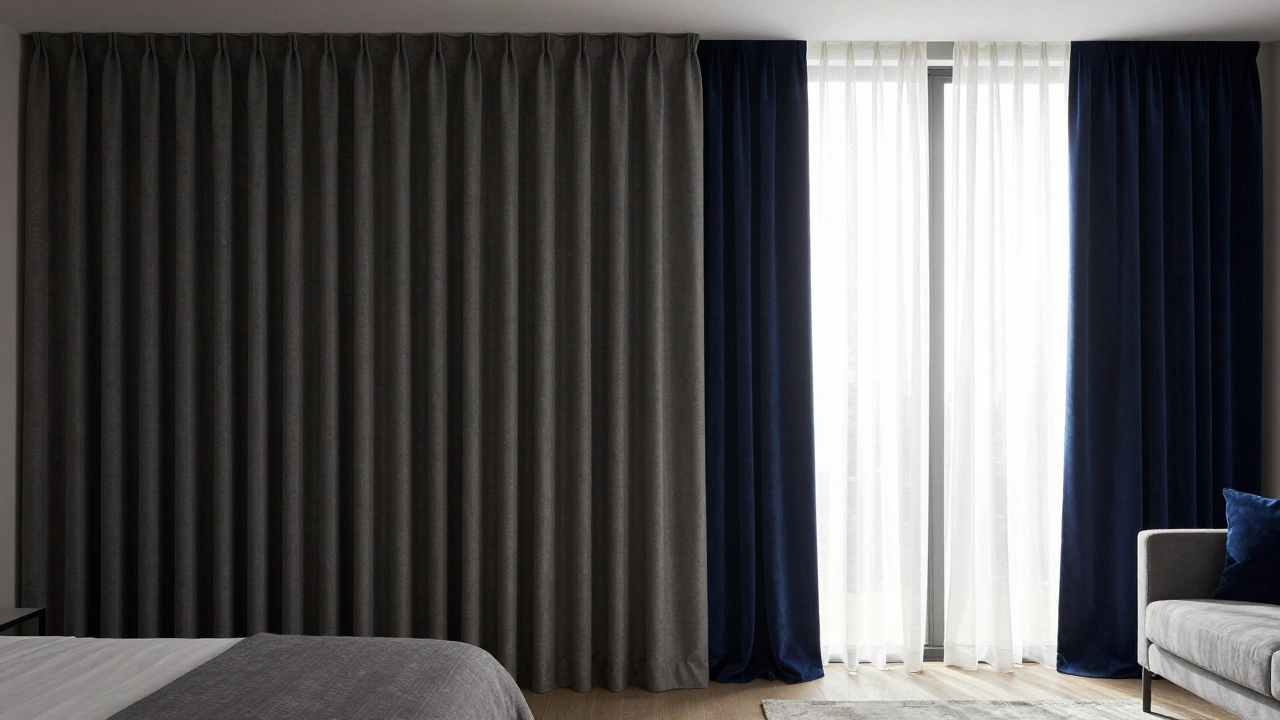
From a style perspective, mixing prevents monotony. If you love color and texture, limiting yourself to one fabric per room stifles creativity. Imagine a living room with a neutral beige sofa. If you hang plain beige curtains everywhere, the room disappears. But if you introduce a navy blue geometric pattern on the main feature wall and keep the side windows simple with sheer whites, you create depth. The eye has places to land, and the room feels layered and interesting.
Consider the architecture too. Older homes often have irregular window sizes. Forcing identical curtains onto a tall narrow window and a wide short one usually results in awkward bunching or wasted fabric. Customizing treatments to fit each opening respects the building’s original character.
How to Mix Without Messing Up
This is where most people stumble. They throw three different fabrics together and wonder why it looks messy. The secret isn’t randomness; it’s cohesion. You need a unifying thread that ties disparate elements together. Here are three reliable strategies:
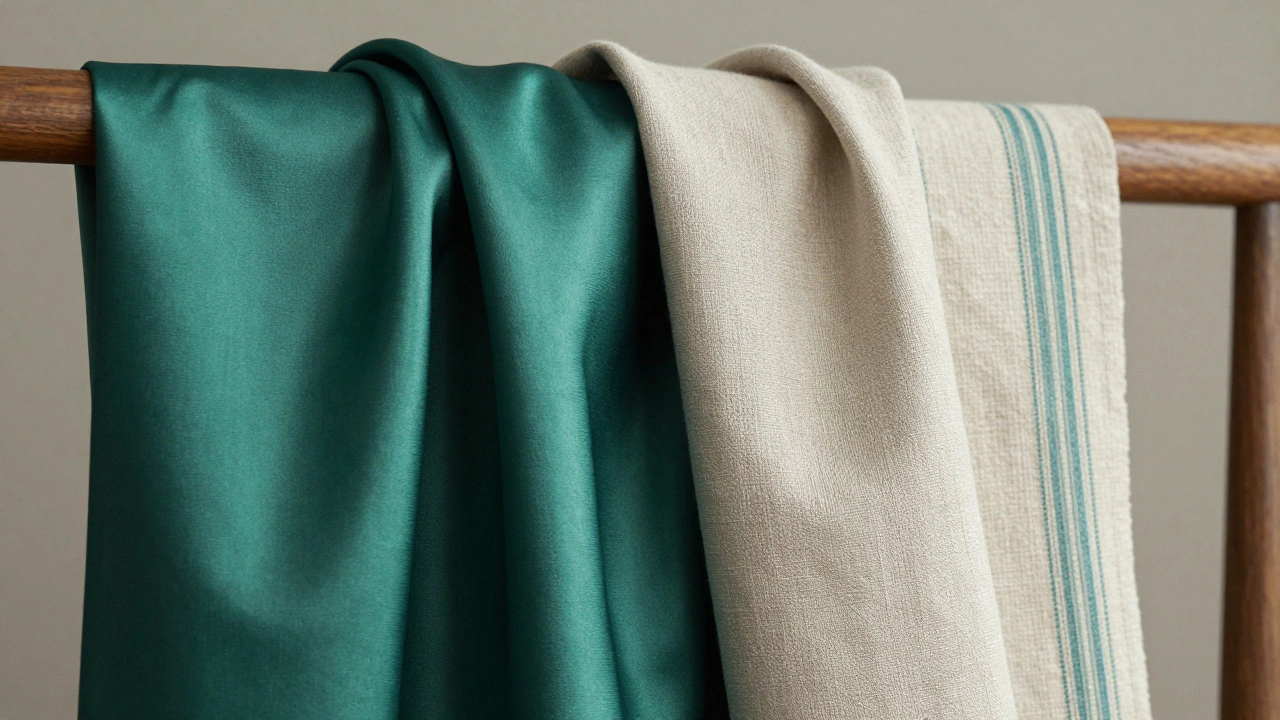
- Stick to a Color Palette: Even if the patterns differ, ensure the colors belong to the same family. Pair a striped teal curtain with a solid emerald green one. Both pull from the cool spectrum, so they read as companions rather than rivals.
- Vary Texture, Not Pattern: If you’re nervous about clashing prints, go textural. Combine smooth silk with rough-hewn linen. The contrast adds richness without the risk of visual chaos. Just keep the tones similar-like oatmeal and cream.
- Use Hardware as the Anchor: If the fabrics are wildly different, unify them with identical rods and finials. Black matte metal rods running across all windows create a strong horizontal line that organizes the view. The hardware becomes the common denominator.
| Factor | Matching Curtains | Mixing Curtains |
|---|---|---|
| Visual Impact | Calm, orderly, minimalist | Dynamic, layered, personalized |
| Best For | Small rooms, bedrooms, formal spaces | Large open plans, eclectic styles, multi-functional rooms |
| Cost Efficiency | High (bulk buying) | Variable (can mix high/low end) |
| Design Skill Required | Low | Medium to High |
| Risk Factor | Boredom, sterility | Clutter, lack of cohesion |
Functional Zoning in Open-Plan Living
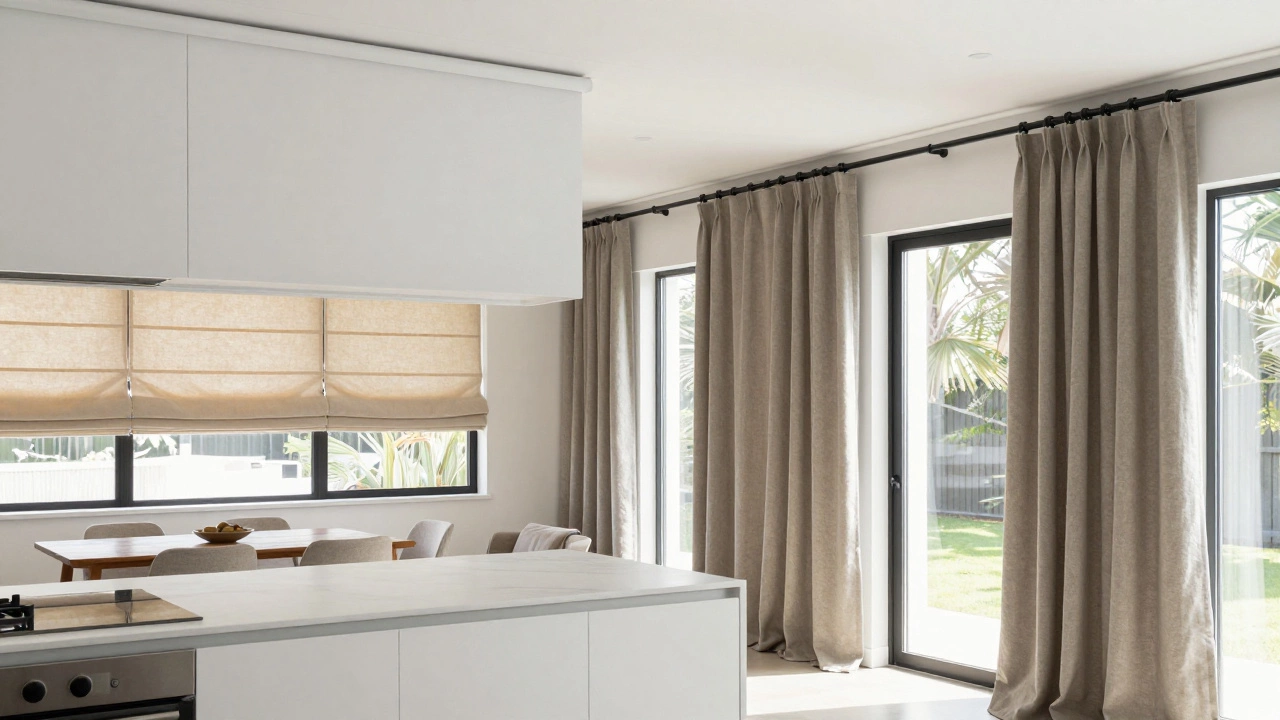
In modern Australian homes, open-plan layouts are everywhere. You’ve got the kitchen flowing into the dining area, which spills into the lounge. These zones share walls but serve very different purposes. Should the curtains match here?
Usually, no. And here’s why: function dictates form. The kitchen window likely needs easy-to-clean vinyl or roller blinds because grease and splashes happen. The dining area might benefit from elegant roman shades that fold neatly away during meals. The lounge wants plush drapes for acoustics and coziness.
If you force the same heavy velvet drape over the kitchen sink, you’ll spend half your life scrubbing it. Instead, treat each zone as a mini-room. Use the ceiling height and flooring continuity to bind the space, but let the window treatments reflect the activity below. This creates subconscious cues for behavior. Soft textures invite lounging; sleek surfaces encourage eating and cleaning.
To keep it from looking disjointed, maintain consistent mounting heights. Hang all rods at the same level relative to the ceiling, even if the window sizes differ. This creates a clean horizontal line that guides the eye across the entire open space, tying the disparate treatments together visually.
Common Mistakes to Avoid
I see these errors all the time, and they’re easy to fix before you buy anything.
- Ignoring Light Direction: Don’t put heavy dark curtains on a north-facing window that barely gets sunlight. It will swallow what little light exists. Save those for south or west exposures where glare is an issue.
- Mismatched Lengths: Unless you’re going for a deliberately deconstructed look, ensure hemlines align. Floor-length curtains should touch the floor uniformly. Skimming the sill should do so evenly. Uneven hems look sloppy, not stylish.
- Overcomplicating Patterns: If you mix two patterned curtains, one must dominate. A large-scale floral paired with a tiny polka dot can work if one is subtle. Two loud prints fighting for attention create visual vibration that hurts the eyes.
- Forgetting Sheer Layers: Mixing opaque and sheer curtains is smart. But don’t layer them haphazardly. Use sheers as a base layer for privacy during the day, and heavier drapes for night. Keep the sheer color neutral so it doesn’t clash with the main drape.
Material Matters: Fabric Choices by Room
Your choice of fabric influences whether mixing works. Some materials naturally pair better than others. Linen blends well with almost anything because of its organic, slightly imperfect texture. Cotton offers crispness and structure. Velvet adds drama and weight.
In Perth, our climate swings from mild winters to hot summers. This means functionality is key. In summer, you want breathable fabrics that don’t trap heat. Linen and cotton are ideal. In winter, thermal-lined polyester or wool blends help retain warmth. Mixing these seasonal needs means your curtains might change annually. That’s okay. Design isn’t permanent.
If you’re mixing fabrics within the same season, consider opacity. A translucent sheer next to a dense blackout panel creates a nice gradient of light control. Just ensure the lining colors are compatible. A white-lined sheer next to a black-backed velvet can look jarring if the reverse sides show when closed.
Final Thoughts on Cohesion
So, should all curtains in a room be the same? Only if you value uniformity over personality and function. Most people prefer homes that feel responsive to their daily lives. That means adapting window treatments to light, privacy, and style needs individually.
The goal isn’t perfection; it’s harmony. You don’t need identical curtains to have a cohesive room. You need intention. Ask yourself: What does this window do? How much light does it get? What mood do I want here? Answer those questions honestly, and the curtain choices will follow naturally. Trust your instincts, test samples in the actual light, and don’t be afraid to break the rules if it makes your home feel more like you.
Can I mix different curtain styles in the same room?
Yes, absolutely. Mixing styles like grommet-top and pinch-pleat curtains can add visual interest. To keep it cohesive, ensure the colors or textures relate to each other, and use matching hardware rods to tie the look together.
Is it okay to have different length curtains in one room?
Generally, no. Varying lengths can look unintentional and messy. Aim for consistent hemlines, whether they pool slightly on the floor, kiss the floor, or skim the sill. Uniformity in length creates a polished appearance.
How do I mix patterned and solid curtains?
Pick a dominant color from the patterned curtain and use that as the solid color for the other windows. For example, if your patterned drape has blue and grey stripes, choose a solid grey or blue curtain for the adjacent window. This creates a clear visual link.
Should curtains match the walls or the furniture?
Neither strictly. Curtains should complement the overall palette. If walls are neutral, curtains can pop with color. If furniture is bold, curtains might recede with a neutral tone. Think of them as part of the whole composition, not isolated matches.
What if my windows are different sizes?
Customize the width and drop for each window. You can still use the same fabric or style, but tailoring the dimensions ensures proper proportion. Alternatively, use different fabrics that share a color scheme to accommodate varying shapes elegantly.