Curtain & Radiator Compatibility Checker
Your Setup
Recommendation
💡 Select your curtain details above to see how they interact with your hot water baseboard heater.
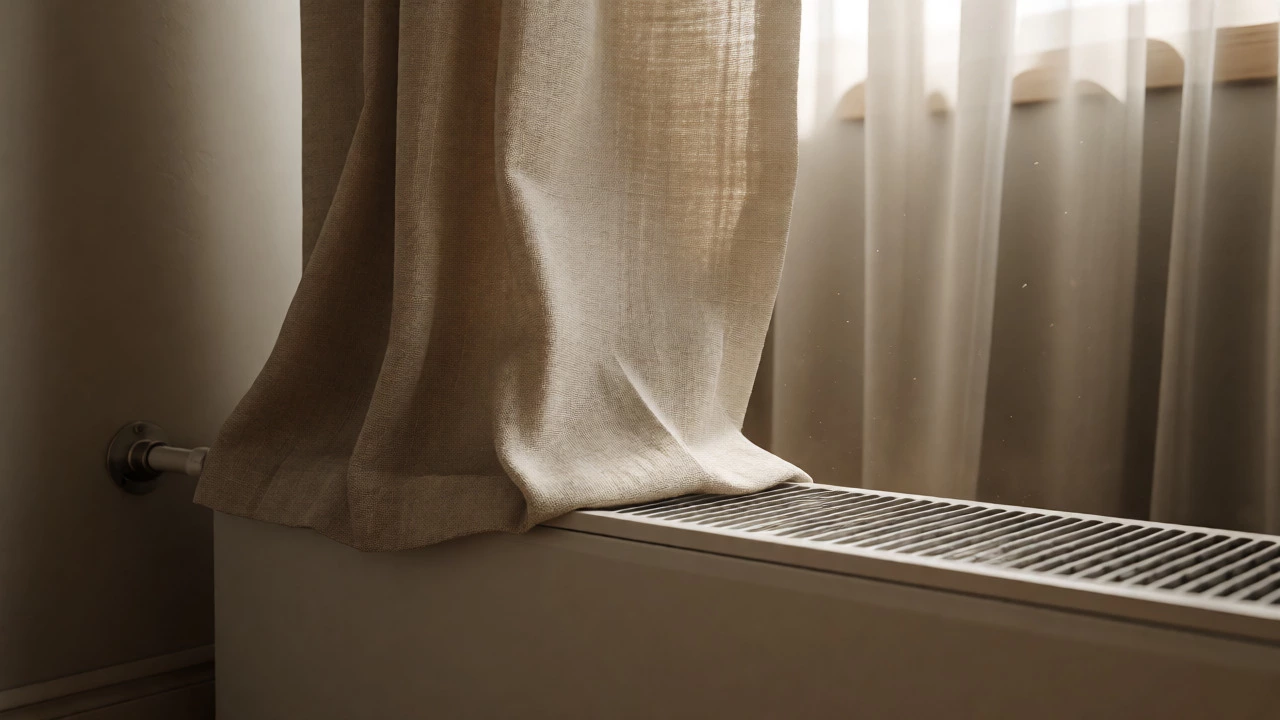
You just bought those gorgeous linen drapes. They’re perfect for the room’s vibe. But then you hold them up against the wall and realize they’ll hang right over that chunky metal radiator under your window. Do you let them drape over it? Or do you cut them short so they hover awkwardly above the heat source? This is one of the most common dilemmas in home decor, and getting it wrong can either ruin your energy bill or make your windows look like a sad afterthought.
Hot water baseboards, also known as hydronic radiators, are heating systems that circulate heated water through pipes located at floor level to warm a room via convection and radiation. Unlike electric heaters, they rely on airflow to distribute warmth. When you place fabric directly in front of them, you aren’t just hiding an ugly pipe; you’re potentially blocking the very mechanism that keeps your house comfortable.
The Physics of Heat and Fabric
Think about how a hot water baseboard works. It heats the air touching the metal fins. That warm air rises, creating a convection current that pushes cold air from the rest of the room toward the heater to be warmed up again. If you throw a heavy velvet curtain over this process, you’re essentially putting a lid on a boiling pot. The heat gets trapped between the curtain and the wall. Your thermostat might think the room is still cold because the sensor is far away, so it cranks up the boiler. Meanwhile, the space behind your curtains becomes a sauna, and your living room stays chilly.
This isn’t just theory. Home energy audits often show that obstructing radiators can reduce heating efficiency by 10% to 20%. That’s real money out of your pocket every month during winter. However, if you live in a drafty old house, sometimes covering the baseboard actually helps block cold air coming from the uninsulated exterior wall behind the radiator. So, context matters. Is your window leaking cold air? Then the curtain acts as an insulator. Is your room already warm but feels uneven? Then the curtain is likely trapping too much heat.
Aesthetic Choices: Length and Style
Let’s talk about looks. There are three main ways to handle curtains near baseboards, each with its own visual impact.
- Floor-Length: These touch the floor or pool slightly. They look luxurious and elongate the window. But if they hit the baseboard, they will get dusty, stained, and possibly scorched if the radiator runs hot enough to brown synthetic fibers.
- Sill-Length: These end exactly at the bottom of the window sill. This leaves the baseboard completely exposed. It’s clean and modern but can make the window feel smaller and less dramatic.
- Apron-Length: These hang just below the sill, usually 6 inches down. This is the middle ground. It hides the top of the baseboard but leaves the lower half visible.
If you choose floor-length curtains, you have to decide whether to break the line of the baseboard. Many designers recommend letting the curtain overlap the baseboard by an inch or two. Why? Because if you stop the curtain just above the baseboard, you create a gap where dust collects and light leaks through. It looks unfinished. Overlapping creates a seamless flow from window to floor, even if it means dealing with the heat issue.
Material Matters More Than You Think
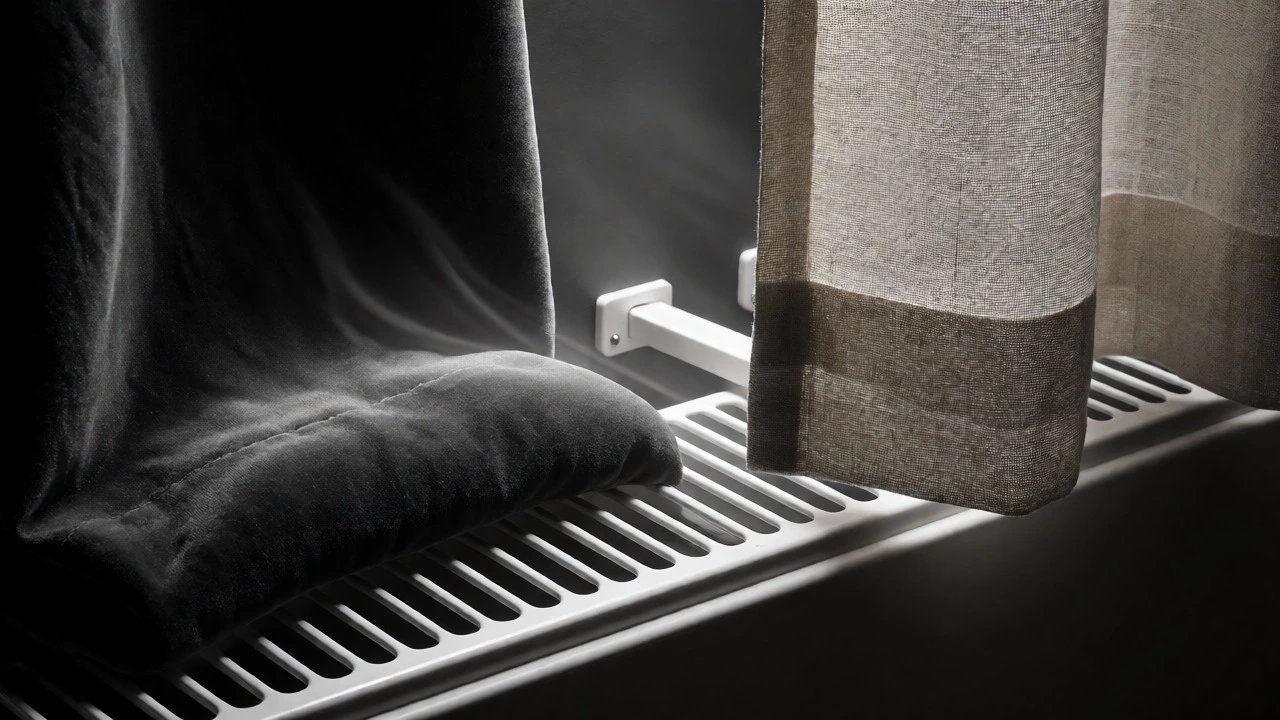
Not all fabrics react to heat the same way. Synthetic materials like polyester or nylon can melt or discolor when placed too close to a hot surface. Natural fibers like cotton, linen, or wool breathe better and resist scorching longer. But heavier fabrics block more heat. Here is a quick breakdown of how different materials interact with hydronic heating.
| Material | Heat Resistance | Airflow Permeability | Aesthetic Impact |
|---|---|---|---|
| Heavy Velvet | High (can retain heat) | Low (blocks convection) | Luxurious, formal |
| Linen | Moderate (natural fiber) | Medium-High (breathable) | Casual, textured |
| Polyester Blend | Low (risk of melting/scorching) | Variable | Durable, affordable |
| Sheer Voile | High (minimal heat buildup) | Very High | Light, airy |
If you love the look of heavy drapes, consider lining them with a reflective thermal backing. This reflects some of the heat back into the room rather than letting it absorb into the thick fabric. Alternatively, use sheer curtains paired with heavier ones you only draw at night. During the day, the sheers allow heat to pass through while maintaining privacy.
Practical Solutions for Heat Blockage
So, you want the full-length look without losing 15% of your heating efficiency. What do you do?
First, check the clearance. Measure the distance from the wall to the front of the baseboard. Most hydronic units protrude 3 to 4 inches. If your curtain rod is mounted close to the wall, the fabric will sit right against the metal. Move the rod further out from the wall using extended brackets. This creates an air gap. Even a 2-inch gap allows convection currents to rise past the curtain and enter the room. It’s a small change with a big payoff.
Second, consider pleat style. Deep pleats, like pinch pleats or goblet pleats, add volume. This volume can act as a buffer, keeping the bulk of the fabric away from the hottest part of the radiator. Flat panels, on the other hand, lie flat against the wall and trap heat more aggressively.
Third, manage the timing. Close your curtains only when the sun is out to prevent glare, or at night to retain heat. If the radiator is running hard during a cold snap, open the curtains fully. Let the heat work. Don’t fight physics with decoration.
When to Definitely Not Cover Them
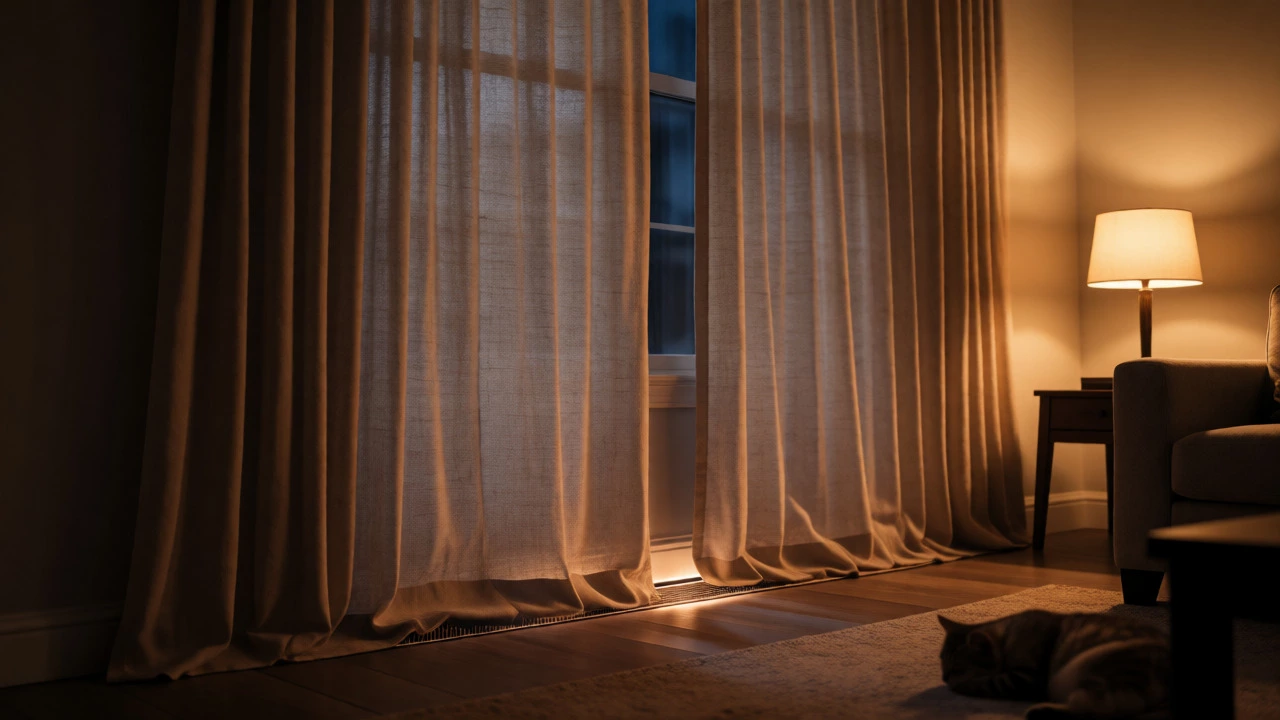
There are specific scenarios where covering the baseboard is a bad idea. If you have pets or small children, hanging fabric near a hot metal surface is a safety hazard. Cats love to rub against warm radiators, and their fur can ignite if the temperature spikes unexpectedly. Also, if your baseboards are noisy-clanking or ticking as they expand-you don’t want fabric muffling those sounds if they indicate a problem like air in the pipes.
Additionally, if you are trying to dry clothes indoors, don’t cover the radiator. The moisture needs to escape. Trapping it behind curtains leads to mold growth on the wall and musty smells in the fabric.
The Verdict
Should curtains cover hot water baseboards? Yes, but with conditions. For the best balance of aesthetics and efficiency, use floor-length curtains made of breathable natural fibers. Mount the rod several inches away from the wall to allow airflow. Avoid tight-fitting synthetic fabrics that hug the radiator. And always monitor your room temperature. If you find yourself turning up the thermostat despite having the heat on high, pull the curtains back and see if the room warms up faster. That’s your sign that the fabric was acting as a blanket for the heater, not the room.
Do curtains block heat from radiators?
Yes, heavy or tightly fitted curtains can block up to 20% of the heat generated by a radiator. This happens because the fabric traps the warm air rising from the unit, preventing it from circulating into the room. Using lighter fabrics or ensuring there is an air gap between the curtain and the radiator can mitigate this effect.
Can curtains catch fire from a hot water radiator?
While hot water radiators generally run cooler than electric steam radiators, they can still reach temperatures high enough to scorch or melt synthetic fabrics. Natural fibers like cotton and wool are safer. Always ensure curtains are not pressed tightly against the hot fins, especially if the system is older or poorly regulated.
How far should curtains hang from the floor?
For a polished look, curtains should either kiss the floor (touching lightly) or puddle slightly (1-2 inches extra length). If covering a baseboard, ensure the fabric does not drag excessively, which can collect dust and wear out quickly. A slight break is acceptable, but avoid large piles of fabric that restrict airflow around the radiator.
Should I use thermal curtains with radiators?
Thermal curtains can be beneficial if used correctly. They help retain heat in the room at night. However, during the day, if the sun is shining, keep them open to let solar gain warm the room. If the radiator is the primary heat source, ensure thermal curtains are pulled back or opened wide to allow the heat to disperse, otherwise, you waste energy heating the space behind the curtain.
What is the best curtain rod placement for radiators?
Mount the curtain rod at least 3 to 4 inches away from the wall. This distance ensures that the fabric hangs clear of the radiator's protruding fins. Use extended bracket arms if necessary. This creates a channel for warm air to rise and circulate freely into the room, maintaining heating efficiency while preserving the aesthetic of full-length drapes.