Interior Design Harmony Calculator
Step 1: What are your current curtains like?
Select the option that best describes your window treatments.
Patterned / Bold
Floral, geometric, striped, or large-scale designs.
Solid Color
Plain fabric in a single hue (navy, gray, beige, etc.).
Neutral / White
White, cream, or light linen acting as a blank canvas.
Heavy Texture
Velvet, brocade, or thick woven fabrics with strong texture.
Step 2: How large is the room?
Room size affects how much visual weight your textiles can carry.
Small
Cozy spaces where patterns can overwhelm.
Medium
Standard living rooms or bedrooms.
Large
Open-plan areas with plenty of negative space.
Step 3: What is the room's primary function?
Function dictates how formal or relaxed your textile choices should be.
Formal
Dining room, study, or guest room.
Casual
Living room, family room, or sunroom.
Bedroom
Personal retreat focused on comfort.
Step 4: What aesthetic do you prefer?
Choose the vibe you want to achieve.
Harmonious & Calm
Soft transitions, tonal dressing, minimal contrast.
Dynamic & Eclectic
Bold contrasts, mixed patterns, high energy.
Your Personalized Design Strategy
Based on your selections, here's your optimal approach:
There is a lingering fear in many of us that if our cushions do not perfectly match our window treatments, the room will look chaotic. For decades, this was the golden rule of interior design: buy the fabric for your drapes, then get the exact same bolt to make throw pillows. It created a safe, symmetrical, and undeniably tidy look. But safety rarely equals style in modern homes.
The short answer is no, your cushions should not match your curtains exactly. In fact, doing so often makes a space feel flat, dated, or like a hotel lobby from the early 2000s. The goal of contemporary interior design is harmony, not uniformity. You want your eye to travel around the room, finding connections between objects without getting stuck on repetitive patterns. When every soft surface looks identical, you lose depth and visual interest.
Why Exact Matching Feels Dated
To understand why we moved away from the "matchy-matchy" aesthetic, we have to look at how our perception of space works. Human eyes are drawn to contrast and variation. When you place two identical textures side by side-say, a floral curtain panel and a pillow with the same floral print-the brain registers them as a single block rather than distinct elements. This flattens the room's dimensionality.
Exact matching creates a static environment that lacks narrative. A home tells a story through its objects. If everything comes from the same collection, the story has only one chapter. By mixing different fabrics, colors, and scales, you introduce complexity. Think of it like music. A song played on one instrument at one volume is boring. A symphony works because different instruments play different notes that complement each other. Your sofa, your windows, and your rug are those instruments.
Consider the difference between a rental property and a designer’s portfolio. Rentals often use matched sets because they are durable, easy to replace, and appeal to a broad, conservative taste. Designer homes, however, rely on curation. They mix vintage finds with new purchases, bold solids with subtle textures. The result feels lived-in and personal, not staged.
The Art of Harmonizing Textiles
If matching is out, what is in? The answer is color harmony the strategic use of complementary hues and tones to create balance. You don't need the same fabric, but you do need a relationship between the textiles. There are three main ways to achieve this without falling into the trap of exact duplication.
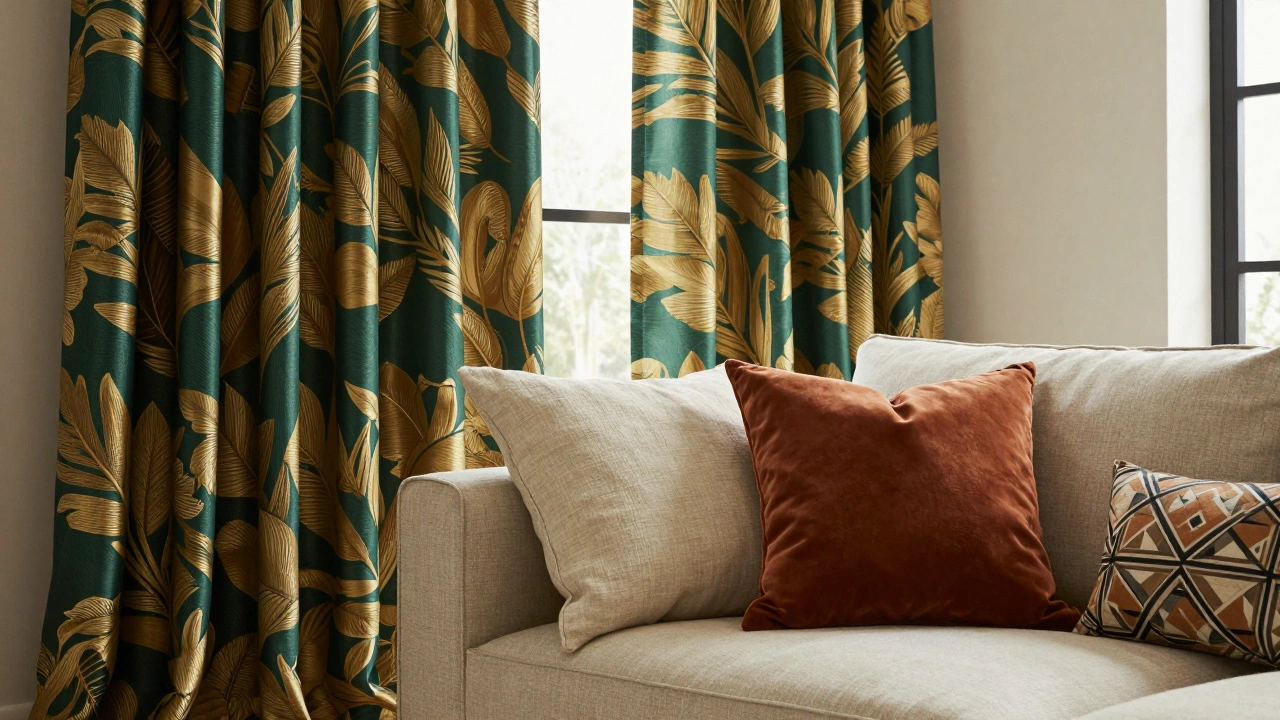
First, pick up a secondary color from your curtain pattern. If your curtains are navy blue with small gold dots, don't buy navy and gold pillows. Instead, choose solid cream pillows to break up the dark, or perhaps a textured rust-colored cushion that complements the warmth of the gold. This creates a dialogue between the window and the seating area. The eye sees the connection but also notices the difference.
Second, vary the scale of your patterns. This is crucial when working with busy designs. If your curtains feature a large-scale botanical print, avoid using pillows with medium-sized leaves. Instead, go for solid colors or very small geometric shapes. Alternatively, if your curtains are plain linen, you can afford to be bolder with your cushions, introducing larger stripes or abstract art prints. The key is ensuring that no two patterned items compete for attention at the same size level.
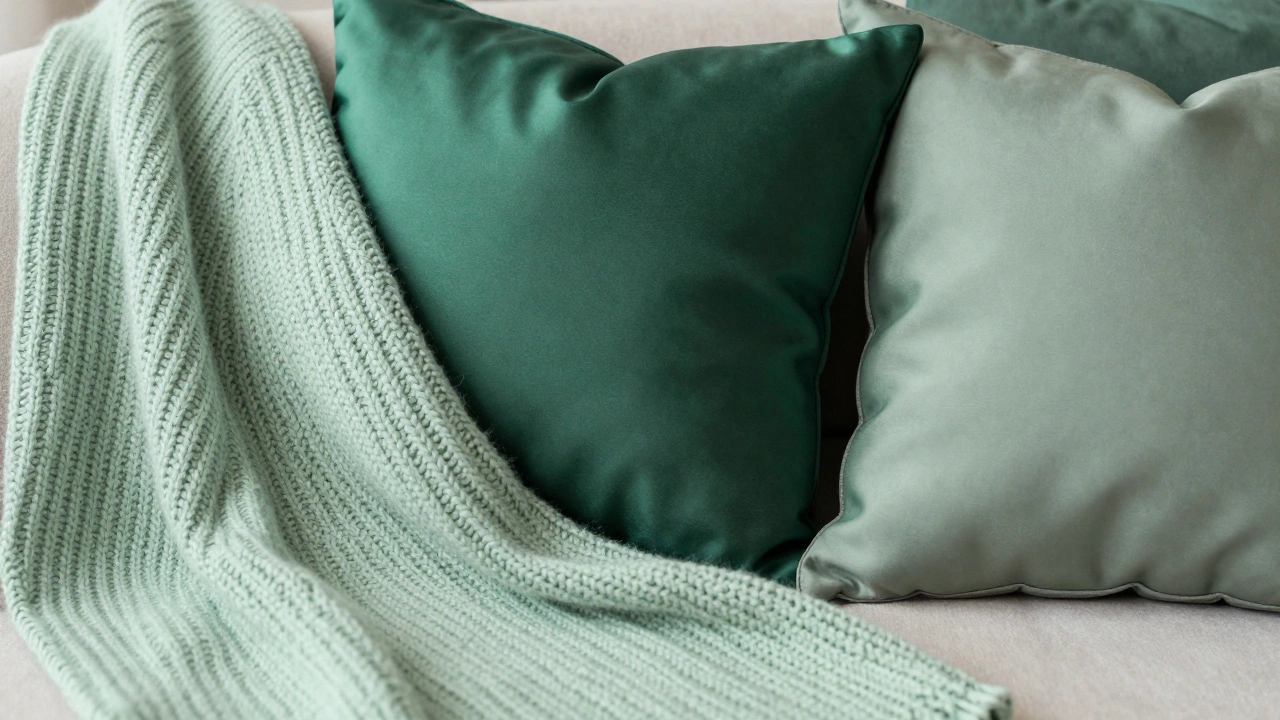
Third, mix textures within the same color family. This is known as tonal dressing. Imagine a room with sage green curtains. Instead of matching sage green velvet pillows, try a chunky knit throw in a lighter mint shade, paired with a smooth silk cushion in a deeper forest green. The colors are related, but the materials tell different stories. Light reflects off silk differently than it does off wool, creating shadows and highlights that add richness to the space.
| Strategy | Best For | Risk Factor | Visual Impact |
|---|---|---|---|
| Exact Matching | Small rooms, rentals | High (looks dated) | Flat, uniform |
| Color Echoing | Most living spaces | Low | Cohesive, balanced |
| Texture Mixing | Tonal schemes | Medium | Rich, layered |
| Contrast Pairing | Bold, eclectic styles | Medium-High | Dynamic, energetic |
Using Neutral Anchors to Bridge Gaps
One of the biggest mistakes people make when trying to avoid matching is swinging too far in the opposite direction and choosing completely unrelated colors. This leads to a disjointed look where nothing connects. To prevent this, use neutral anchors. These are items that act as a bridge between your curtains and your cushions.
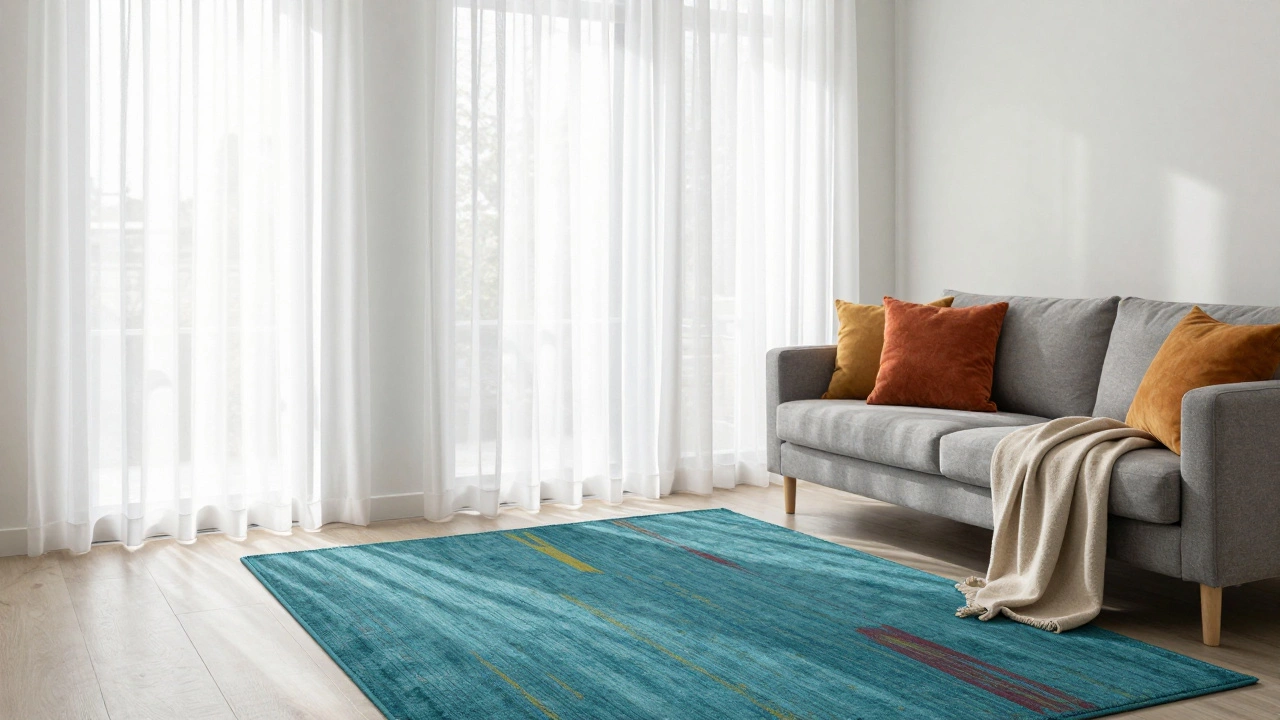
Your sofa is usually the largest anchor. If your sofa is gray, it can hold both warm-toned curtains and cool-toned cushions. If your curtains are a vibrant teal, you might worry about clashing with orange cushions. But if you place a neutral beige throw blanket over the sofa arm, it softens the transition. The blanket acts as a buffer zone, allowing the eye to rest before moving from one strong color to another.
Rugs also serve as powerful anchors. A rug often contains multiple colors. If your rug has hints of burgundy and mustard, you can pull those specific shades into your cushions, even if your curtains are a completely different hue, like charcoal gray. The rug ties the floor to the furniture, while the curtains frame the view. As long as the cushions reference something else in the room besides the curtains, you are safe.
Context Matters: Room Function and Size
Not all rooms require the same approach. The function of the space dictates how much contrast you can handle. In a formal dining room, where symmetry is often desired, closer matching between window treatments and chair cushions may still be appropriate. Here, the goal is elegance and order, not casual comfort. However, even in these spaces, slight variations in sheen or weave can prevent the look from becoming stiff.
In contrast, a family living room or a sunroom benefits from high-contrast mixing. These are spaces where life happens. Kids run around, pets jump on sofas, and sunlight fades fabrics unevenly. Using different materials makes maintenance easier. If a spill happens on a cotton cushion, it’s less tragic than if it ruins a delicate silk pillow that matches your expensive drapes. Practicality should always inform your aesthetic choices.
Room size also plays a role. In small spaces, large-scale patterns on both curtains and cushions can overwhelm the eye. Keeping curtains light and airy, while using darker, solid-colored cushions, helps define the seating area without closing in the walls. In large rooms, you have more canvas to work with. You can introduce multiple pattern types, such as ikat curtains paired with geometric pillows, because there is enough negative space to let each element breathe.
Common Pitfalls to Avoid
Even with the best intentions, it is easy to stumble. One common error is ignoring the undertones of your colors. A white curtain with yellow undertones will clash with a white cushion that has blue undertones. They won’t look like a harmonious pair; they will look dirty against each other. Always check your fabrics in natural light before committing. Hold them up together to see if the whites or neutrals truly align.
Another pitfall is overcrowding with patterns. If your curtains are striped, your rug is checked, and your sofa is plaid, adding patterned cushions is asking for trouble. In this scenario, stick to solid-colored cushions that pick up one dominant hue from the existing mix. Let the solids provide relief from the visual noise. Remember, less is often more when dealing with complex textile combinations.
Finally, don't forget about hardware. The rods holding your curtains and the legs of your coffee table contribute to the overall texture palette. If your curtain rods are brass, consider adding metallic accents to your cushions, such as piping or embroidery. This subtle detail links the architectural elements of the window to the soft furnishings, creating a cohesive loop that goes beyond just fabric.
Building a Cohesive Look Step-by-Step
Ready to update your space? Start by identifying your fixed elements. What cannot change? Usually, this is the sofa and the flooring. Next, look at your curtains. Are they a statement piece or a background player? If they are bold, treat them as the primary color source. If they are neutral, they are simply a frame.
- Select your base color from the curtains or sofa.
- Choose a secondary color that complements the base.
- Pick a texture that contrasts with the curtain material (e.g., velvet vs. linen).
- Add one accent color for pop, ensuring it appears elsewhere in the room (art, books, decor).
- Layer with neutrals to ground the scheme.
This method ensures that every piece has a reason to be there. No item is an orphan. Each cushion relates to the curtains, the sofa, or the rug, creating a web of visual connections that feels intentional and designed.
Can I use the same fabric for curtains and cushions if I love it?
Yes, but limit it. Use the same fabric for one set of curtains and maybe one or two accent pillows, but keep the rest of the cushions in contrasting textures or solids. This prevents the room from looking like a showroom display.
What if my curtains are plain white?
Plain white curtains are a blank canvas. You have total freedom with your cushions. Mix bold colors, varied patterns, and rich textures. Just ensure the whites of your cushions (if any) match the undertone of the curtains to avoid a dirty appearance.
How do I coordinate cushions with patterned curtains?
Pick one or two secondary colors from the curtain pattern and use them as solid colors for your cushions. Avoid using the exact same pattern on the pillows unless you want a very traditional, formal look.
Is it okay to have mismatched cushions?
Absolutely. Mismatched cushions are actually preferred in modern design. They add personality and comfort. Just ensure they share a common color palette or texture theme to maintain cohesion.
What is the best texture to pair with heavy velvet curtains?
Pair heavy velvet curtains with lighter, rougher textures like linen, cotton, or chunky knits. This contrast in weight and finish adds depth and prevents the room from feeling too heavy or oppressive.