Interactive Mirror Simulator
Explore how different mirror shapes change the way you see objects. Adjust the object distance to observe changes in image size, orientation, and clarity.
How It Works
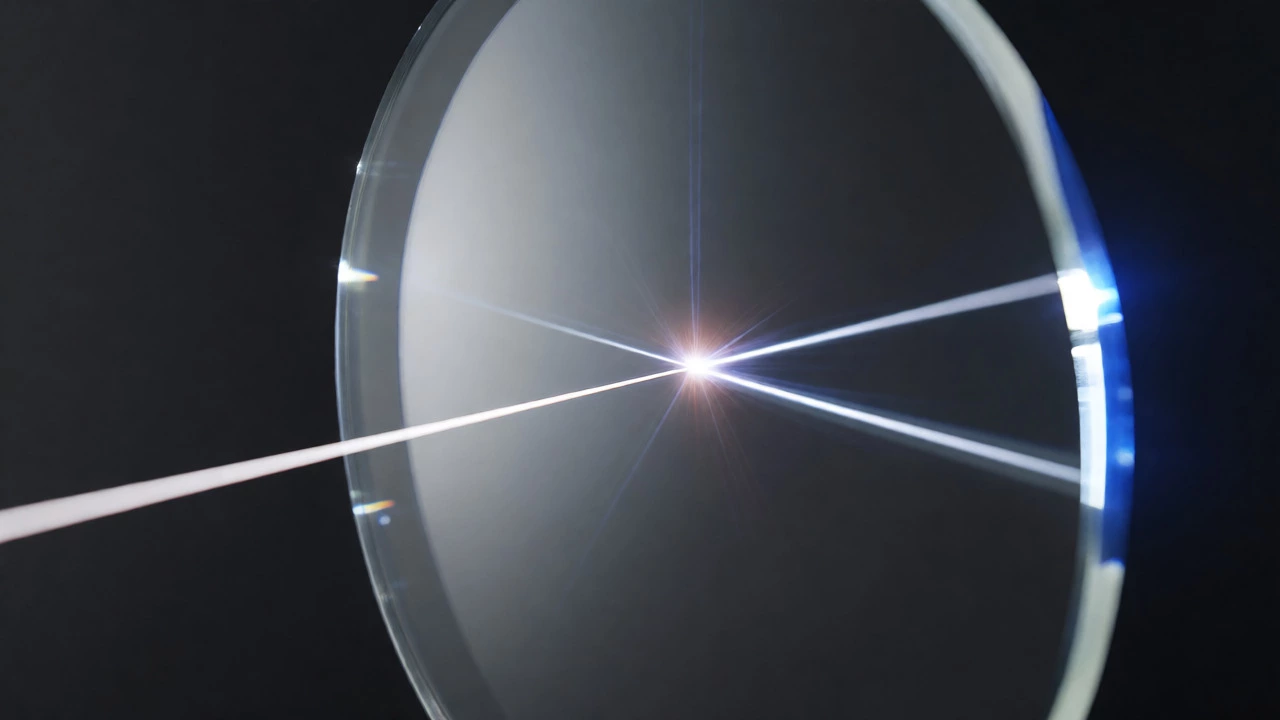
A plane mirror reflects light at equal angles, creating a virtual image behind the glass. This is why your reflection appears at the same distance behind the mirror as you are in front of it. Curved mirrors distort this relationship, magnifying or shrinking images depending on their curvature and the object's position.
You walk into a room, glance at the wall, and see your reflection staring back. It looks exactly like you-same height, same width, just reversed left-to-right. You might call it a "flat mirror," but if you ask an optician or a physicist, they’ll look at you funny. The technical term is plane mirror. While "flat" describes the shape, "plane" describes the geometry that makes the reflection work the way it does. Knowing this distinction isn’t just about sounding smart at dinner parties; it helps you understand why some mirrors distort your face while others don’t, and which one you actually need for your bathroom or hallway.
The Physics Behind the Name
So, why do we switch from "flat" to "plane"? In everyday language, flat means not bumpy. But in optics, a plane mirror is a reflective surface that is perfectly smooth and flat on a microscopic level. This precision matters because light behaves predictably when it hits a smooth surface. If the surface were even slightly uneven-like cheap aluminum foil-you’d get a distorted, blurry image instead of a sharp reflection.
The magic happens through specular reflection. When light rays hit a plane mirror, they bounce off at the exact same angle they arrived. This consistent bouncing creates a virtual image that appears to be behind the glass. Your brain interprets these reflected rays as coming from a point behind the mirror, which is why you feel like there’s another version of you standing in the wall. Concave or convex mirrors curve the surface, changing how light bounces and distorting the size or orientation of the image. A plane mirror doesn’t play games-it gives you the truth, mirrored.
Common Names and Technical Terminology
If you’re shopping for a mirror, you’ll encounter several terms that refer to the same basic object. "Flat mirror" is the colloquial term most people use. "Plane mirror" is the scientific term used in textbooks and by engineers. You might also hear "front-surface mirror," which refers to a specific type of high-quality plane mirror where the reflective coating is on the front of the glass rather than the back. This eliminates the double-image effect sometimes seen in cheaper mirrors where light reflects off both the glass surface and the silver backing.
Another term you might run into is "first-surface mirror." This is essentially the same as a front-surface mirror. These are often used in telescopes and lasers because they prevent light absorption by the glass layer. For your living room, however, standard back-silvered plane mirrors are perfectly fine. They protect the delicate metallic coating from scratches and oxidation, ensuring your reflection stays clear for years.
How Plane Mirrors Differ from Curved Variants
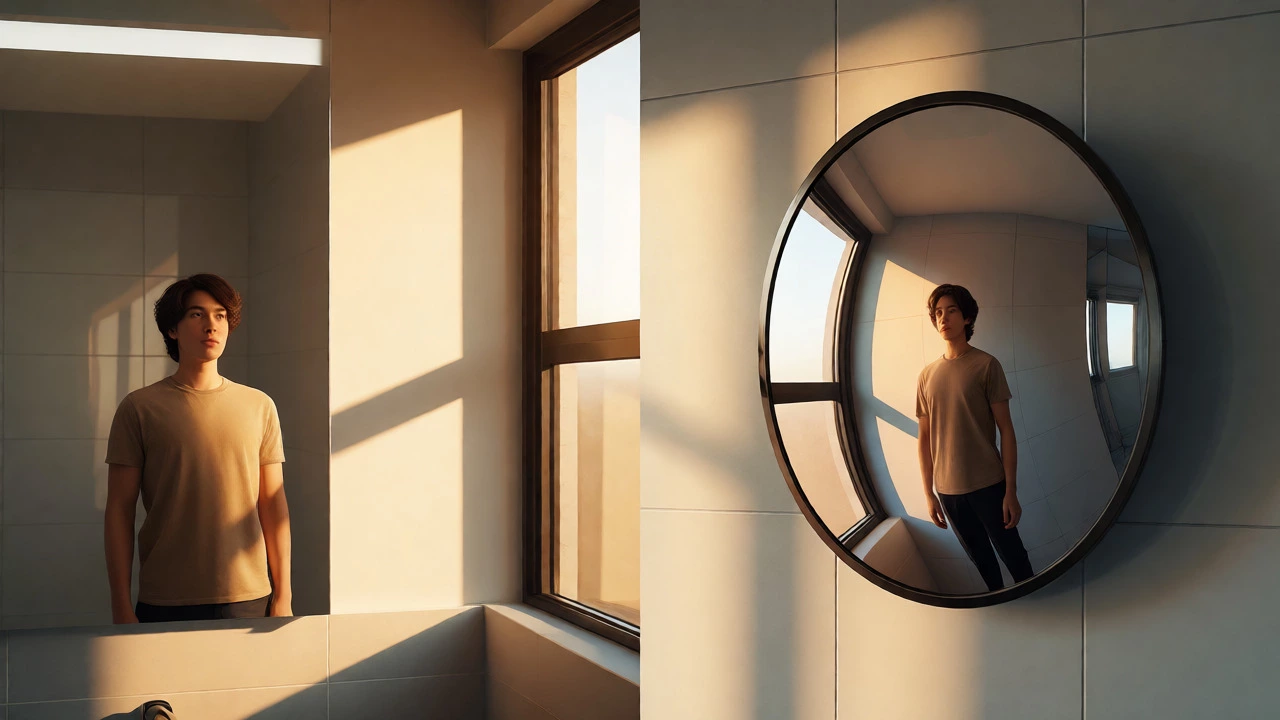
To really grasp what a plane mirror is, it helps to compare it to its curved cousins: concave and convex mirrors. Each type manipulates light differently, resulting in distinct visual effects. Here’s a breakdown of how they stack up against each other.
| Mirror Type | Surface Shape | Image Characteristics | Common Use Cases |
|---|---|---|---|
| Plane Mirror | Flat | Virtual, upright, same size, laterally inverted | Bathrooms, dressing rooms, periscopes |
| Concave Mirror | Curved inward (like a cave) | Can be magnified or inverted depending on distance | Makeup mirrors, shaving mirrors, headlights |
| Convex Mirror | Curved outward (like a ball) | Virtual, upright, diminished (smaller) | Security mirrors, car side-view mirrors |
Notice how the plane mirror stands out for accuracy. If you buy a makeup mirror labeled "magnifying," it’s likely concave. If you want to see your full outfit without distortion, you need a plane mirror. Confusing these can lead to bad purchases-imagine buying a security mirror for your entryway and realizing it makes everyone look ten feet tall because it’s actually concave!
Why Lateral Inversion Happens
Ever wondered why text looks backwards in a mirror, but your head doesn’t flip upside down? This phenomenon is called lateral inversion, and it’s a hallmark of plane mirrors. Contrary to popular belief, mirrors don’t actually swap left and right. They swap front and back. When you raise your right hand, the image raises the hand on the opposite side of the vertical axis. Because we interpret reflections as a person facing us, our brains automatically rotate the image mentally, creating the illusion of a left-right swap.
This behavior is unique to plane mirrors. Curved mirrors can invert images vertically as well, especially when the object is far away. With a plane mirror, the top stays top and the bottom stays bottom. This consistency makes them ideal for checking appearance. If you’re ever unsure whether a mirror is truly flat, hold a book with text close to it. If the letters appear reversed but upright, you’ve got a true plane mirror.

Practical Applications in Home Decor
In interior design, plane mirrors are powerful tools. They don’t just show you your reflection; they manipulate space. Because they reflect light without distortion, they can make small rooms feel larger. Placing a large plane mirror opposite a window doubles the natural light entering the room. This is a favorite trick in apartments where square footage is limited.
However, placement matters. A plane mirror placed directly across from a cluttered corner will simply reflect the clutter. To maximize the effect, aim it at something pleasant-a plant, a piece of art, or a view outside. Frameless plane mirrors are particularly effective for modern aesthetics because they blend seamlessly into walls, creating an illusion of depth without adding visual weight. If you prefer a more traditional look, ornate frames around a plane mirror can serve as focal points while still providing accurate reflections.
Choosing the Right Glass Quality
Not all plane mirrors are created equal. The quality of the glass and the backing determines clarity and longevity. Standard float glass mirrors are affordable but may have slight green tints due to iron content. Low-iron glass, often marketed as "crystal clear," removes this tint for a truer color representation. This is crucial if you’re using the mirror for checking makeup colors or selecting outfits.
Also, consider the thickness. Thicker glass resists warping better over time. A thin sheet of glass mounted on a flexible frame might develop ripples, turning your perfect plane mirror into a funhouse distortion. Always check for flatness before installation. Lay the mirror on a level surface and shine a straight edge along the glass. Any gaps indicate curvature, meaning it’s not truly a plane mirror despite being sold as one.
Are flat mirrors and plane mirrors the same thing?
Yes, they are the same object described by different terms. "Flat" is the common everyday word describing the physical shape, while "plane" is the geometric term used in science and engineering to describe a perfectly flat two-dimensional surface. Both refer to a mirror that produces a non-distorted, upright reflection.
Why do I look wider in some mirrors?
If you look wider or taller than usual, the mirror is likely curved. Convex mirrors (curved outward) tend to shrink images, making you look smaller, while concave mirrors (curved inward) can magnify or stretch images depending on your distance. A true plane mirror will show your actual proportions without stretching or shrinking.
What is a first-surface mirror?
A first-surface mirror is a high-quality plane mirror where the reflective coating is applied to the front of the glass, not the back. This prevents light from passing through the glass twice, eliminating ghosting or double images. They are more expensive and fragile but offer superior clarity for professional photography and optical instruments.
Do plane mirrors reverse left and right?
Technically, no. Plane mirrors reverse front and back. The perception of left-right reversal is a result of how humans mentally rotate the reflected image to match their own perspective. Text appears backward because the characters themselves are asymmetric, highlighting this front-back inversion.
How can I tell if my mirror is truly flat?
Place a ruler or straight edge against the surface of the mirror. If there are visible gaps between the ruler and the glass, or if the reflection of the ruler appears bent, the mirror has curvature. A true plane mirror will show a straight, undistorted reflection of any straight object placed near it.