Rug Value & Price Estimator
Select your preferences below to see the estimated price range and expected lifespan for a standard quality rug.
Estimated Fair Price Range
Expected Lifespan:
Best Use Case:
You walk into a store or scroll through an online marketplace, and the price tags for rugs make zero sense. One looks identical to another, but one costs $150 while its neighbor demands $2,500. It’s frustrating. You just want a floor covering that doesn’t shed, smells weird, or flatten out after six months. So, what is the average price of a good rug? The honest answer isn't a single number; it’s a range determined by material, size, and construction method. If you’re looking for a rug that lasts more than five years in a high-traffic area, you’re generally looking at spending between $400 and $800 for standard sizes like 5x8 feet. But let’s break down why some rugs are cheap, which ones are worth the splurge, and how to spot a rip-off before your credit card gets charged.
The "Good" Rug Definition: What Are You Actually Paying For?
Before we talk dollars and cents, we need to agree on what "good" means. In the rug world, quality usually boils down to three things: fiber durability, knot density (for hand-knotted pieces), and backing stability. A "good" rug should resist crushing under furniture legs, hold up against vacuum cleaners, and not release toxic fumes (off-gassing) when you unroll it in your living room.
Most people confuse "expensive" with "high quality." That’s not always true. A $3,000 silk rug might be beautiful, but if you have dogs and kids, it’s a terrible investment. Conversely, a well-made $200 polypropylene rug might outlast a poorly made $600 wool blend. When I help friends in Perth choose rugs, I tell them to ignore the brand name initially and look at the specs. Is it natural fiber? Is it machine-tufted or hand-woven? These factors dictate the lifespan, which ultimately determines the value per year of use.
Material Matters: The Biggest Driver of Price
Fiber type is the single largest variable in rug pricing. Here is the reality of what different materials cost and how they perform.
| Material Type | Average Price Range (USD/AUD) | Lifespan Estimate | Best For |
|---|---|---|---|
| Polypropylene (Synthetic plastic fiber) | $100 - $250 | 2-4 Years | Renters, outdoor areas, low-budget spaces |
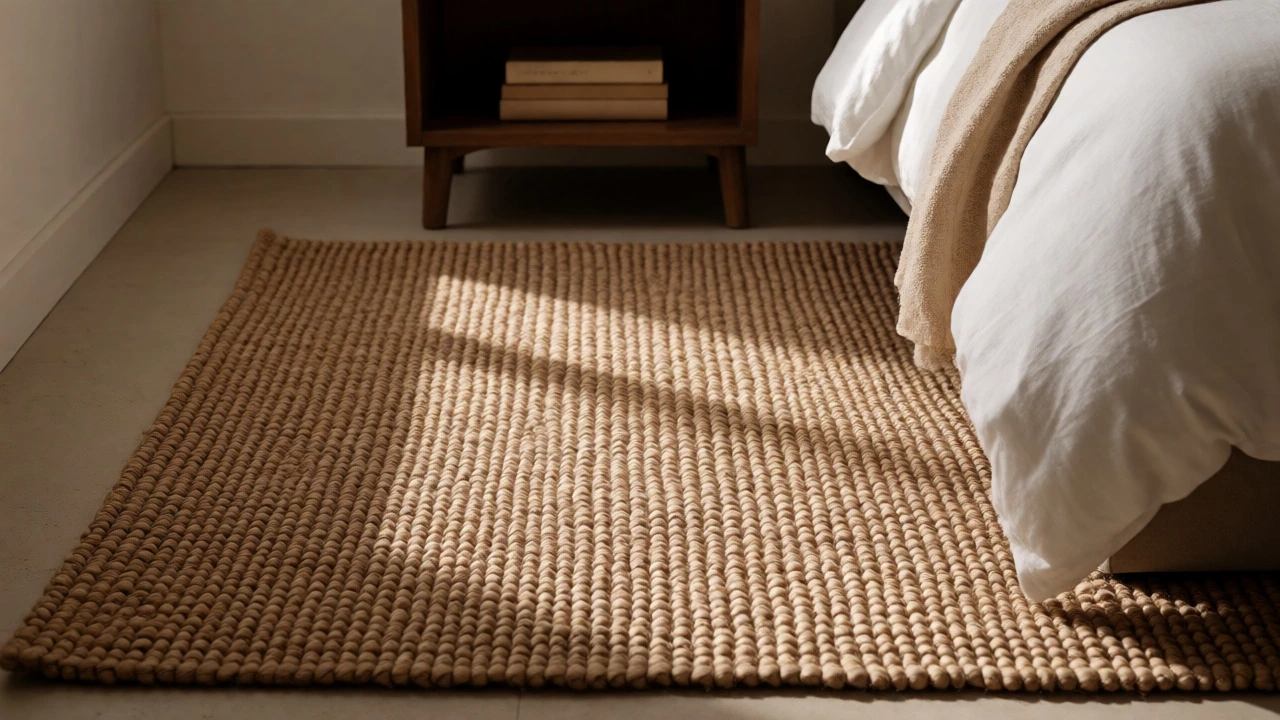
| Jute/Sisal (Natural plant fibers) | $150 - $350 | 3-5 Years | Boho decor, low-traffic bedrooms |
| Cotton (Flatweave or braided) | $200 - $450 | 3-6 Years | Kitchens, bathrooms, washable needs |
| Wool Blend (Mixed synthetic/natural) | $350 - $700 | 5-8 Years | High traffic living rooms, pets |
| 100% Wool (Hand-tufted or machine woven) | $600 - $1,500 | 10-20+ Years | Main living areas, long-term homes |
| Hand-Knotted Oriental/Persian (Artisanal production) | $1,500 - $5,000+ | 50+ Years | Investment pieces, heirlooms |
Notice the jump between synthetic and natural fibers? That’s because wool is expensive to source, process, and weave. However, wool is also naturally stain-resistant due to lanolin, a waxy substance on the sheep’s fleece. Synthetic rugs, particularly polypropylene (often sold as "Olefin"), are cheap because they are essentially plastic spun into thread. They don’t absorb spills, which sounds great until you realize they also don’t breathe, leading to a musty smell if they get wet underneath.
Construction Methods: Why Knots Cost Money
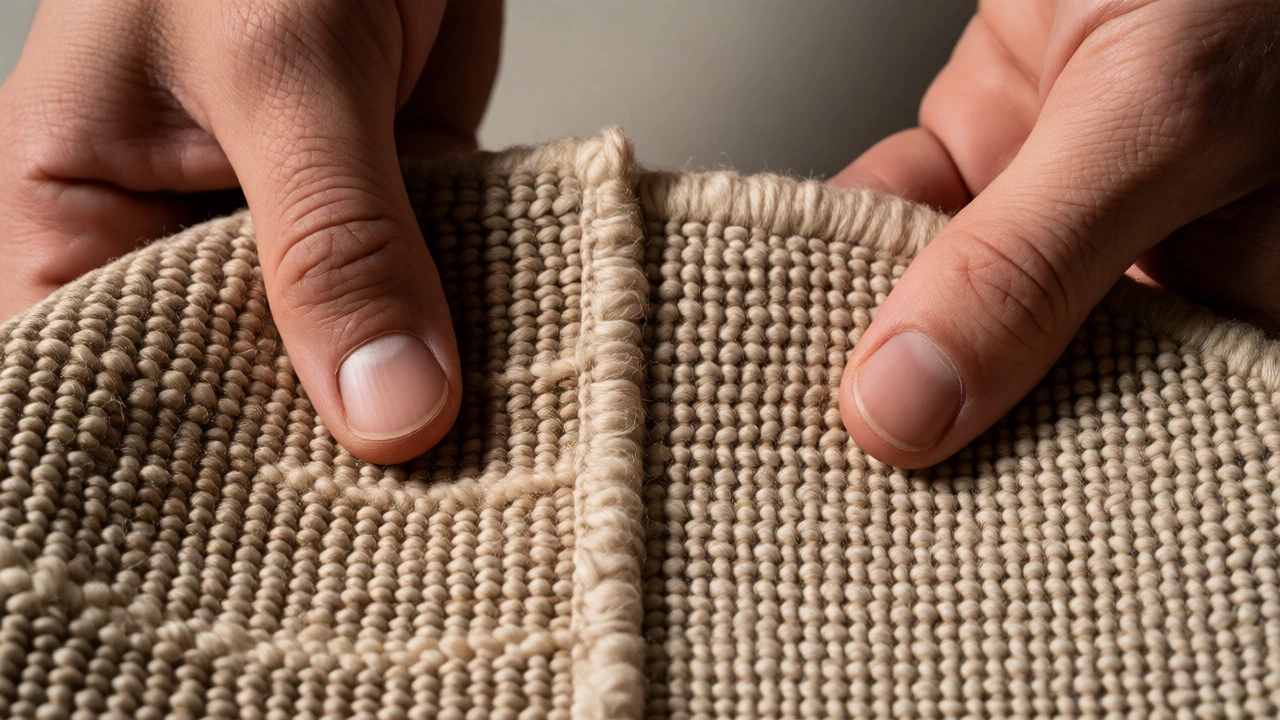
Have you ever flipped a rug over and looked at the back? That view tells you everything about the labor involved. The two main categories here are machine-made and handmade.
Machine-made rugs are produced on power looms. This includes tufted rugs (where yarn is punched into a canvas backing and glued down) and flat-weaves. Tufted rugs are popular because they can mimic the look of expensive Persian rugs for a fraction of the cost. However, the glue used to secure the pile can degrade over time, especially in hot climates like ours in Australia. If you buy a tufted rug, expect to replace it every 5-7 years.
Hand-knotted rugs are built knot by knot by an artisan. A small 3x5 foot rug might take a weaver three to six months to complete. The price reflects this labor. More importantly, hand-knotted rugs are incredibly durable because there is no glue holding the structure together-just tension and friction. If you drop a heavy bookshelf on a hand-knotted rug, it might dent temporarily, but it will spring back. A tufted rug might develop a permanent crease.
Size Scaling: The Non-Linear Price Jump
Here is a trap many buyers fall into: assuming price scales linearly with size. It doesn’t. Doubling the size of a rug often more than doubles the price. Why? Because larger rugs require more complex weaving processes, higher tension control on looms, and often higher-grade materials to prevent sagging in the center.
Let’s look at real-world examples based on current market trends in late 2026:
- Small Accent Rug (2x3 ft): A decent wool runner or accent piece typically runs $150-$300.
- Bedside Rug (3x5 ft): Expect to pay $300-$600 for quality wool.
- Living Room Standard (5x8 ft): This is the most common size. A "good" quality wool rug sits comfortably in the $600-$1,200 range.
- Large Area Rug (8x10 ft): Prices skyrocket here. A comparable quality wool rug jumps to $1,500-$3,000.
- Oversized (9x12 ft+): Often considered custom territory, these can easily exceed $4,000.
If your budget is tight, consider buying a smaller rug and placing it only under the front legs of your sofa. It anchors the space without breaking the bank.
Hidden Costs: Padding, Shipping, and Maintenance
The sticker price isn’t the final price. You need to account for three sneaky expenses.
First, rug pads. Never skip this. A good felt-and-rubber pad costs $50-$100 depending on size. It protects your hardwood floors from scratches and prevents the rug from sliding. Cheap foam pads degrade quickly and leave residue. Spend the extra money on a dense felt pad.
Second, shipping. Rugs are heavy and bulky. If you’re buying online, shipping a 9x12 rug can cost $50-$150. Some retailers offer free shipping, but check the return policy. Returning a large rug is often prohibitively expensive unless you have a specific "free returns" guarantee.
Third, cleaning. Wool rugs require professional cleaning every 1-2 years. In Perth, a deep clean for a medium-sized rug might cost $80-$150. Synthetics can often be hosed down, saving you this annual fee. Factor this into your long-term cost analysis.
Regional Variations: Why Location Changes the Bill
You might see a rug listed for $500 on a US website, but the landed cost in Australia could be $650. Import duties, GST (Goods and Services Tax), and international freight add up. If you’re shopping locally, support independent stores if possible. They often allow you to inspect the rug in person, which is crucial for checking color accuracy and texture.
In major cities like Sydney, Melbourne, or Perth, you’ll find a wider variety of stock, meaning less waiting time. Rural areas might face higher delivery fees. Always ask local dealers if they include delivery and setup. Sometimes, paying a premium locally saves you the headache of coordinating a third-party courier for a 50kg package.
How to Spot a Bad Deal (and a Bargain)
Not all expensive rugs are good, and not all cheap rugs are bad. Here’s how to audit a rug before you buy.
- The Bend Test: Fold the rug in half. If the backing cracks or shows white stress lines, the latex/glue is poor quality. Walk away.
- The Shedding Check: Rub your hand vigorously across the pile. If a handful of fibers comes off immediately, it will continue to shed for months. Some shedding is normal in new wool rugs, but excessive loss indicates short staple length fibers.
- Color Fastness: Damp a white cloth and rub a hidden corner. If dye transfers, it will bleed when you spill wine or coffee.
- Symmetry: For patterned rugs, check if the design aligns at the edges. Poor alignment suggests mass-produced cutting rather than careful weaving.
Bargains often exist in discontinued colors or slightly irregular handmade pieces. Ask sales staff if they have "seconds" or factory rejects. These rugs have minor imperfections (a skipped knot, a slight color variance) but are structurally sound and often discounted by 30-50%.
Final Verdict: Setting Your Budget
So, what is the average price of a good rug? For the average homeowner wanting a durable, aesthetically pleasing centerpiece for their living room, aim for $600 to $1,000 AUD for a 5x8 foot wool-blend or pure wool rug. This sweet spot balances longevity, comfort, and visual appeal without entering the luxury art-piece territory.
If you are renting or moving soon, stick to synthetics under $300. If you own your home and plan to stay for a decade, invest in hand-knotted wool starting at $1,500. Remember, a rug is a foundational element of your home. Skimping too much results in a flat, sad-looking floor that you’ll regret replacing in two years. Spend wisely, test thoroughly, and prioritize natural fibers where possible.
Is a $200 rug worth buying?
Yes, if it is a temporary solution, for a rental property, or for a low-traffic area like a guest bedroom. At this price point, you are likely getting polypropylene or thin cotton. It won't last long in a busy household, but it serves the immediate aesthetic purpose.
Why are wool rugs so expensive compared to synthetic ones?
Wool is a natural, renewable resource that requires shearing, cleaning, spinning, and dyeing. It is also heavier and denser than synthetic fibers. Furthermore, wool rugs often involve more skilled labor during manufacturing. The durability and fire-resistance properties of wool also justify the higher upfront cost over the rug's lifespan.
Can I negotiate the price of a rug in physical stores?
Often, yes. Independent rug dealers have significant margins, especially on unique or imported pieces. Online retailers rarely negotiate, but brick-and-mortar stores may offer discounts for cash payments, end-of-season clearance, or if you are buying multiple items (like a matching runner).
How do I know if a rug is non-toxic?
Look for certifications like OEKO-TEX Standard 100 or Greenguard Gold. These indicate the rug has been tested for harmful substances. Avoid rugs with strong chemical smells upon opening, as this suggests high levels of volatile organic compounds (VOCs) from adhesives or dyes.
Do I really need a rug pad?
Absolutely. A pad extends the life of the rug by cushioning the pile against wear from footsteps. It also protects your flooring from scratches and prevents slipping hazards. Without a pad, even a high-quality rug can move around and bunch up, creating tripping risks.