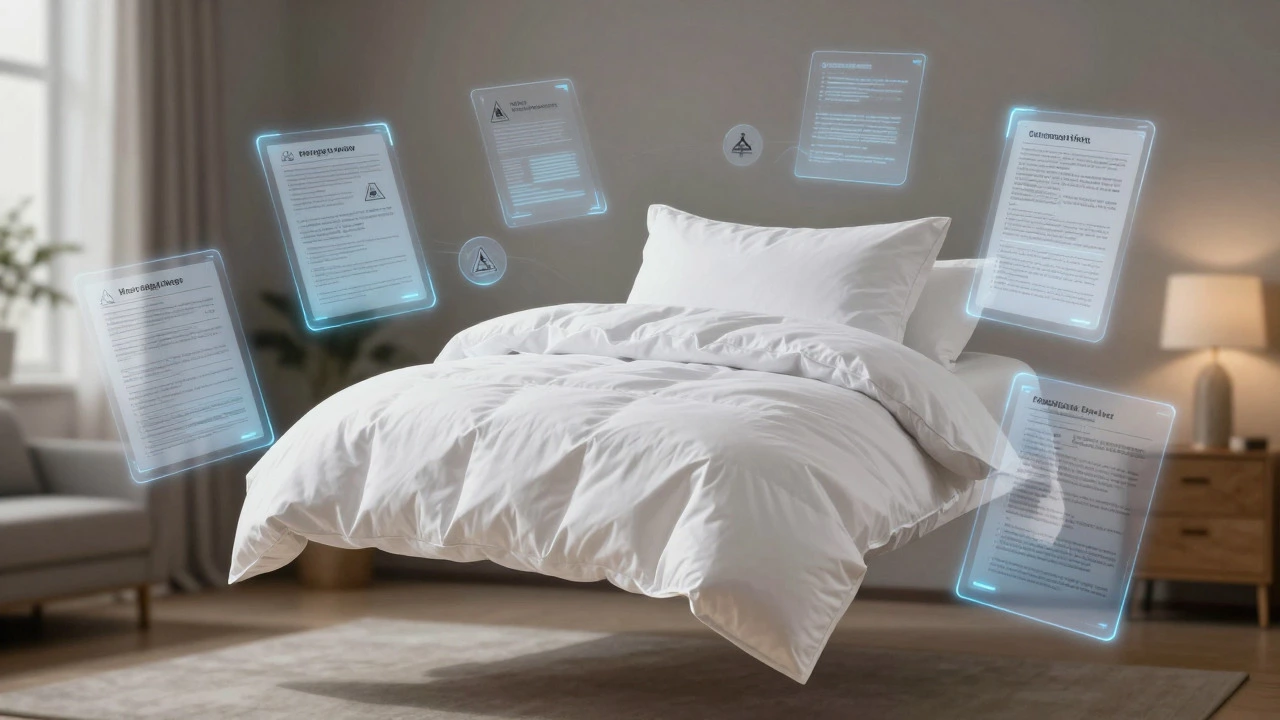
Bedding Compliance Checker
Product Information
Compliance Checklist
Quick Reference Guide
- Mattress Fire Tests Mandatory
- Fiber Content Labeling Required
- Country of Origin Required
- Care Instructions Recommended
- Medical Claims Restricted
You might think you know what bedding is. It’s sheets, pillows, and a duvet, right? But if you are a manufacturer, an importer, or even just a savvy shopper wondering why that cheap set from overseas has a weird warning label, the answer gets complicated fast. The legal definition of bedding isn’t just about comfort; it’s a minefield of safety regulations, fire codes, and consumer protection laws that vary wildly depending on where you live.
In many jurisdictions, including Australia and the UK, "bedding" is legally defined by its function and material composition rather than just its name. This distinction matters because it triggers specific mandatory testing for flammability, chemical safety, and labeling accuracy. Get this wrong, and you aren’t just selling a bad product-you’re breaking the law.
The Core Legal Definition: Function Over Form
Legally, bedding usually falls under the broader category of Textile Products intended for sleeping or resting purposes. However, the law rarely stops at such a simple description. In regulatory terms, bedding is often split into two distinct categories: "mattress protectors" (or mattress covers) and "soft furnishings" (like duvets, blankets, and pillowcases).
This split is crucial. Why? Because mattresses and their immediate covers are subject to much stricter fire safety laws than loose linens. For example, in the United Kingdom, the Furniture and Furnishings (Fire) (Safety) Regulations 1988 specifically define "mattress" and "mattress topper" with precise technical criteria. If a product fits that definition, it must meet rigorous ignition resistance standards. A standard cotton sheet, however, is generally exempt from these specific fire tests, though it still must comply with general consumer safety laws.
In the United States, the Consumer Product Safety Commission (CPSC) defines bedding components through Federal Flammability Standards. Here, the focus shifts heavily to children’s sleepwear and bedding materials used in cribs, which must resist open flame. For adult bedding, the emphasis is often on truth-in-labeling regarding fiber content and care instructions, governed by the Textile Fiber Products Identification Act.
Fire Safety: The Biggest Regulatory Hurdle
If there is one area where the legal definition of bedding becomes non-negotiable, it is fire safety. This is where most legal disputes arise. Manufacturers cannot simply call a product "fire-resistant" without proof. In fact, in many places, making that claim without certification is illegal.
In Australia, where I’m based in Perth, we follow the Australian Standard AS/NZS 3837. This standard sets out the requirements for the resistance to ignition of upholstered furniture and soft furnishings. While not all bedding is covered, mattress protectors and certain types of bed linen sold as part of a fire-safe system must comply. The law requires that these products pass specific tests involving cigarette igniters and match flames.
Across the pond in Europe, the REACH regulation plays a huge role. It restricts the use of certain chemicals in textiles, including those used to make bedding fire-retardant. This means that even if a product meets physical fire tests, it can be illegal if it contains banned substances like certain brominated flame retardants. The legal definition here expands to include chemical safety profiles.
| Region | Governing Body/Standard | Key Requirement | Scope |
|---|---|---|---|
| Australia | AS/NZS 3837 | Ignition resistance for mattresses/protectors | Mattresses, protectors, some soft furnishings |
| United Kingdom | Furniture & Furnishings (Fire) Safety Regs 1988 | Cigarette and match ignition tests | Mattresses, mattress toppers, cushions |
| United States | CPSC 16 CFR Part 1632/1633 | Flammability standards for mattresses | Mattresses, box springs, children's sleepwear |
| European Union | REACH Regulation | Restriction of hazardous substances | All textile products, including bedding |
Labeling Laws: What Must Be on the Tag?
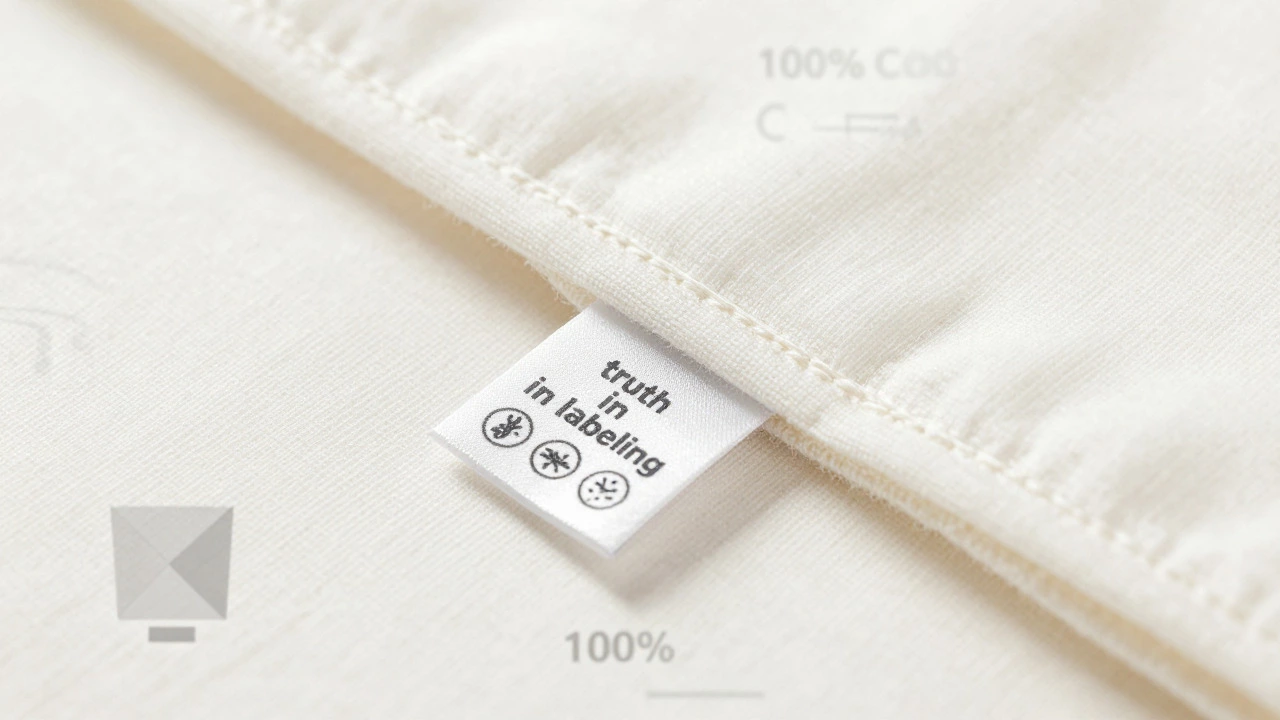
Beyond safety, the legal definition of bedding dictates what information must be provided to the consumer. This is known as "truth in labeling." You’ve seen those tiny tags sewn into the corner of your pillowcase. They aren’t just there for decoration; they are legal requirements.
In most Western countries, bedding labels must disclose:
- Fiber Content: The exact percentage of each fiber used (e.g., 100% Cotton, 80% Polyester/20% Silk). Mislabeling this is considered fraud.
- Country of Origin: Where the final assembly took place.
- Care Instructions: How to wash, dry, and iron the item without damaging it. Providing incorrect care instructions that lead to product failure can be a liability issue.
- Manufacturer Details: Who made it and who to contact if there’s a problem.
If a seller markets a product as "Egyptian Cotton" but it’s actually regular Upland cotton, they are violating trade descriptions acts. This is a common trap for online retailers importing goods. The legal definition of "Egyptian Cotton" is protected in some regions, meaning you can’t just slap that term on any high-quality cotton.
Consumer Rights and Warranty Implications
When you buy bedding, you enter a contract with the seller. The legal definition of the product determines your rights if it fails. Under Australian Consumer Law (ACL), for instance, goods must be of "acceptable quality," fit for purpose, and match their description.
If you buy a "thermoregulating" duvet that makes you sweat through every night, you might have a case. The product didn’t perform the function it was legally described as having. Similarly, if a fitted sheet snaps after one wash due to poor stitching, it fails the durability test inherent in the definition of acceptable quality.
For businesses, this means that marketing claims become part of the legal definition of the product. You can’t say a mattress is "ergonomic" unless it has been tested to support spinal alignment. Vague terms like "luxury" or "premium" are harder to police, but specific functional claims are strictly enforced.
Special Cases: Medical and Hypoallergenic Claims
Some bedding crosses over into health products. If a company sells a pillow as "orthopedic" or "anti-allergy," it may no longer be treated just as a textile. It could be classified as a medical device or a health-related product, triggering additional regulations.
In the EU, for example, claiming a product reduces allergens requires scientific evidence. Without it, the product violates unfair commercial practices directives. In the US, the FDA might get involved if the bedding makes drug-like claims, such as "cures insomnia." Most reputable brands stick to "promotes relaxation" to stay within the legal bounds of general wellness products rather than medical devices.
Why This Matters for Online Sellers
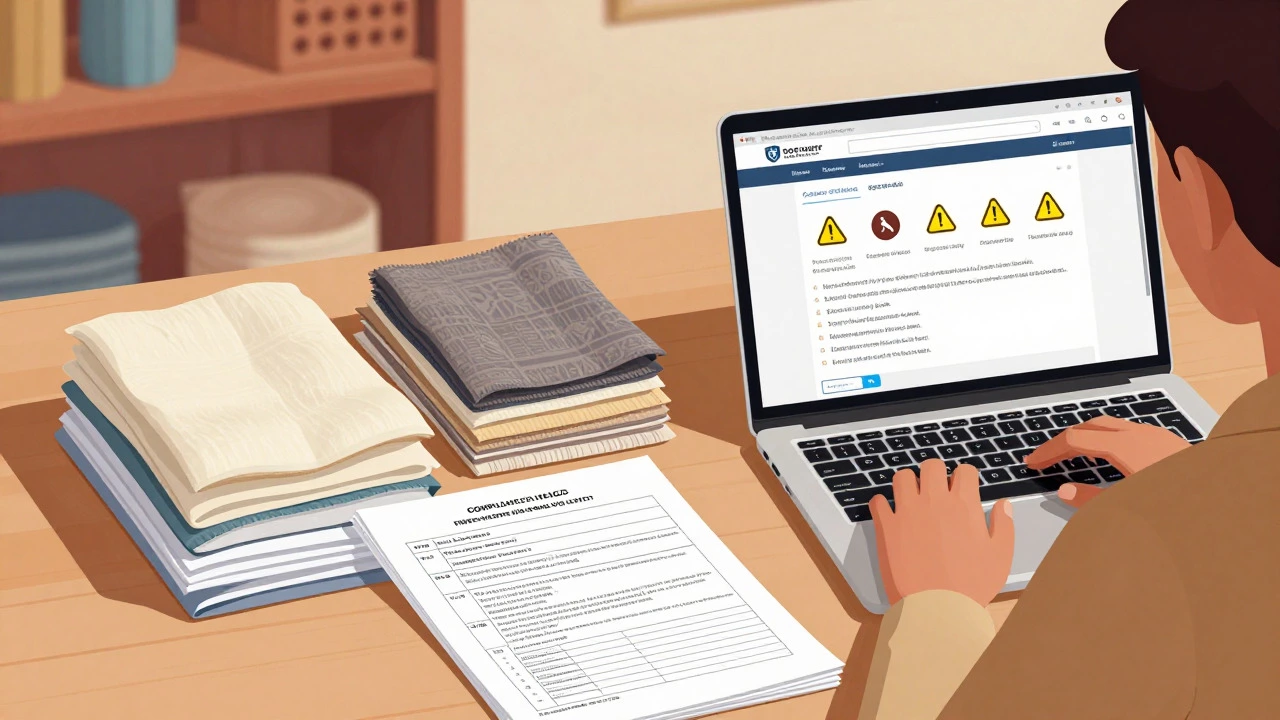
If you are selling bedding on platforms like Amazon, eBay, or your own Shopify store, understanding these definitions is critical. Platforms have strict policies aligned with local laws. List a mattress protector without the required fire safety certificates, and your listing will be removed. Worse, you could face fines from regulatory bodies.
Always check the specific regulations of the country you are shipping to. A product that is legal in China might not meet the flammability standards required in California or the chemical restrictions in Germany. Don’t assume that because it’s "just a sheet," it’s low risk. The legal framework treats bedding as a high-risk category due to its proximity to sleepers, especially children.
Next Steps for Compliance
To ensure your bedding business stays on the right side of the law, start by identifying the exact classification of each product. Is it a mattress component or a loose linen? Then, obtain third-party testing reports for fire safety and chemical composition. Finally, audit your labels and marketing copy to ensure every claim is substantiated and every fiber percentage is accurate. When in doubt, consult a legal expert specializing in consumer goods law in your target market.
Is all bedding required to be fire-resistant?
Not necessarily. In many jurisdictions, only mattresses, mattress toppers, and sometimes mattress protectors are subject to strict mandatory fire safety regulations. Loose items like pillowcases and duvet covers are often exempt from specific fire tests but must still meet general consumer safety standards. However, if a retailer markets a sheet as "fire-resistant," it must legally prove that claim through testing.
What happens if I mislabel the fiber content of my bedding?
Mislabeling fiber content is considered fraud in most countries. It can lead to significant fines, forced recalls of the product, and damage to your brand’s reputation. Consumers can also sue for refunds and compensation under consumer protection laws if the product does not match its description.
Does the legal definition of bedding differ for children's products?
Yes, significantly. Children's bedding, especially crib sheets and sleepwear, is subject to much stricter flammability standards. In the US, for example, the CPSC enforces rigorous open-flame tests for children's sleepwear and bedding to prevent burn injuries. These rules are more stringent than those for adult bedding.
Can I sell imported bedding without re-testing it?
It depends on the destination country's laws. Many countries require that imported bedding meet local safety standards, which may differ from the country of origin. Often, importers are legally responsible for ensuring compliance, which may involve independent testing and certification before the goods can be sold.
What is the difference between a mattress protector and a mattress cover in legal terms?
Legally, the distinction often lies in the product's construction and intended function. A mattress protector is typically designed to shield the mattress from moisture and stains and may be subject to fire safety laws if it forms a permanent layer. A decorative mattress cover or slipcover might be classified differently, potentially facing fewer regulatory hurdles, but this varies by jurisdiction. Always check local definitions to be sure.