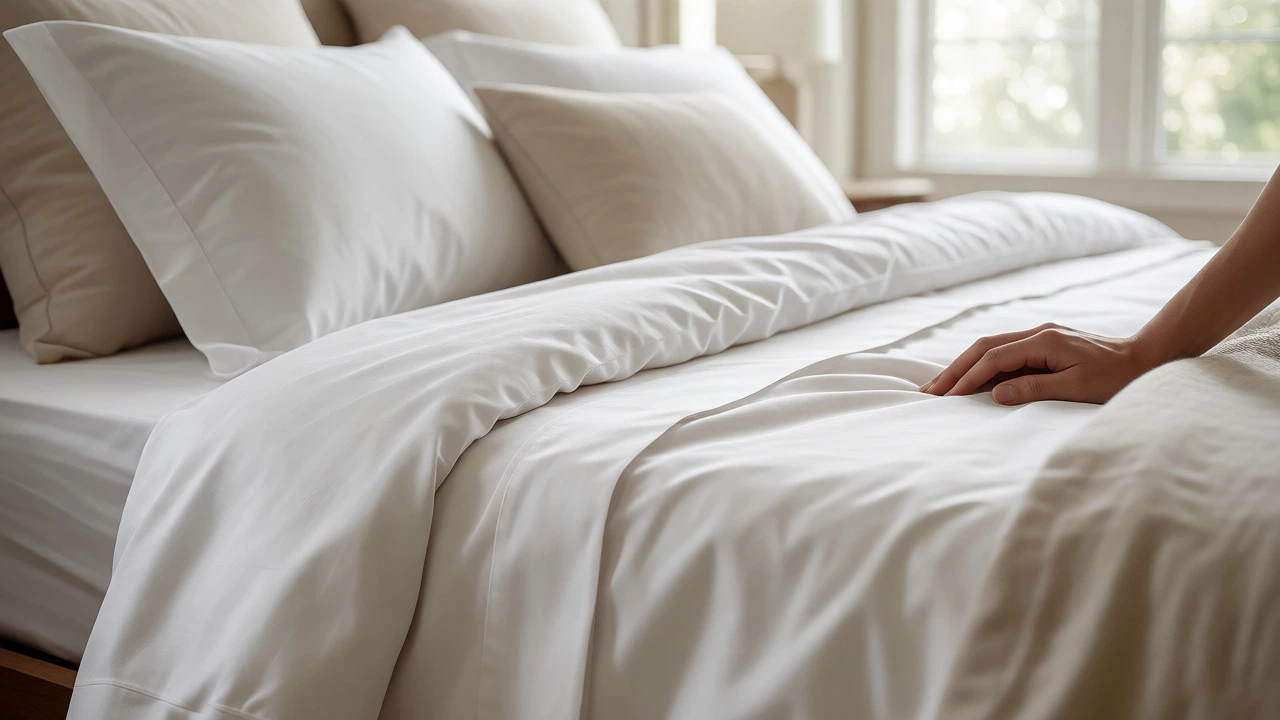
Bedding Set Decoder & Guide
Confused by bedding labels? Use this tool to see exactly what's in a standard set and get a recommendation for your specific sleeping needs.
Typical Set Contents:
You’ve probably stood in a store aisle or scrolled through an online shop, staring at a box labeled "Queen Bedding Set" and wondering: what exactly is inside? Is it just sheets? Does it include the fluffy part? Why does one set cost $50 and another $300? The meaning of beddings often gets lost in marketing jargon. But here’s the simple truth: beddings are the textile items that cover your mattress and pillows for warmth, hygiene, and style. They aren’t just fabric; they are the interface between you and sleep.
Understanding what constitutes bedding helps you buy smarter. You stop paying for things you don’t need and start investing in pieces that actually improve your rest. Whether you’re setting up a first apartment or refreshing a master suite, knowing the difference between a duvet cover and a comforter saves money and headaches. Let’s break down the anatomy of a bed, piece by piece.
The Core Definition: What Counts as Bedding?
Bedding is a collective term for the textiles used to dress a bed, including sheets, blankets, duvets, pillows, and pillowcases. It serves three primary functions: protecting the mattress, providing thermal regulation, and enhancing bedroom aesthetics. Unlike furniture, which is structural, bedding is soft goods. It touches your skin directly or lies within arm's reach while you sleep. This direct contact means material quality matters more than almost any other home product.
Many people confuse "bedding" with "mattress." The mattress is the support system underneath. Bedding goes on top. If you strip a bed completely, you are left with just the mattress and frame. Everything else-the crisp white squares, the heavy quilt, the decorative shams-is bedding. In Australia, where we deal with everything from humid coastal nights to cold Tasmanian winters, choosing the right type of bedding is critical for temperature control.
Anatomy of a Bedding Set: The Essential Components
When retailers sell a "bedding set," they rarely mean the same thing twice. One brand might include four pieces; another includes twelve. To decode this, you need to know the standard components. Here is how the industry typically structures these items:
- Fitted Sheet: This has elasticated corners designed to hug the mattress tightly. It protects the mattress surface and provides the base layer against your skin. Look for deep pockets if you have a thick mattress (over 30cm).
- Flat Sheet: Often called a top sheet, this lies over the fitted sheet but under the blanket or duvet. In many modern minimalist setups, people skip this, but it keeps the duvet insert clean and allows for easier temperature adjustment during the night.
- Pillowcases: These protect your pillows. Standard cases open at the side; envelope cases tuck in for a cleaner look. You usually get two per person in a set.
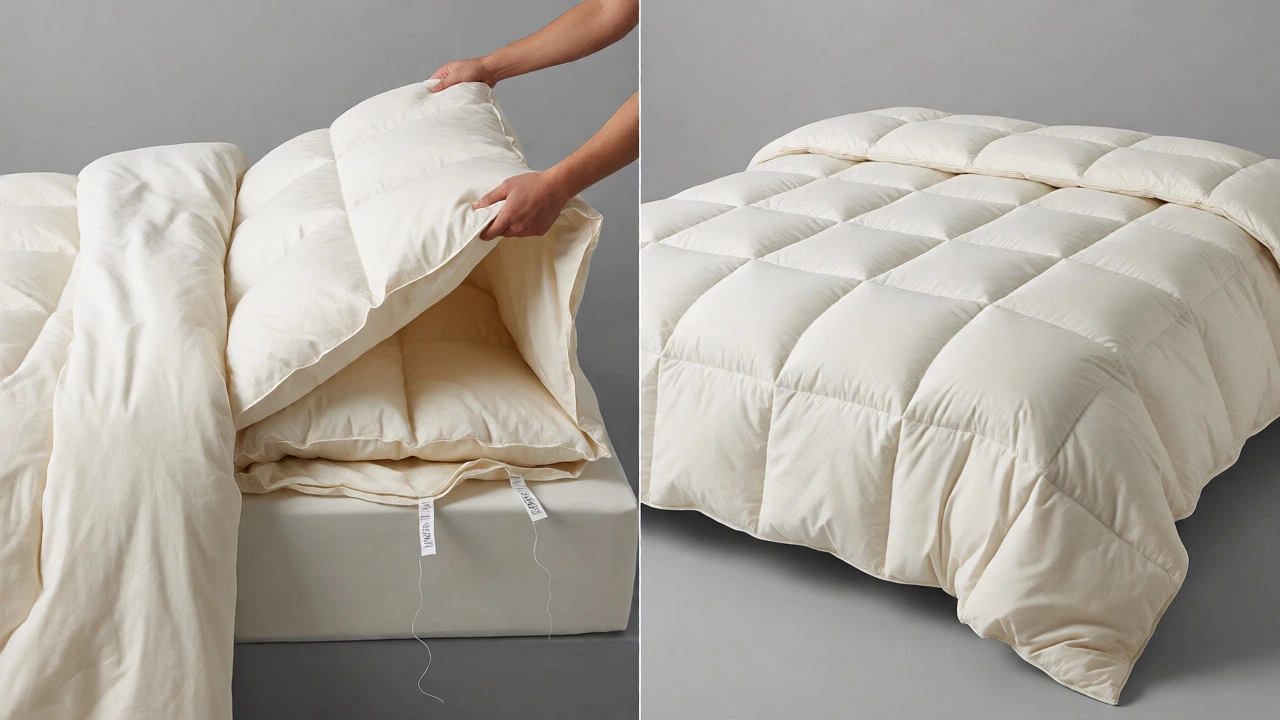
- Duvet Cover: Think of this as a giant pillowcase for your duvet insert. It is removable and washable. The insert itself stays inside.
- Duvet Insert (or Duvet): The actual warm layer filled with down, feathers, or synthetic fibers. Some sets come with this; others do not.
- Comforter: A one-piece quilted blanket. Unlike a duvet, it doesn’t need a separate cover. It is heavier and harder to wash.
Notice the distinction between a duvet system and a comforter system. That choice defines your maintenance routine and cost structure.
Duvet vs. Comforter: Which System Do You Need?
This is the biggest point of confusion in the bedding world. Both keep you warm, but they work differently. Your climate and cleaning habits should dictate your choice.
| Feature | Duvet System | Comforter System |
|---|---|---|
| Structure | Two parts: Cover + Insert | One part: Quilted blanket |
| Cleaning | Easier: Wash cover weekly/monthly; air out insert | Harder: Must wash entire bulky item |
| Style Flexibility | High: Change cover color easily | Low: Style is fixed to the fabric |
| Warmth Control | Modular: Swap inserts for seasons | Fixed: Buy different weights for seasons |
| Cost Initial | Higher upfront (need both parts) | Lower upfront (one item) |
| Long-term Cost | Lower (covers are cheap replacements) | Higher (replacing whole unit) |
If you live in Perth, where summers are hot and winters are mild, a duvet system offers better flexibility. You can use a light cotton cover in summer and swap in a heavier wool insert in winter without buying a new blanket every year. Comforters are great for guest rooms where you want a "done" look with minimal effort, but they trap heat more aggressively.
Material Matters: Understanding Fabric Choices
The meaning of beddings extends beyond shape to substance. The fabric determines how you feel at 3 AM when the room temperature drops or spikes. Natural fibers breathe; synthetics wick moisture. Here’s a quick guide to common materials:
- Cotton: The gold standard. Breathable, durable, and hypoallergenic. Look for long-staple varieties like Egyptian or Pima cotton for softer textures.
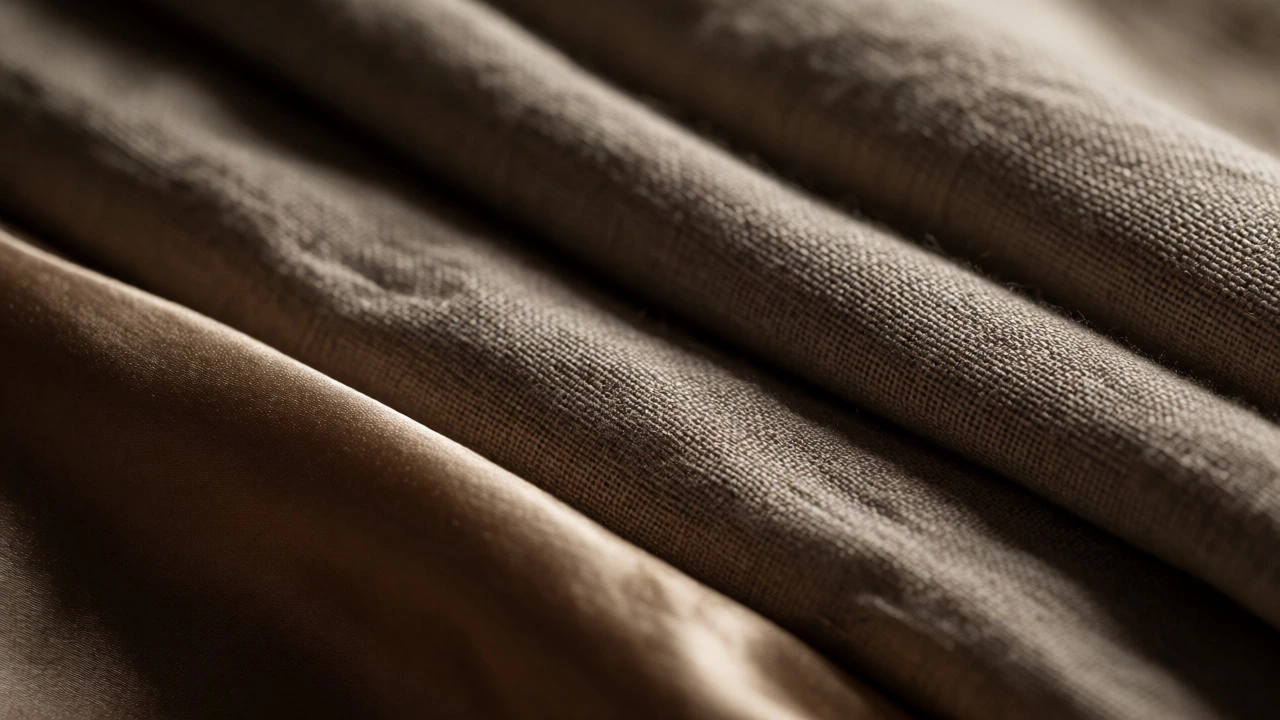
- Linen: Made from flax plants. It feels rough initially but softens with every wash. Excellent for hot climates because it dissipates heat quickly. Wrinkles are part of its charm.
- Bamboo Viscose: Silky smooth and naturally antibacterial. Great for sensitive skin or eczema sufferers. It tends to run cooler than cotton but can be less durable if washed harshly.
- Microfiber: Synthetic polyester. Cheap and stain-resistant, but traps heat. Good for budget rentals or guest beds, not ideal for sweaty sleepers.
- Flannel: Brushed cotton or wool. Heavy and cozy. Reserved for colder months or drafty bedrooms.
Thread count is often marketed as a quality metric, but don’t fall for the hype. A thread count of 800+ in low-quality cotton will feel worse than a well-made 300-thread-count sateen weave. Focus on fiber quality and weave type (percale for crispness, sateen for silkiness) rather than just the number.
Standard Sizes and Fit Issues
A major frustration for buyers is poor fit. A fitted sheet popping off the corner ruins sleep. Bedding sizes vary by region. In Australia, standard sizes differ slightly from US or UK standards.
- Single: 92cm x 188cm. For kids or single adults.
- Double: 137cm x 188cm. Rarely used now; too small for couples.
- Queen: 153cm x 204cm. The most popular size for couples who want personal space.
- King: 183cm x 204cm. Luxury option for spacious rooms.
- Super King: 204cm x 204cm. Square-ish, huge, requires large laundries.
Always measure your mattress depth before buying. Most standard sheets fit up to 30cm depth. If you have a pillow-top mattress, you need "deep pocket" sheets, usually labeled as fitting 40cm+. Ignoring this leads to constant tugging in the morning.
Why Proper Bedding Improves Sleep Hygiene
It’s not just about looks. Dirty bedding accumulates dead skin cells, sweat, and dust mites. A study published in the *Journal of Environmental Health* suggests that regular washing of bedding significantly reduces allergen loads. Since we spend roughly one-third of our lives in bed, hygiene is non-negotiable.
Using a duvet cover acts as a barrier. You wash the cover weekly, keeping the expensive insert clean for months. With a comforter, you either wash the whole thing (risking clumping fill) or use a thin protective layer, which defeats the purpose of having a nice-looking blanket. Proper bedding management creates a cleaner microenvironment, reducing allergy symptoms and improving skin health.
Common Misconceptions About Bedding
Let’s clear up some myths that waste money.
Myth 1: More layers equal better sleep. False. Too many layers cause overheating. Stick to breathable layers you can remove easily.
Myth 2: Expensive brands always mean higher quality. Not necessarily. Many luxury brands mark up generic Chinese-manufactured linens. Check for OEKO-TEX certification, which ensures no harmful chemicals were used in processing.
Myth 3: White bedding is hard to keep clean. Actually, white cotton can be bleached and washed at high temperatures, killing bacteria effectively. Colored linens fade and require gentler washing.
How to Care for Your Bedding
To make your investment last, follow these rules:
- Wash Separately: Don’t mix towels with sheets. Towels shed lint that sticks to cotton, making it feel scratchy.
- Use Mild Detergent: Harsh detergents break down fibers over time. Avoid fabric softeners on towels and bamboo sheets; they reduce absorbency and breathability.
- Dry Properly: Remove sheets while slightly damp to minimize ironing. Over-drying makes cotton brittle.
- Rotate Inserts: Flip and rotate your duvet insert monthly to prevent lumps and ensure even wear.
By treating your bedding as a functional tool rather than just decor, you extend its life and enhance your comfort. The meaning of beddings ultimately boils down to intentionality: choosing items that serve your specific climate, body, and lifestyle needs.
What is the difference between bedding and linens?
While often used interchangeably, "linens" traditionally refers specifically to woven fabrics made from flax (linen), cotton, or hemp. "Bedding" is the broader category that includes linens plus blankets, quilts, pillows, and accessories. All linens are bedding, but not all bedding is linen.
Do I need both a flat sheet and a duvet cover?
Not strictly. Many people prefer the simplicity of skipping the flat sheet. However, using a flat sheet protects the underside of your duvet cover from body oils and sweat, extending the time between washing the larger duvet cover. It also allows you to kick off the duvet if you get hot without exposing yourself to the cold air directly.
How often should I replace my bedding?
Sheets and duvet covers should be replaced every 2-3 years depending on frequency of use and washing habits. Pillow inserts should be replaced every 1-2 years as they lose support and accumulate allergens. Mattress protectors last longer, typically 5-7 years.
Is bamboo bedding really cooling?
Yes, bamboo viscose has a smoother surface and higher moisture-wicking properties than standard cotton, which makes it feel cooler to the touch. However, it can retain heat if the weave is very tight. Look for looser weaves or blends for maximum airflow in hot climates like Perth summers.
What is a sham and do I need one?
A sham is a decorative pillow cover, usually with a flap closure, designed to match the duvet cover. You sleep on standard pillowcases, not shams. Shams are purely for aesthetics during the day. You do not need them for function, only if you want a coordinated hotel-style look.