Shelving Strength Calculator
Pro Tip: For every 12 inches of shelf depth, use at least 3/4 inch thickness. Add center supports every 16-24 inches for longer spans.
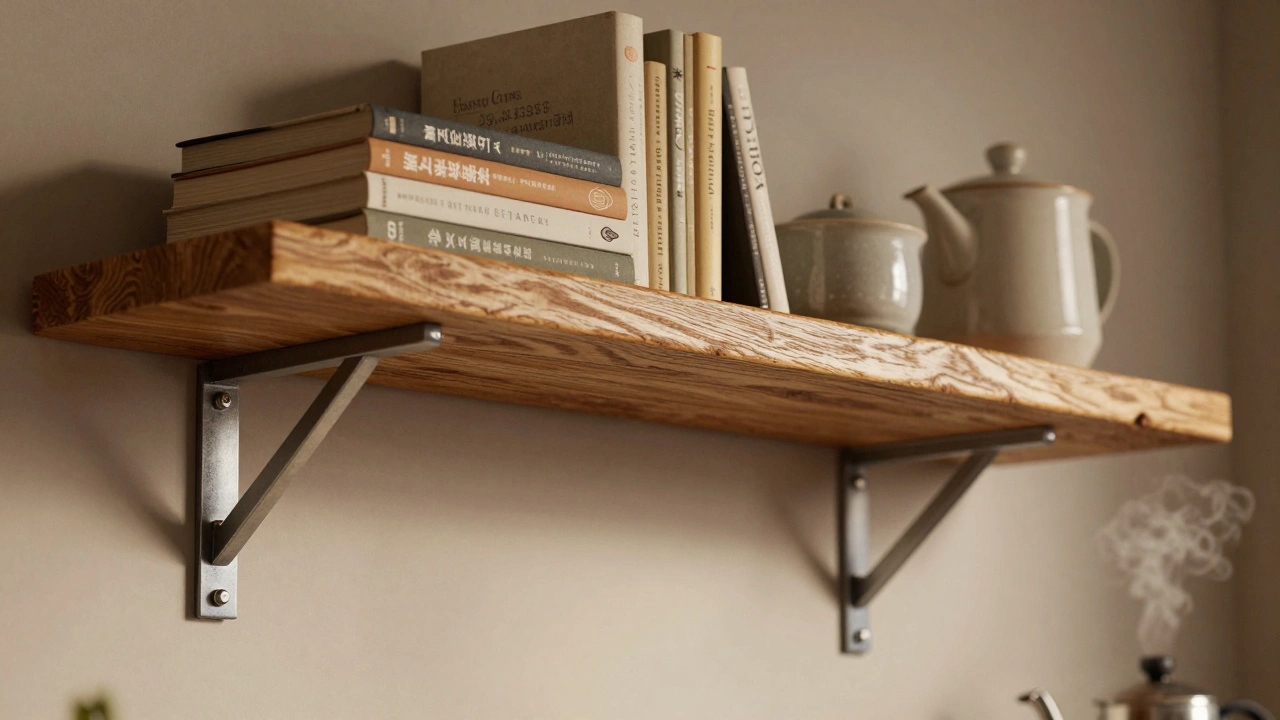
If you’re building shelves that need to hold books, tools, or heavy kitchenware, the wood you pick isn’t just about looks-it’s about safety and longevity. You don’t want your shelf sagging, cracking, or worse, collapsing under weight. So what’s the strongest wood for shelving? The answer isn’t one single species, but a few that consistently outperform others when it comes to load-bearing strength, stability, and resistance to wear.
Hardwoods Dominate for Heavy-Duty Shelves
Softwoods like pine or cedar are cheap and easy to find, but they bend under pressure. A pine shelf holding a stack of encyclopedias will bow noticeably over time. Hardwoods, on the other hand, are dense, tight-grained, and built to handle weight. Among them, three stand out: oak, maple, and hickory.
Oak-especially white oak-is the go-to for furniture makers and cabinet builders. It has a Janka hardness rating of 1,360 lbf, meaning it resists dents and scratches well. More importantly, its grain structure gives it excellent bending strength. A 36-inch oak shelf, 3/4 inch thick, can hold over 150 pounds without sagging more than 1/8 inch. That’s enough for a full bookshelf or a row of heavy pots and pans.
Maple is even harder, with a Janka rating of 1,450 lbf. It’s smoother than oak and takes finishes beautifully, making it popular for modern kitchens. But its real strength lies in stiffness. Maple doesn’t flex much under load, which is why it’s often used in workbenches and industrial shelving. If you’re stacking boxes of canned goods or storing tools, maple won’t let you down.
Hickory takes the crown for sheer strength. With a Janka rating of 1,820 lbf, it’s one of the hardest domestic woods available. It’s also incredibly tough-resistant to impact and compression. A hickory shelf can support over 200 pounds with minimal deflection. The downside? It’s harder to cut and drill, and it’s more expensive. But if you’re building a garage shelf for power tools or a pantry shelf for heavy jars, hickory is worth the extra effort.
Engineered Wood: Plywood vs. MDF
Not everyone wants solid wood. Many DIYers turn to plywood or MDF because they’re cheaper and easier to work with. But not all engineered wood is equal.
High-quality hardwood plywood-like 3/4 inch Baltic birch with 13 layers-is surprisingly strong. The cross-laminated layers give it dimensional stability and resistance to warping. It’s a great middle ground: strong enough for most shelving needs, easier to cut than solid wood, and affordable. Just make sure it’s not the kind with thin veneers or softwood cores. Those won’t hold up under heavy loads.
MDF, on the other hand, is a trap. It’s dense, but it’s not strong. Under weight, MDF sags badly and can’t be re-drilled without crumbling. If you’ve ever seen a MDF shelf collapse under a stack of textbooks, you know why. Avoid it for anything that needs to carry more than 50 pounds. It’s fine for lightweight decor shelves, but not for storage.
What About Lumber Thickness and Support?
No matter how strong the wood, shelf design matters just as much. A 1-inch thick shelf made of pine will outperform a 3/4-inch shelf made of oak if it’s properly supported. The rule of thumb? For every 12 inches of shelf depth, you need at least 3/4 inch of thickness. For deeper shelves-say, 16 inches or more-go with 1 inch or even 1 1/4 inches.
Support spacing is critical. If your shelf spans 36 inches without support in the middle, even oak will sag. Add a center support bracket, and the load capacity doubles. Use metal L-brackets or wooden corbels every 16 to 24 inches for best results. Wall anchors matter too-drywall anchors can’t hold heavy shelves. Always screw into wall studs.
Real-World Examples
Think about what you’re storing:
- Books and records: Oak or maple, 3/4 inch thick, supported every 24 inches.
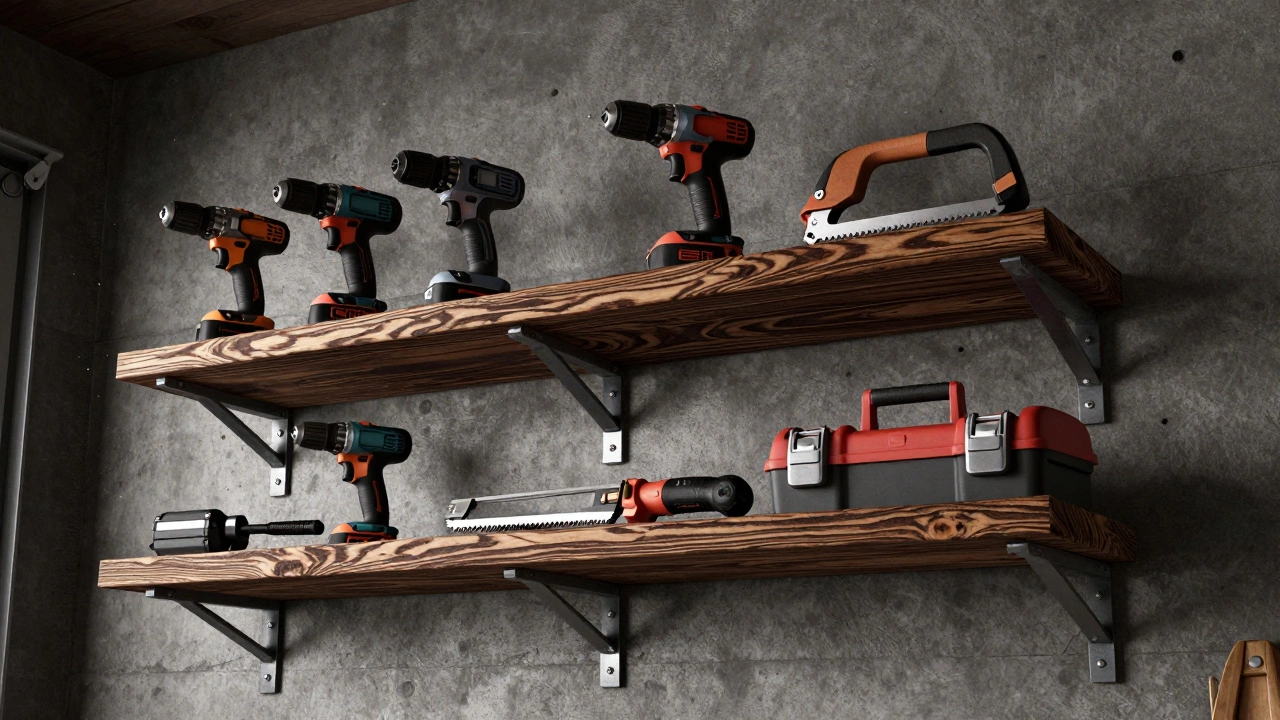
- Tools in the garage: Hickory or hardwood plywood, 1 inch thick, with steel brackets anchored to studs.
- Kitchen pantry: Maple, 3/4 inch, with 1-inch edge banding to prevent chipping.
- Display shelves for collectibles: Maple or cherry, 5/8 inch, since weight is light but appearance matters.
In Perth, where humidity swings between dry summers and wet winters, wood movement is a real concern. Oak and maple handle moisture well if sealed properly. Avoid leaving shelves exposed to direct sunlight or steam from showers. A good oil-based finish or polyurethane helps seal the wood and keeps it stable.
Common Mistakes to Avoid
People often make the same errors when building shelves:
- Using softwood because it’s cheap-then wondering why it bends.
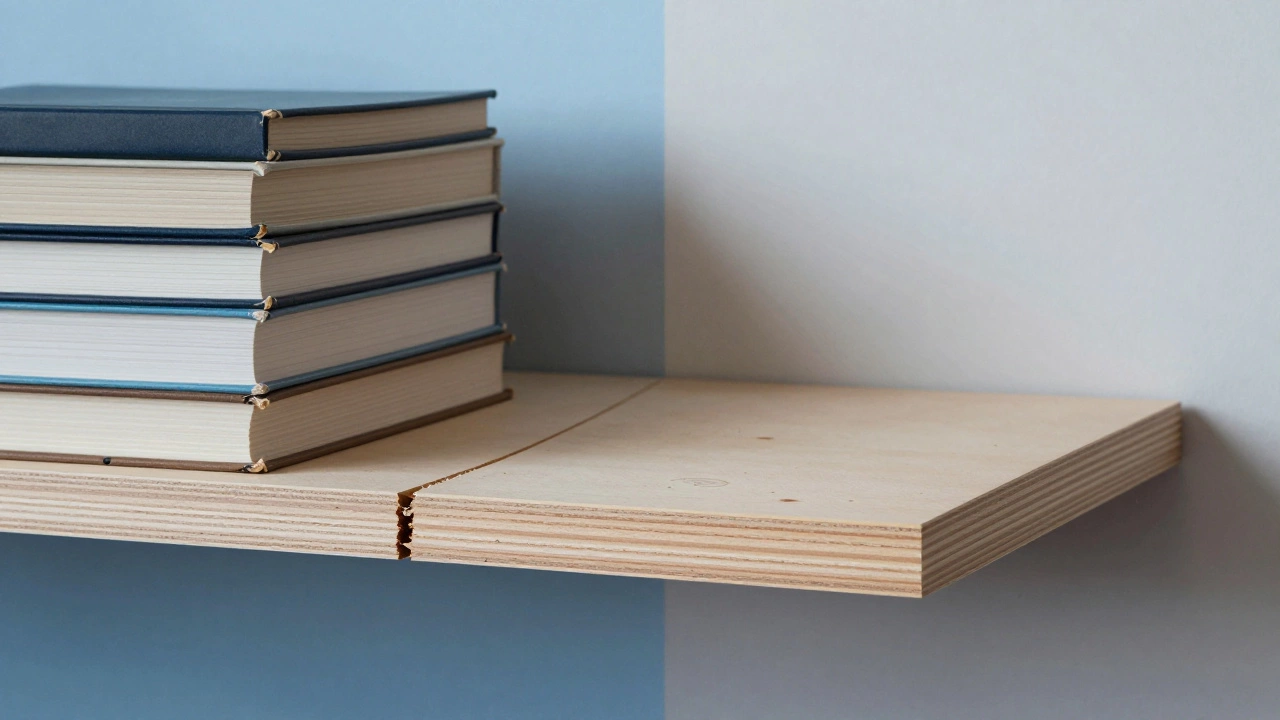
- Skipping support brackets to save money-only to have shelves collapse later.
- Buying thin plywood labeled as ‘shelving grade’-it’s often just particleboard with a veneer.
- Not sealing the wood-leading to warping or moisture damage over time.
- Mounting shelves only into drywall-no matter how many anchors you use, it won’t hold.
There’s no shortcut to strength. If you want shelves that last 20 years, invest in the right wood and install it right.
Final Recommendation
For most home shelving needs, oak is the sweet spot: strong, affordable, and easy to work with. If you need maximum strength and don’t mind the cost and effort, go with hickory. For a budget-friendly option that still holds up, use hardwood plywood with a 13-layer core. Skip MDF and softwoods unless you’re hanging lightweight items.
And remember: wood strength isn’t just about the species. Thickness, support spacing, and proper installation make the difference between a shelf that lasts and one that fails.
Is pine wood strong enough for shelves?
Pine isn’t strong enough for heavy shelves. It’s soft, prone to dents, and sags easily under weight. You might get away with it for lightweight decor or a small bathroom shelf, but don’t use it for books, tools, or kitchenware. It’ll bow over time and look worn out quickly.
What’s the best wood for kitchen shelves?
Maple is ideal for kitchen shelves. It’s hard, resists moisture, and takes a smooth finish that’s easy to clean. Oak works too, especially if you like a rustic look. Avoid MDF-it absorbs grease and steam, and can swell or crumble. Always seal kitchen shelves with a food-safe oil or polyurethane.
Can I use plywood for heavy shelves?
Yes, but only if it’s high-quality hardwood plywood with a 13-layer core, like Baltic birch. Avoid cheap plywood with thin veneers or softwood cores-they’re just particleboard in disguise. Use 3/4 inch or thicker, and always support shelves every 16 to 24 inches. Plywood is stable and strong enough for most heavy-duty uses.
Does wood thickness affect shelf strength?
Absolutely. A 3/4 inch shelf will sag under heavy weight if it’s too long. For shelves longer than 24 inches, use 1 inch thickness. The thicker the wood, the less it bends. Doubling the thickness can quadruple the load capacity. Always match thickness to shelf length and expected weight.
How do I stop wood shelves from warping?
Seal all surfaces-top, bottom, and edges-with a finish like polyurethane, tung oil, or lacquer. Unsealed wood absorbs moisture from the air and swells unevenly, causing warping. Keep shelves away from direct sunlight, steam, or wet areas like bathrooms. Use stable woods like oak or maple, and install them with proper support to reduce stress.
If you’re building shelves this weekend, skip the guesswork. Choose oak for balance, hickory for brute strength, or hardwood plywood for value. Get the thickness right, support it well, and seal it properly. Your shelves won’t just hold weight-they’ll last decades.