There’s no point in buying a sofa that looks great but feels like sitting on a brick. You’ve probably sat on one of those - the kind that promises luxury but leaves your back screaming after ten minutes. The truth? Comfort isn’t about brand names or price tags. It’s about how the sofa is built, what’s inside, and how it matches your body and habits.
Comfort Starts With the Frame
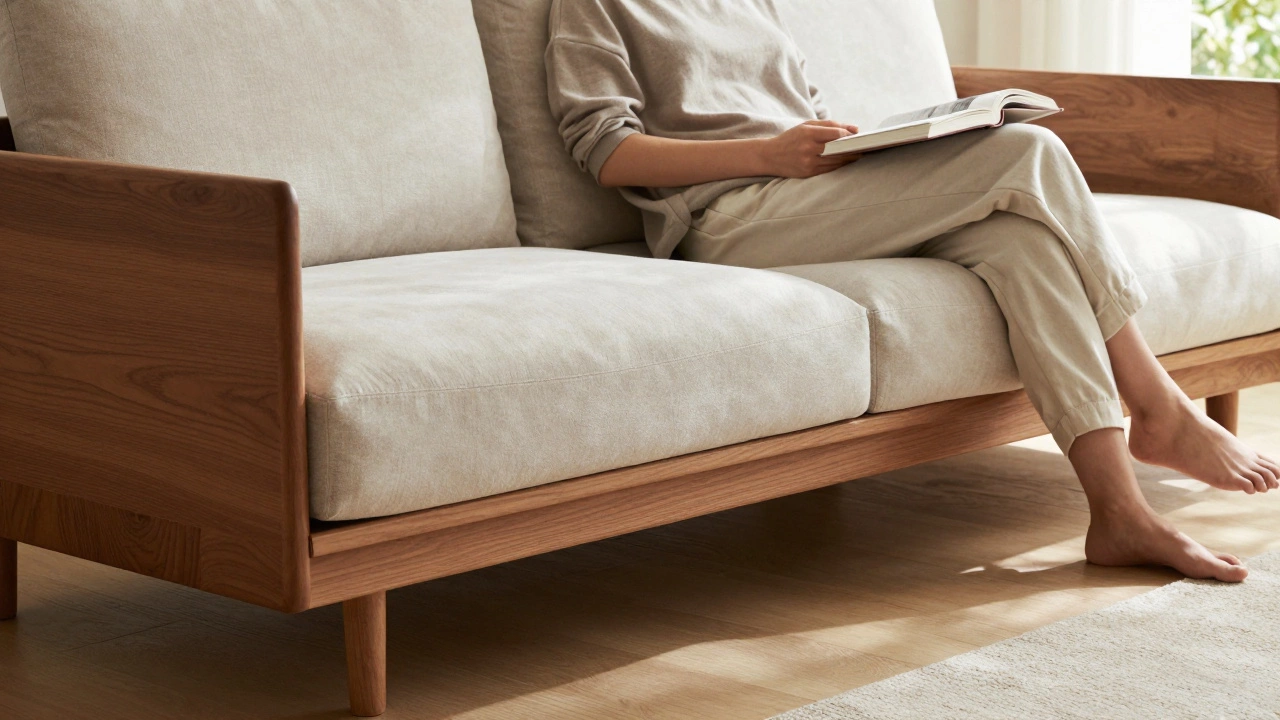
A sofa’s frame is its skeleton. If it’s weak, nothing else matters. Hardwood frames - like kiln-dried oak, maple, or birch - are the gold standard. They don’t warp, creak, or sag over time. You’ll find these in mid-range to high-end sofas from brands like Pottery Barn, Crate & Barrel, or local Australian makers like The Sofa Company. Avoid particleboard or plywood frames. They’re cheap, noisy, and break down fast. I’ve seen sofas with these frames collapse after two years of light use. That’s not comfort - that’s a waste of money.Cushion Fill: The Secret Ingredient
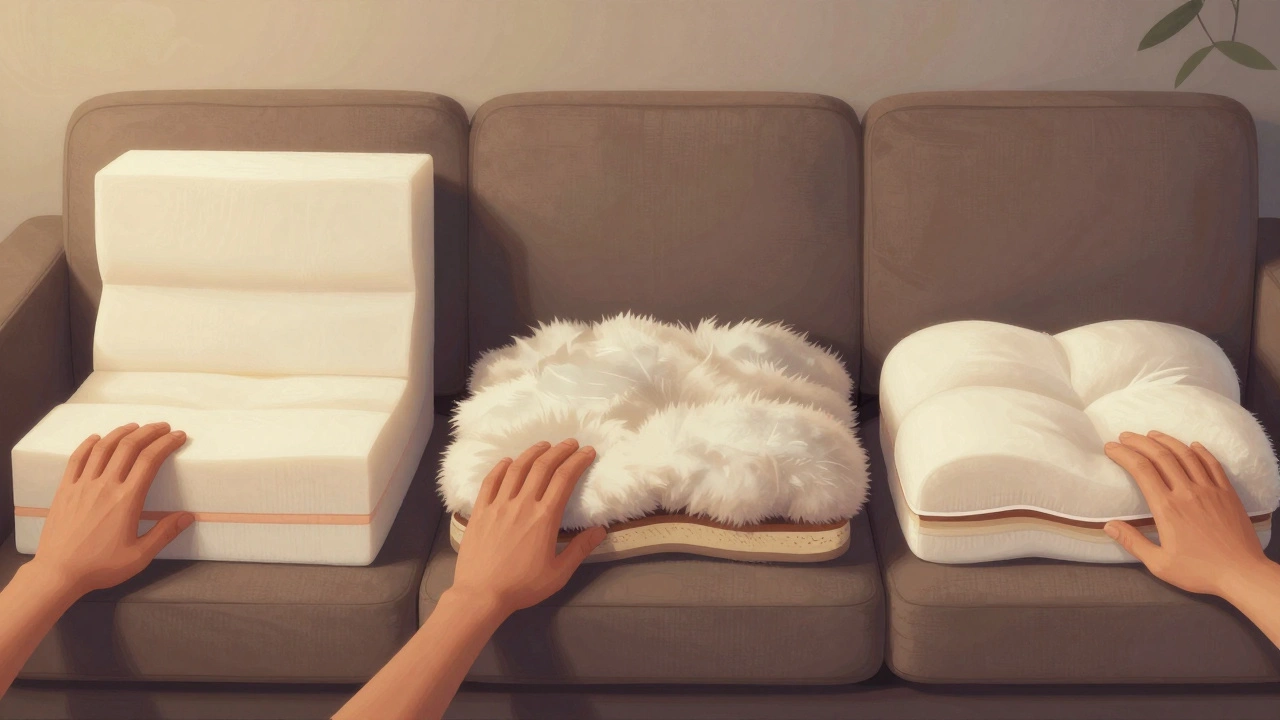
The cushion filling is where comfort lives. There are three main types, and each suits a different kind of lounging:- High-density foam: Firm, supportive, holds its shape. Best for people who sit upright or use the sofa for work. Lasts 7-10 years. Not soft, but never flat.
- Down and feather blend: Soft, sink-in feel. Feels luxurious, but needs fluffing daily. Good for nappers and movie watchers. Watch out - low-quality blends use cheap feathers that poke through or clump. Look for at least 70% down with 30% feather.
- Foam wrapped in down: The sweet spot. A firm foam core with a down layer on top. Gets the support of foam without the hardness. This is what I sleep on every weekend. It’s the reason I don’t need a separate recliner.
Avoid cheap polyfill. It’s fluffy at first, then turns into a lumpy mess after six months. I tested three sofas with polyfill in a friend’s living room - all looked identical, but one was already sagging. The difference? Fill quality.
Seat Depth and Back Height Matter More Than You Think
A sofa that’s too shallow forces you to sit on the edge. Too deep, and you’re sliding into a hole. For most people, a seat depth of 21 to 24 inches works best. If you’re taller than 6 feet, go for 25 inches. Shorter? Stick to 20-22 inches.Back height is just as important. A low back gives you a modern look but offers zero neck support. A high back feels like a hug - great if you like to lean back and read. But if you’re tall and sit upright, a medium back (around 30 inches) gives you balance. I tried a high-back sofa once and ended up with a stiff neck because my head didn’t rest naturally.
Arms and Angles: The Silent Players
Armrests aren’t just for decoration. A low, wide arm lets you rest your forearms naturally - no shoulder strain. High, narrow arms force you to hunch. If you like to curl up with a book, look for sofas with wide, slightly angled arms. Some models even have built-in cup holders or side tables - handy if you’re a snack-and-watch kind of person.Also, check the seat angle. A slight forward tilt (5-10 degrees) helps your hips stay aligned. Flat seats make your pelvis tuck under, which strains your lower back. You won’t notice this until you’ve sat for 20 minutes - then it hits you like a headache.
Try Before You Buy - Really Try
Don’t just sit down and bounce. Do this:- Sit in the sofa for at least 10 minutes. Read a book, scroll on your phone, or just stare at the wall.
- Lean back fully. Does your head rest naturally? Do your feet touch the floor?
- Stand up. Does the sofa spring back quickly, or does it look squashed?
- Try it in different positions - feet up, sideways, lying across.
I bought a sofa once because it looked perfect in the showroom. I didn’t test it properly. Three weeks later, I was back at the store exchanging it. The cushion had sunk too low, and my lower back ached every morning. I learned the hard way: comfort isn’t a first impression. It’s a long-term relationship.
What About Sectionals and Loveseats?
Sectionals are great for families or big spaces, but they’re not automatically more comfortable. A poorly designed sectional with thin cushions and a rigid frame is worse than a good two-seater. Look for sectionals with deep seats (24+ inches) and high-density foam. Avoid those with built-in storage - the hinges and mechanisms often compromise cushion support.Love seats? They’re fine if you live alone or use the sofa as a reading nook. But if you share it with someone, or like to stretch out, you’ll regret the space limit. I’ve seen couples fight over who gets the center spot on a loveseat. It’s not romantic - it’s a design flaw.
What’s the Best Sofa for Different Lifestyles?
- For nappers: Down-wrapped foam with a deep seat (24-26 inches) and a medium-high back. Think of it as a bed you don’t have to make.
- For families with kids: High-density foam with removable, washable covers. Avoid down - it collects crumbs and pet hair. Look for performance fabrics like Crypton or Sunbrella.
- For small spaces: A slim, firm sofa with a low back and tight arms. It won’t feel cozy at first, but it won’t eat your living room either.
- For tall people: 25-inch seat depth, 32-inch back height, and a firm cushion. You need the length and support.
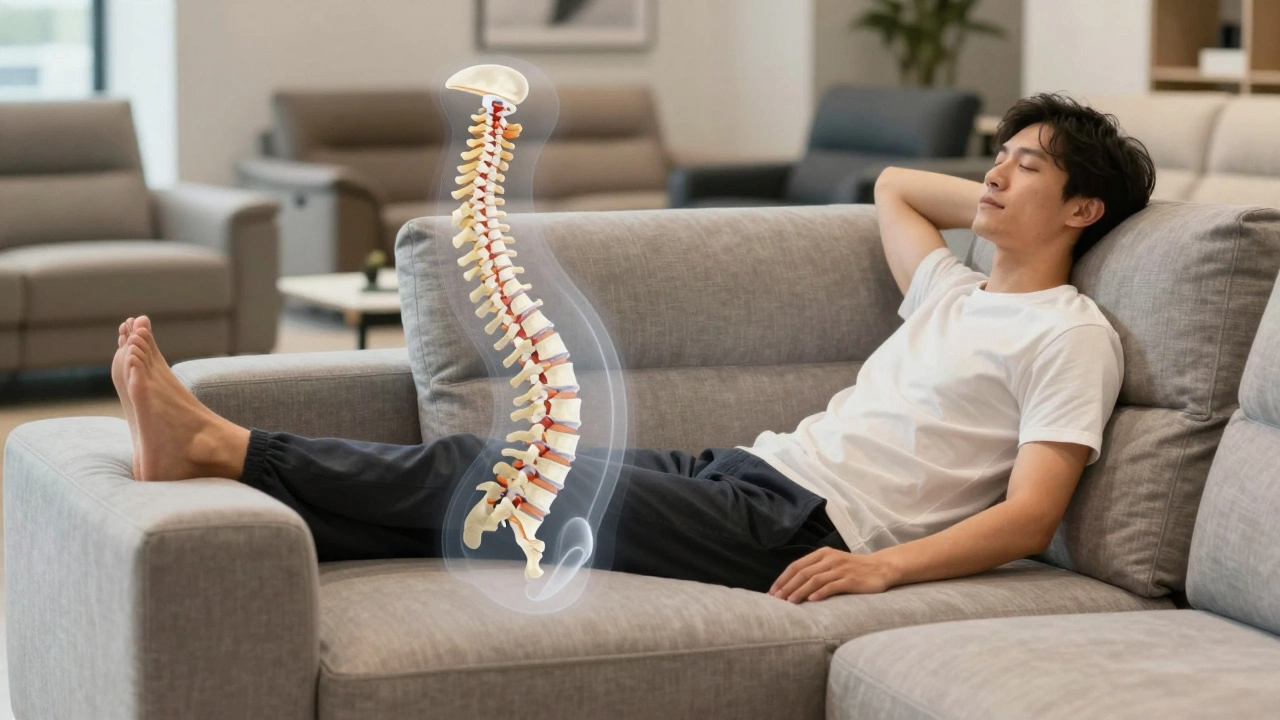
- For back pain sufferers: Medium-firm foam with lumbar support built into the backrest. Avoid overly soft sofas - they collapse under your weight.
What to Skip
There are a few traps:- Memory foam cushions - they get too hot and sink too slowly. Not ideal for everyday sitting.
- Ultra-modern designs with no arms or low backs - they look cool in magazines, but your spine will beg for mercy.
- Online-only sofas without return policies - if you can’t test it, don’t buy it.
I bought a sofa from a trendy online brand last year. It had 4.9 stars and 200 reviews. But the reviews said things like, ‘Great at first, now my back hurts.’ I returned it. No regrets.
Final Rule: Comfort Is Personal
There’s no single ‘most comfortable’ sofa. What works for your neighbor won’t work for you. Your height, weight, posture, and habits all matter. The best sofa is the one you’ve sat on for 10 minutes - not the one with the prettiest photo.Go to a store. Sit. Test. Walk away. Come back the next day. Compare. Don’t rush. Your back will thank you for years.
What type of sofa cushion is most comfortable?
The most comfortable cushion combines a firm high-density foam core with a layer of down or down alternative on top. This gives you support without the hard feel. Pure down is soft but needs constant fluffing, while pure foam is supportive but can feel rigid. The hybrid is the best balance for daily use.
Are sectional sofas more comfortable than regular sofas?
Not necessarily. Sectionals can be more comfortable if they have deep seats, good cushioning, and a supportive frame - but many cheap sectionals sacrifice comfort for size. A well-built two-seater can be more comfortable than a poorly made sectional. Focus on the cushion quality and frame, not the shape.
Do memory foam sofas get hot?
Yes. Memory foam retains heat and reacts slowly to movement, which makes it feel sticky and warm after sitting for a while. It’s great for sleeping, but not ideal for lounging or watching TV. For everyday comfort, choose high-density foam or foam-down hybrids instead.
How long should a comfortable sofa last?
A well-made sofa with a hardwood frame and high-density foam cushions lasts 10 to 15 years. Cheaper sofas with particleboard frames and low-density foam start to sag in 2 to 5 years. The frame and cushion quality determine lifespan, not the fabric or brand name.
Should I buy a sofa online without trying it?
Only if the company offers a long trial period - at least 30 days - and free returns. Otherwise, don’t risk it. Comfort is physical, not visual. What looks soft in a photo might feel like a board in real life. I’ve returned three online sofas. All because I didn’t test them properly.
Is a firm sofa better for your back?
Not always. A sofa that’s too firm can press on your hips and tailbone. A sofa that’s too soft lets your spine sink out of alignment. The best option is medium-firm with lumbar support built into the backrest. This keeps your spine neutral without forcing you to sit upright like a soldier.